108 Misunderstandings About Buddhism
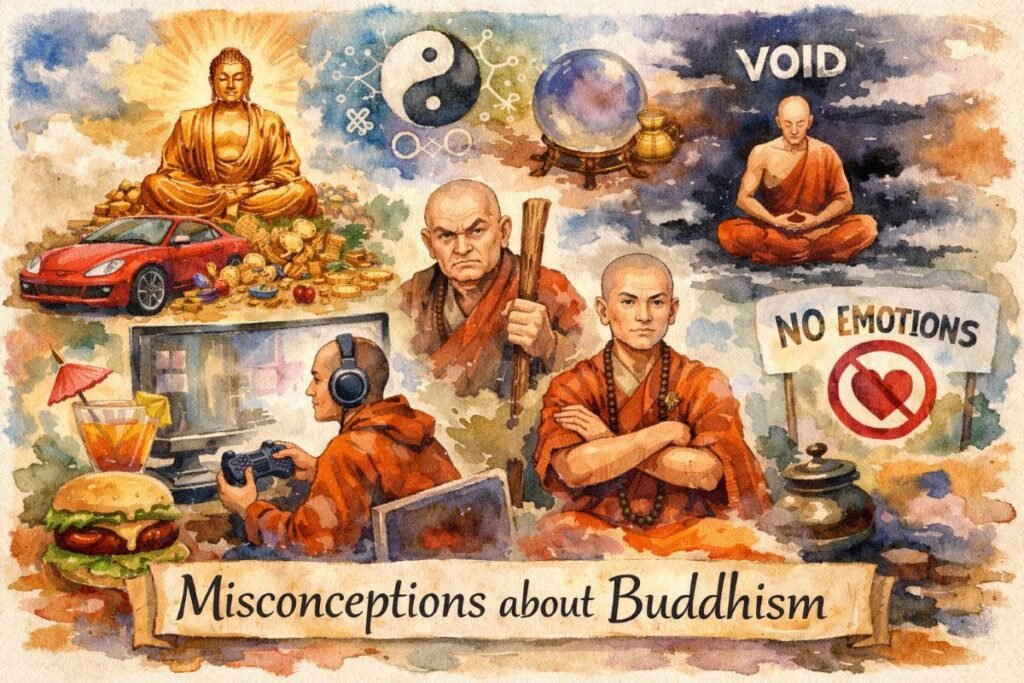
Buddhism is frequently encountered through cultural stereotypes, secondhand summaries, and casual assumptions. This article works through 108 common misunderstandings — spanning the nature of the Buddha, karma and rebirth, dependent origination, the Eightfold Path, monastic and lay practice, sectarian differences, and contemporary adaptations — drawing on Pali, Mahayana, and Vajrayana sources for clarification. Each entry traces the origin of the misunderstanding and points toward what the relevant canonical material actually says.
The Sand Mandala: A Philosophical Education in Ritual and Impermanence

The Tibetan sand mandala is a sacred Vajrayāna practice that brings together art, ritual, and philosophy. Through its meticulous construction and deliberate dissolution, it offers a direct reflection on impermanence, dependent origination, emptiness, and compassion. This article explores the history, symbolism, doctrinal foundations, and contemplative significance of the sand mandala within the broader context of Buddhist practice and understanding.
The Two Truths: Conventional and Ultimate
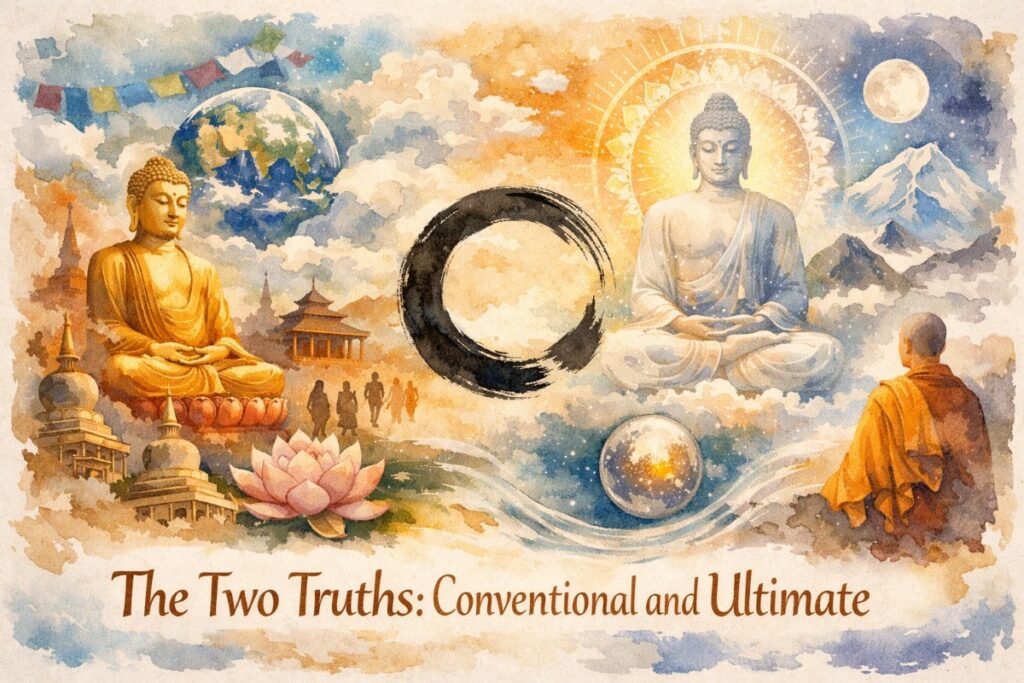
What if the reality you experience in daily life and its deepest nature are both true? This article explores the Buddhist teaching of the Two Truths: conventional truth (the world of cause, effect, and everyday actions) and ultimate truth (the emptiness of fixed, independent existence). You will find practical ways to apply both perspectives to work, relationships, difficult emotions, money, and social issues, without rejecting either. Includes sutta references, meditation practices, and a glossary.
The Four Nutriments: Nourishing the Mind and Body for Modern Life
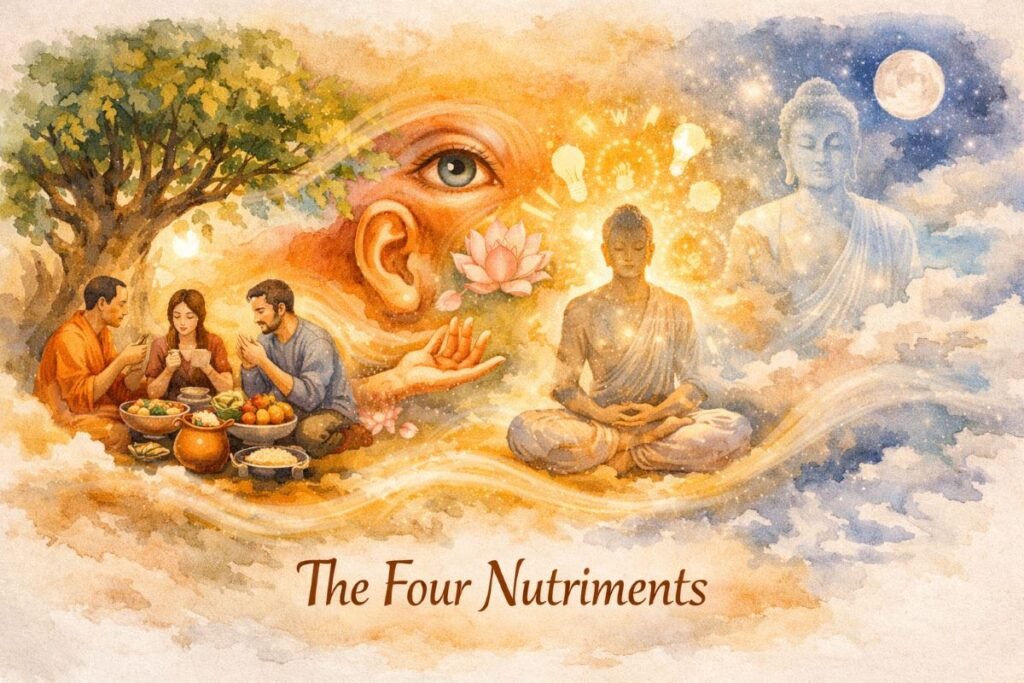
The Buddhist teaching on the Four Nutriments, found in the Pali Canon, offers a practical framework for understanding what sustains physical and mental life. Exploring edible food, sensory contact, mental intention, and consciousness, it shows how mindful consumption on all four levels can reduce suffering and support a balanced, intentional way of living.
The Four Right Exertions

The Four Right Exertions offer a practical framework for directing mental energy wisely; preventing unwholesome states, letting go of those already present, and nurturing wholesome qualities. This guide examines each exertion, clarifies common misunderstandings, and provides real‑world examples for applying these teachings in modern daily life.
Sixteen Aspects of Four Noble Truths
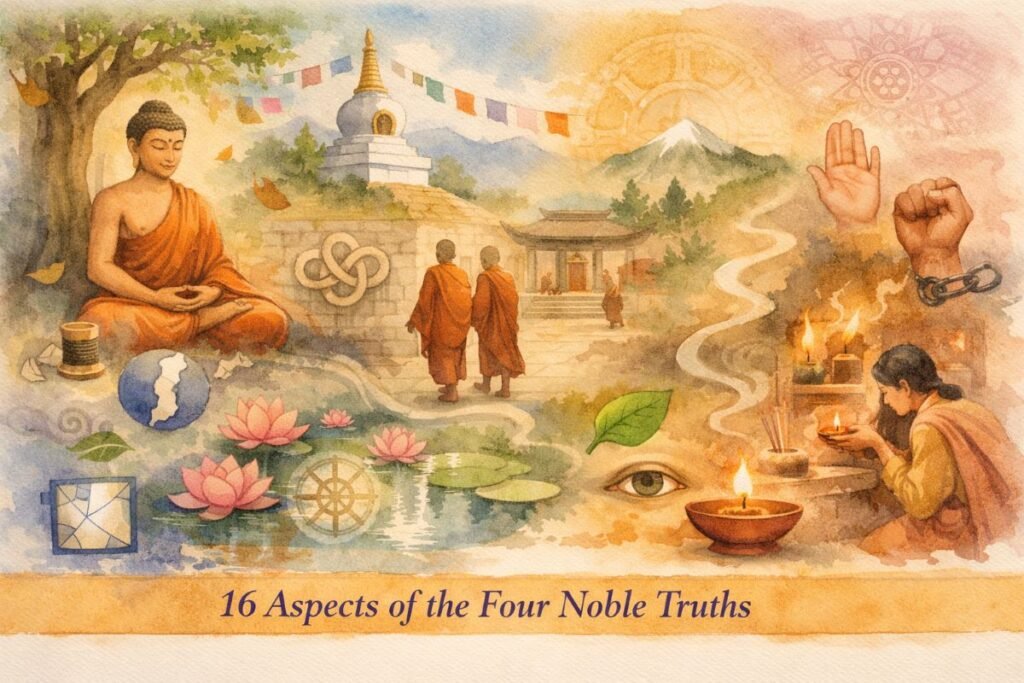
The sixteen aspects expand the Four Noble Truths into a practical framework for understanding stress, its causes, and the way to genuine peace. Written in plain English for a mature audience, this guide explains each aspect, notes the Buddhist schools that emphasise them, and offers daily-life applications without exaggerated claims or commercial pitch.
The Joy of Letting Go: A Layperson’s Guide to Buddhist Renunciation
Renunciation in Buddhism is often misunderstood as giving up everything you love. In practice, it is a gradual letting go of craving that brings more peace, not less. This guide explores the Buddhist perfection of renunciation [nekkhamma] as it applies to lay life: simplifying possessions, setting healthy boundaries with technology, and loosening attachment to identity. Drawing from Theravada, Mahayana, and Zen traditions, it offers practical exercises and sutta-based insights for anyone seeking freedom from the endless pull of wanting more.
The Four Bases of Power (Iddhipāda): A Buddhist Framework for Balanced Achievement
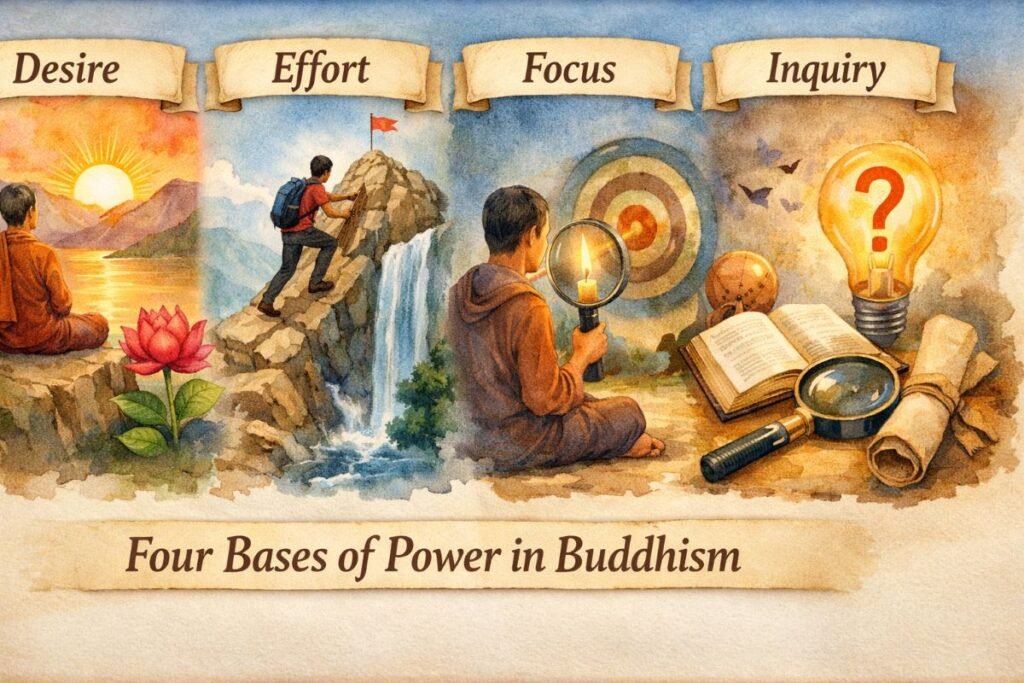
Explore the Four Bases of Power (Iddhipāda), the Buddha’s practical framework for balanced achievement. Wholesome desire, persistent energy, focused intention, and investigative inquiry work together to overcome procrastination, sustain effort, and bring any undertaking to completion without burnout. Rooted in the Pāli Canon and relevant to meditation as much as to daily life, these four inner strengths offer a timeless roadmap for wise, balanced action.
The 37 Factors of Enlightenment: A Practical Guide to the Bodhipakkhiyā Dhammā
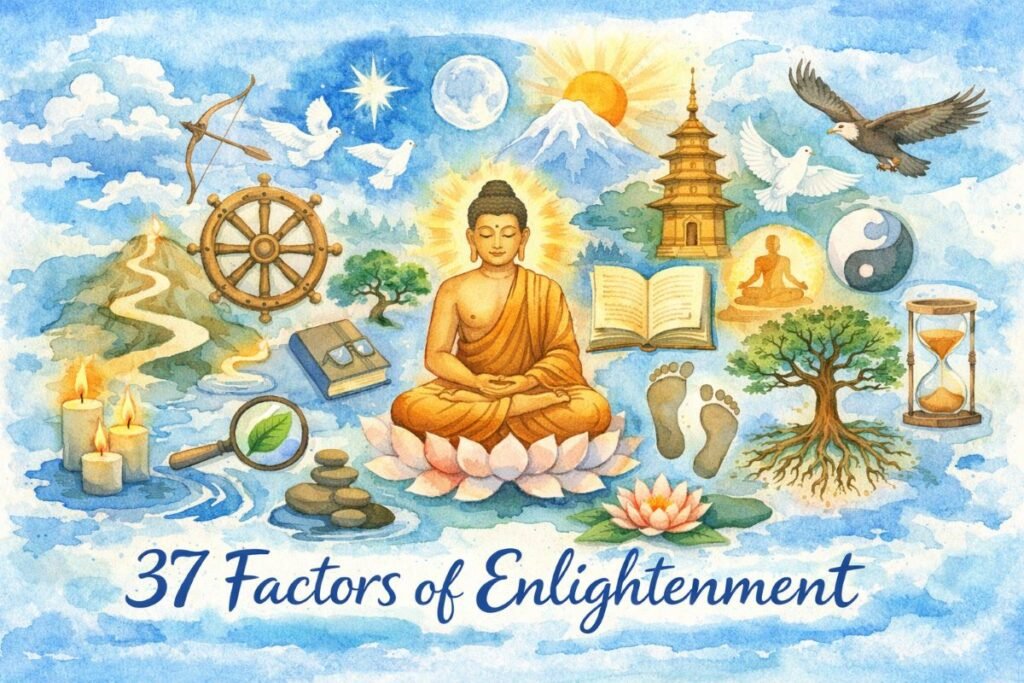
A practical exploration of the Thirty-seven Factors of Enlightenment, seven interlocking groups of qualities the Buddha taught as essential for awakening, and how they can be cultivated amidst the challenges of contemporary life.
What Is Nibbāna? Understanding the Unconditioned in Modern Life.
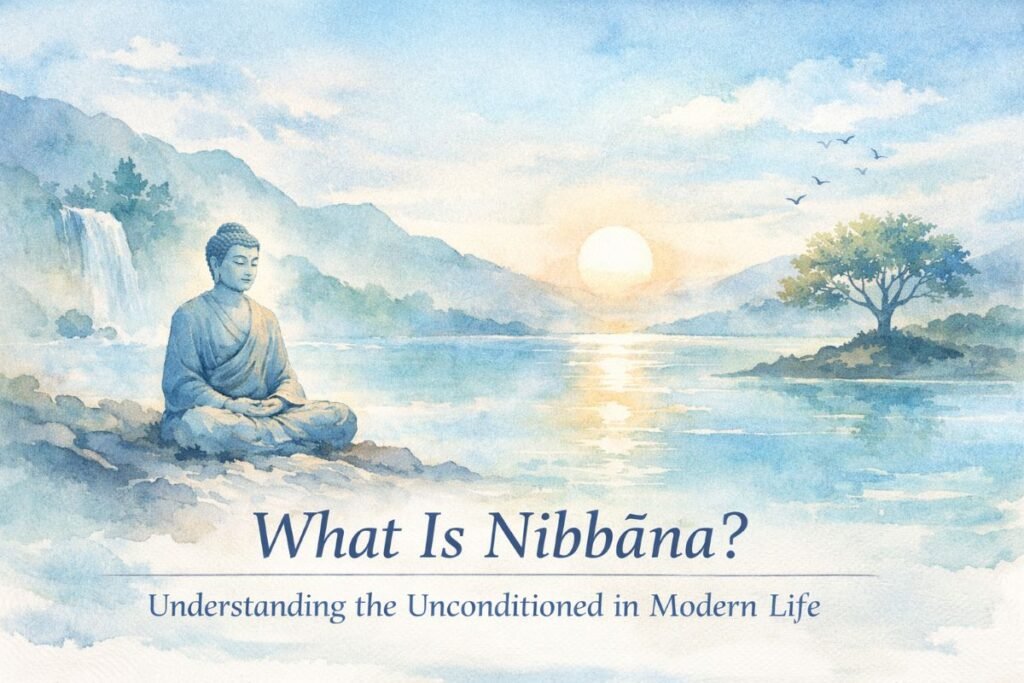
What is Nibbāna? A clear and practical exploration of the Buddha’s teaching on the end of suffering, the Unconditioned, and the path to stable peace in the midst of modern life.
Vajrayāna Buddhism: The Diamond Path of Rapid Transformation
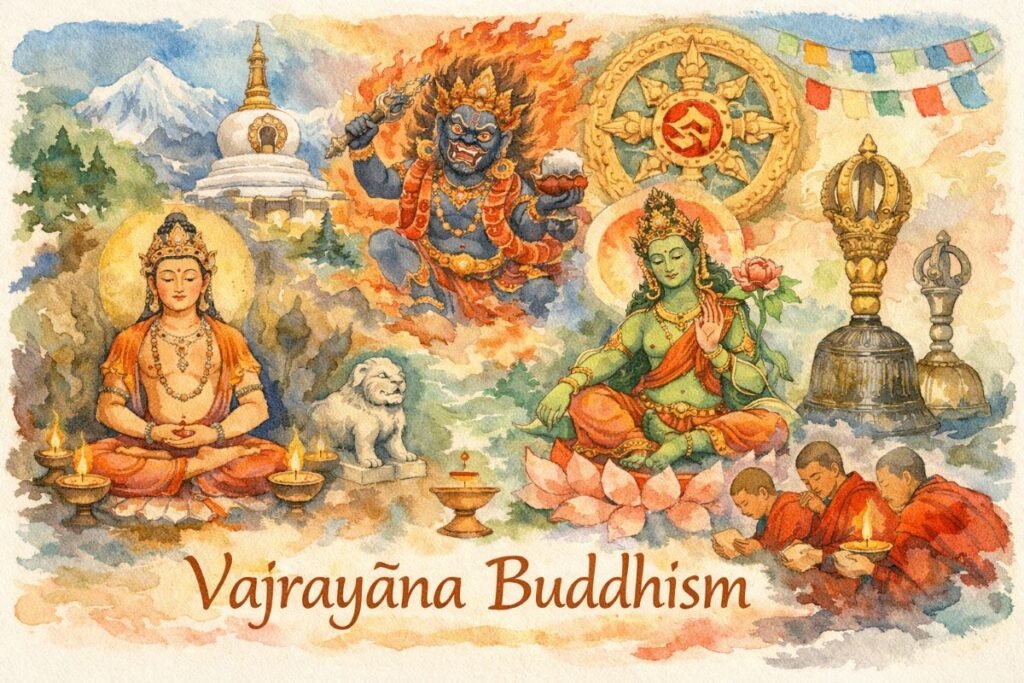
Vajrayāna Buddhism, frequently known as the Diamond Path or Tantric Buddhism, provides a precise framework for the direct transformation of the mind. Rather than rejecting the mundane world, this esoteric tradition teaches how to transmute everyday experiences and challenging emotions into clear wisdom. Grounded in the premise that all beings already possess inherent Buddha nature, the path utilizes specific inner technologies: including mantras, mandalas, and deity yoga—under the careful guidance of qualified teachers. Explore the historical roots, core philosophy, and practical applications of these profound contemplative teachings.