Three Unskillful Thoughts and Three Skillful Thoughts

The Buddha taught that thoughts are the forerunner of all actions. This article explores the six kinds of thought identified in the early discourses—three unskillful (sensuality, malice, and cruelty) and three skillful (renunciation, good will, and harmlessness)—and offers practical guidance for recognising and transforming them in daily life. Drawing from the Dvedhāvitakka Sutta (MN 19) and Vitakkasaṇṭhāna Sutta (MN 20), the teaching is presented for those wishing to deepen their understanding of Right Intention and walk the path with greater clarity and care.
Failure in Ethics and Failure in View; Accomplishment in Ethics and Accomplishment in View

This article examines how ethics (sīla) and view (diṭṭhi) work together in Buddhist practice. It explores what happens when either fails, what changes when either is accomplished, and how these teachings apply to daily life, work, and relationships. No exaggerated claims. Just practical guidance drawn from the Pali Canon and Buddhist traditions.
The Ten Fetters (Samyojanas)

Explore the Ten Fetters, the subtle mental chains that bind us to dissatisfaction and rebirth. This plain-language guide walks through each fetter, from self-view to ignorance, with everyday examples and practical reflections. No promises of quick fixes or special powers, just an honest look at how the mind creates suffering, and how mindfulness, ethics, and wisdom can loosen its grip, one moment at a time.
Right Speech – The Noble and Ignoble Expressions of Speech

This article explores the Buddha’s distinction between noble and ignoble expression, not as rigid rules, but as practical training tools for truthfulness, kindness, and inner clarity. No exaggerated claims just a shared reflection on how words can lead toward peace or away from it. May it be of modest use to anyone walking the path of compassionate communication.
Buddhist Practices for Overcoming Fear and Doubt

This article offers a grounded exploration of Buddhist practices for overcoming fear and doubt, presenting these states as conditioned mental factors rather than permanent character flaws. Drawing on Theravada teachings and the Pali suttas, it shares practical tools such as mindfulness, loving-kindness, and wise reflection, all aimed at cultivating inner steadiness and clarity in daily life.
How to Practice Non-Attachment in Relationships
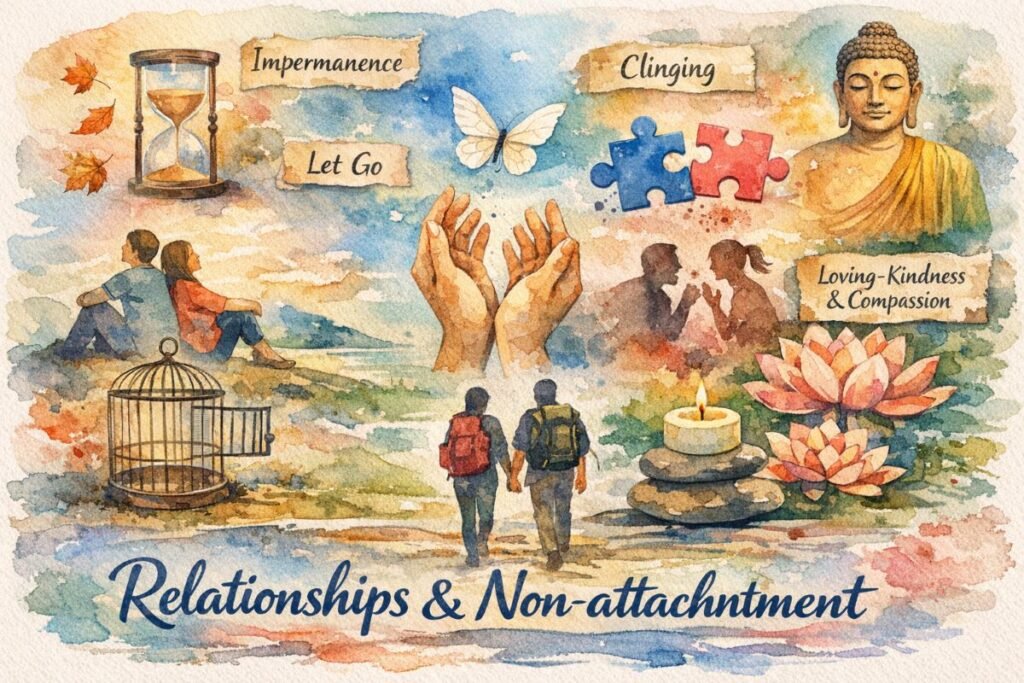
This article explores what non-attachment in relationships means from a Buddhist perspective. It distinguishes clinging from genuine care, introduces practical teachings such as the Four Sublime States and wise attention, and offers everyday examples of responding to relationship challenges with less fear and more freedom. No exaggerated claims are made; the aim is simply to share what the Buddha taught about clinging and to suggest how those teachings might be applied in modern life.
Common Meditation Mistakes and How to Correct Them
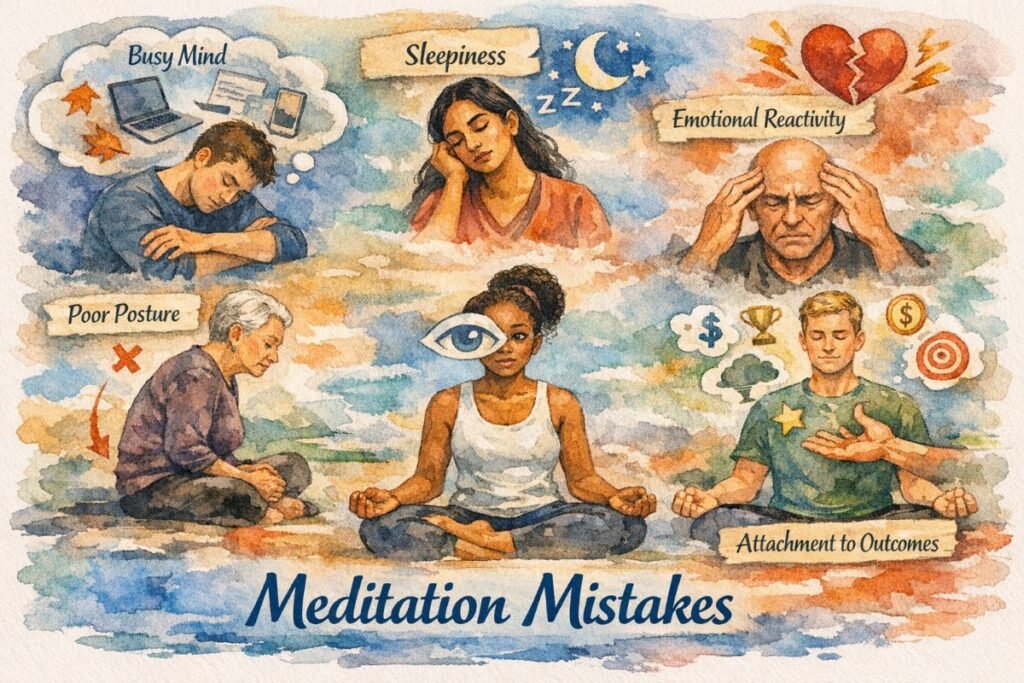
When the mind wanders, the body slumps, or doubt creeps in, meditation can feel like it isn’t working, but these difficulties are not failures. They are familiar companions on an ancient path. This gentle guide draws on the Buddha’s own teachings to help you recognise common meditation mistakes and offers simple, kind corrections. No special experience is required. Just a willingness to sit, notice, and begin again.
Karma – Why Do Good People Suffer? A Buddhist View on Fortune, Misfortune, and Injustice
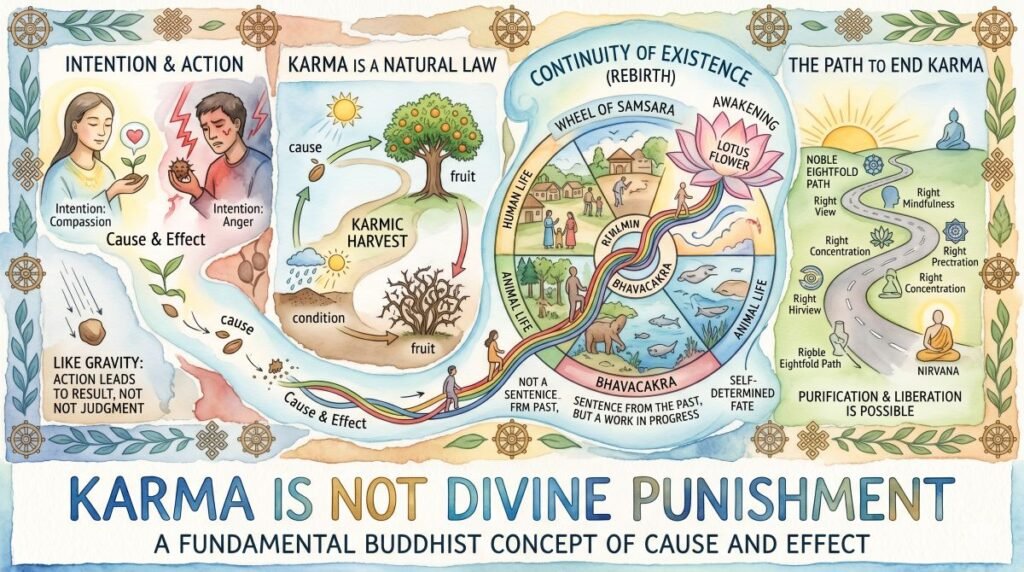
This article examines the Buddhist view on why good people suffer, drawing on early suttas to clarify the limits of kamma, reject victim‑blaming, and show how systemic greed, hatred, and delusion—not past deeds—underlie historical atrocities. It offers practical guidance for cultivating compassion, wise action, and a boundless heart in the face of suffering today.
Emptiness, Dependent Origination, and Not‑self
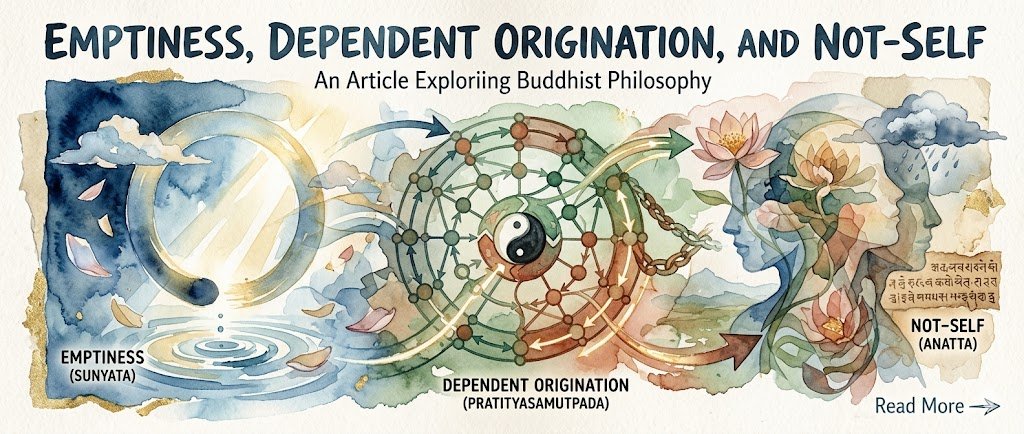
Explore the Buddha’s core teachings on emptiness, dependent origination, and not‑self in this clear, practical guide. Using everyday examples and simple reflections, it shows how these insights reveal the nature of experience, loosen clinging, and open the path to genuine freedom.
The Five Remembrances

The Five Remembrances (Upajjhatthana Sutta, AN 5.57) are five truths the Buddha taught every person to reflect on daily: that aging, illness, death, and loss are universal conditions, and that our intentional actions are our only lasting inheritance. Far from morbid, this contemplation dissolves the three intoxications of youth, health, and life that quietly fuel recklessness and discontent — and pivots the mind from personal anxiety toward the recognition that all beings share these conditions. Regular reflection cultivates saṃvega (the urgency that motivates practice), steadies equanimity in the face of change, and restores attention to what genuinely matters.
Why We Defend a Self That Keeps Changing

We pour enormous energy into defending a “self” that is constantly changing: in body, thought, emotion, and identity. Buddhist teachings on anattā (not-self), dependent origination, and the three poisons explain why this defensive reflex arises, what it costs us, and why releasing it opens the door to genuine peace. Drawing on the Pali Canon, the five aggregates, and practical mindfulness exercises, this article explores how seeing the self clearly, rather than defending it, is itself the beginning of freedom from unnecessary suffering.
The Five Factors of Striving: A Guide to the Padhāniyaṅga Sutta (AN 5.53)

The Buddha taught that meditation does not happen in a vacuum. In the Padhāniyaṅga Sutta (AN 5.53), he identified five essential conditions that together make liberation-oriented practice possible: faith in the Tathāgata’s awakening, a body fit for striving, psychological honesty with one’s teachers, consistently roused energy, and the penetrative wisdom that discerns arising and passing away. This article explores each factor, grounding the teaching in canonical Pali sources and showing how these conditions function not as a checklist but as an interdependent framework supporting the full arc of the path.