Critical Thinking, Intellectual Knowledge, and Buddhist Wisdom (Paññā/Prajñā) as Deep Experiential Insight
Curious about the difference between knowing about Buddhism and truly living it? This article gently explores the distinction between intellectual knowledge and the deep, transformative quality of Buddhist wisdom (paññā). We look at how critical thinking can serve as a genuine support on the path, how to balance study with direct experience, and what it means to cultivate insight that reaches beyond the page. Through practical examples and teachings from the Pali Canon, this is an invitation to investigate the Dhamma for yourself—not as a collection of beliefs, but as a living path toward greater clarity and peace.
Buddhist Psychology: Understanding the Mind’s Patterns
Buddhist psychology offers a time-tested, experience-based framework for understanding how the mind creates suffering through habitual patterns, and how those patterns can be transformed through mindfulness, ethical living, and wisdom. Drawing on early Buddhist teachings preserved in the Pali Canon, this introduction explores core concepts such as sati, samādhi, and paññā, examines common misunderstandings, and offers practical guidance for bringing these insights into the challenges of everyday life. The path is gradual, the tools are simple, and the invitation is open to anyone willing to look honestly at their own mind.
The Raft is Heavy: An Inquiry into How We Hold What Was Meant to Carry Us

What are you holding that is holding you? This essay offers a compassionate inquiry into how Buddhist traditions, identities, and institutions—meant to carry us across, can themselves become burdens. Drawing on ten suttas and the Brahmaviharas, it gently asks what it means to finally set the raft down.
Tibetan Buddhism: A Living Tradition of Wisdom and Compassion

An introduction to Tibetan Buddhism, exploring its history, the four major schools of Nyingma, Kagyu, Sakya, and Gelug, and core teachings on emptiness and bodhicitta. It covers the sacred texts of the Kangyur and Tengyur, meditation practices including Dzogchen and Mahamudra, and the living tradition’s presence in the modern world through digital preservation and dialogue with science.
Pure Land Buddhism: An Introduction to the Tradition of Faith and Practice

Pure Land Buddhism offers a path of trust, compassion, and mindful practice. Centered on Amitābha Buddha’s vow, it guides practitioners toward rebirth in the Pure Land as a place for deepening understanding, cultivating gratitude, and living with ethical awareness in daily life.
Beginner’s Mind: Shoshin and the Practice of Fresh Perception
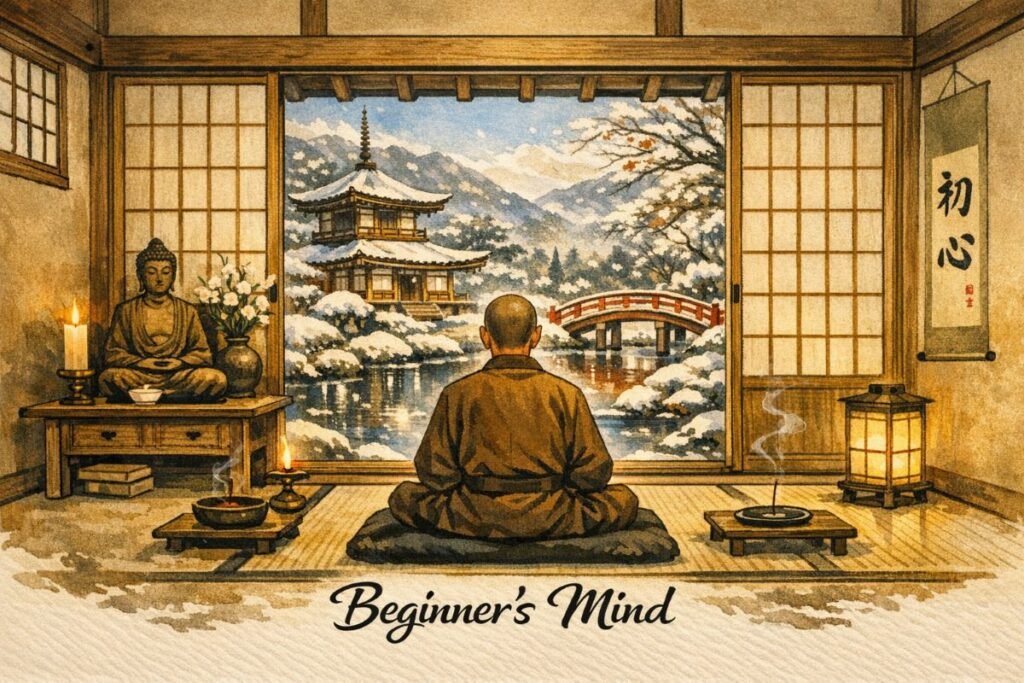
Beginner’s Mind (Shoshin) invites us to meet each moment with openness, curiosity, and freedom from preconceptions. Rooted in the Zen teachings of Eihei Dōgen and Shunryū Suzuki, this practice offers a path to clarity, compassion, and deeper presence in daily life. Drawing on Mahayana sutras and practical examples, this guide explores the meaning of Beginner’s Mind, common misunderstandings, and simple ways to cultivate freshness in meditation, relationships, and ordinary activities. Whether new to Buddhism or a longtime practitioner, you may find here an invitation to see the world again for the first time.
Buddhist Perspectives on Friendship and Community: The Strength and Importance of Sangha

What does it mean to walk a spiritual path together? In Buddhism, the Sangha community has been a vital refuge for over 2,500 years, not as an escape from the world, but as a place of genuine connection and mutual support. This article explores the meaning of spiritual friendship (Kalyana-mittata), the role of community in sustaining practice, and how the Buddha’s teachings on relationship can illuminate our own lives. Whether you are new to Buddhism or have been practicing for years, you are invited to explore how friendship on the path can become a source of strength, clarity, and peace.
The Middle Way: Integrating Being Present with the Buddha’s Structured Path

Integrating spontaneous presence with the Buddha’s structured path offers a balanced approach to the Dhamma that avoids the extremes of passive stagnation and rigid striving. By examining the Middle Way, this article explores how to unify open awareness (Sati) with the intentional ethical and mental training of the Noble Eightfold Path. Grounded in the early suttas and practical application, this investigation provides a framework for cultivating a sustainable practice where mindfulness and discipline serve as the “two wings” of spiritual development, supporting a grounded path toward wisdom and the easing of suffering.
Devotion to Teachers in Buddhism: Inspiration vs Idealization

This guide explores the role of the spiritual teacher in Buddhism with clarity and balance, examining how devotion can support the path when grounded in wisdom, ethical discernment, and personal investigation. Drawing on teachings from Theravāda, Mahāyāna, and Vajrayāna traditions, it outlines the qualities of a trustworthy guide, the risks of idealization, and the importance of spiritual friendship (kalyāṇa-mitta) that encourages independence rather than dependency. Intended for both new and experienced practitioners, it offers a careful framework for relating to teachers in a way that nurtures compassion, understanding, and the gradual lessening of suffering.
Mindfulness in Ordinary Activities

Mindfulness in ordinary activities is the gentle practice of bringing kind, non-judgmental awareness to the simple tasks that fill each day: walking, eating, working, caring for others, or pausing between moments. Rooted in early Buddhist teachings on the four foundations of mindfulness, it invites a quiet remembering (sati) to return to the present again and again, without striving for special states or quick results. By noticing the body, feelings, and mind as they naturally change, everyday life itself becomes a field for calm understanding, ethical sensitivity, and reduced reactivity. No retreat or belief is required, only patient attention, applied where you already are. Over time, this steady presence can soften stress, deepen relationships, and support a more balanced and compassionate way of living.
How to Be Compassionate Toward Yourself

This article gently explores how Buddhist teachings can support a kinder relationship with yourself. Drawing from suttas, meditation practices, and everyday examples, it offers practical ways to develop a compassionate self‑image without striving for perfection. Whether you are new to Buddhism or familiar with the path, these reflections invite you to meet your own suffering with the same care you would offer a dear friend.
The Buddhist Concept of Good and Bad Conduct: Body, Speech, and Mind

This article explores the Buddhist framework of good and bad conduct through body, speech, and mind. It presents traditional teachings on the ten wholesome and unwholesome actions, their role in cultivating peace and understanding, and practical ways to apply them in daily life. No exaggerated claims or commercial intent, simply a guide for those who wish to examine their own actions with honesty and care.