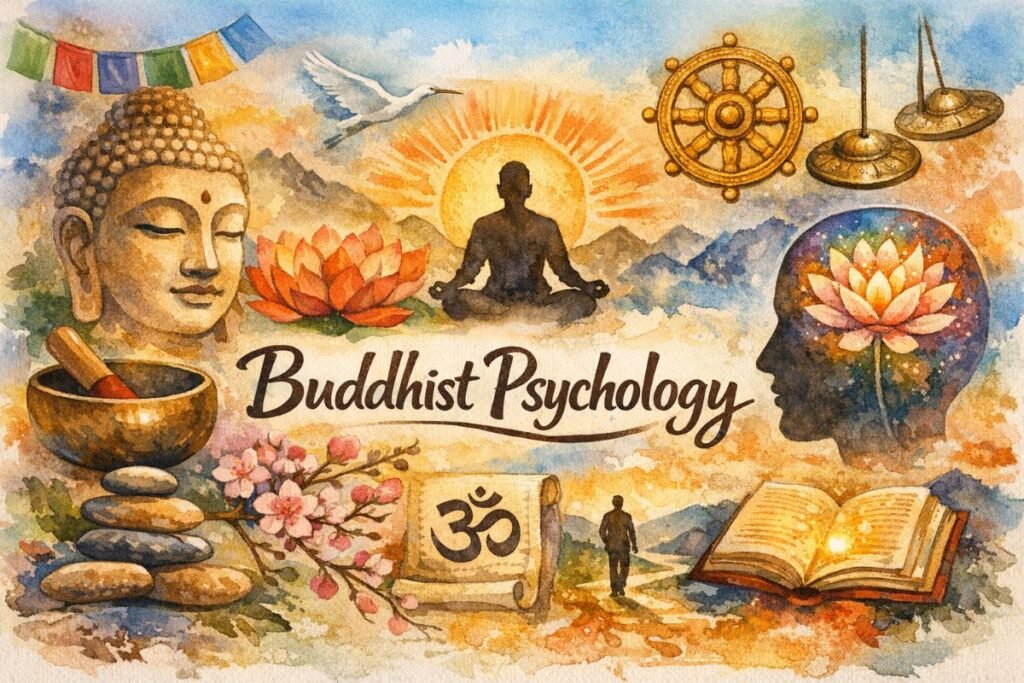
A modern synthesis drawn from the Satipaṭṭhāna Sutta, Theravāda Abhidhamma, and Mahayana mind‑training texts. These contemplations aim to be faithful in spirit to their source traditions while offering a practical, psychologically accessible curriculum for contemporary readers. They are offered as humble tools for direct investigation, not as absolute dogma.
1–12: Establishing Mindfulness
1. Mindfulness of Breathing
Attention rests on the natural breath, the sensation of air entering and leaving the nostrils, the rise and fall of the chest or abdomen. This is not breath-control; it is simply resting awareness on a process already happening, continuous and dependable. Doing so steadies the mind and reveals the breath’s constant change: each inhalation is fresh, each exhalation unique. In that direct seeing, the notion of a fixed breather dissolves; there is just breathing, an impersonal flow of energy.
For example: While waiting for a late train, instead of reaching for the phone or growing irritated, turn to the breath. Notice the cool inhale, the warm exhale. When the mind wanders, acknowledge the thought and gently return. The waiting becomes an opportunity for calm and presence rather than frustration.
2. Mindfulness of Postures
The four basic postures: standing, walking, sitting, lying down, are noticed as they occur. Each posture is not a solid block but a stream of changing sensations: pressure under the feet, the spine’s alignment, the movement of limbs. By knowing a posture clearly as it happens, the illusion of a self behind the movements is seen through. What remains is just a body shifting according to conditions, guided by intention and gravity.
For example: When getting up from a chair at work, pause for one second. Feel the weight transfer, the muscles engage, and note “standing.” Then as you walk to the next room, note “walking.” This simple break snaps the automatic pilot and anchors you in the here and now.
3. Clear Comprehension of Daily Activities
Ordinary actions: eating, drinking, dressing, opening a door, are brought into the light of attention. One observes the intention before the act, the act itself as it unfolds, and the sensations during and after. This interrupts the habit of doing things mechanically, revealing that a large portion of life passes unnoticed. With clear comprehension, each small moment becomes a chance to see craving, aversion, or neutrality at work.
For example: When brushing your teeth, instead of reviewing the day’s worries, focus on the taste of the toothpaste, the movement of the brush against gums, the sound of the water. When the mind wanders, simply return to the sensations. The morning routine shifts from a chore to a mindful start.
4. Mindfulness of Bodily Parts
The body is scanned systematically: hair, nails, teeth, skin, flesh, sinews, bones, and internal organs. Each part is visualized or felt, recognized as a mere constituent, not “I” or “mine.” This contemplation weakens attachment to physical appearance by revealing the body as a composite of fragile, impersonal elements. It fosters a balanced relationship with the body, neither loathing it nor clinging to it.
For example: In the shower, instead of critiquing your body’s shape, briefly direct attention to the actual parts: the hair being washed, the skin under the soap, the teeth being brushed. Acknowledge each as a functional item, not a definition of who you are.
5. Elements Meditation
The body’s solidity, cohesion, temperature, and motion are examined, corresponding to the ancient elements of earth, water, fire, and air. Hardness in bones, fluidity in blood, warmth in the torso, and movement in the breath are all impersonal qualities. They exist throughout nature, not belonging to anyone. This reflection loosens the sense of ownership toward the body, seeing it as borrowed matter returning to the elements.
For example: While drinking a glass of water, notice the liquid element entering the body, joining the water already there. As you feel hot or cold, recognize the fire element changing. No need for special posture; just note these properties in ordinary moments.
6. Cemetery Contemplations (warning – should only be attempted when guided by a professional teacher)
One reflects on the inevitable decay of the body after death: bloating, discoloration, dissolution to bones and dust. This is not morbid but a sober recognition of mortality, which cuts through the illusory sense of permanence and vanity. It encourages a healthy urgency: if life is uncertain and death certain, what truly matters?
For example: When caught up in a conflict over a minor issue, pause and recall, “This body is subject to decay; I do not know how long I have.” This perspective can soften the attachment to being right and redirect energy toward kindness.
7. Mindfulness of Feeling-Tone
In each moment, one notices whether experience is pleasant, unpleasant, or neutral. The tone is known simply as a raw sensation, before the mind adds stories. This observation reveals how automatically the mind reacts: clinging to pleasant, resisting unpleasant, and ignoring neutral. By seeing the pattern, one can choose not to be pushed by it.
For example: While eating a favorite food, notice the pleasant feeling that arises. Do not try to prolong or enhance it; just know “pleasant.” When the food finishes and a mild disappointment appears, know that as “unpleasant.” Neither push it away; just acknowledge it.
8. Mindfulness of Worldly Mind-States
When greed, hatred, or delusion colors the mind, it is recognized. The presence of a constricted, turbulent, or foggy state is known without judgment. It is seen as a temporary visitor, dependent on conditions, not as proof of a flawed self. By acknowledging these states, their power to drive unconscious action diminishes.
For example: Feeling a flash of irritation at a colleague’s comment. Instead of acting on it or suppressing it, silently note, “mind with anger.” Watch its texture — the heat, the tension — and let it be there without feeding it a story. It rises and passes.
9. Mindfulness of Withdrawn Mind-States
When the mind is temporarily free from hindrances: peaceful, concentrated, spacious, this is known clearly. One does not grasp at this state or try to make it last forever; it is seen as conditioned, just like other states. The knowing presence that was there even in disturbance is now obvious when the dust settles.
For example: After a meditation sit when the mind feels calm, rather than clinging to the calm or judging tomorrow’s distracted session, simply note, “mind free of hindrance now.” Appreciate it without ownership, like enjoying a breeze that comes and goes.
10. Overview of the Five Hindrances
The five classic hindrances: sense desire, ill will, sloth and torpor, restlessness and worry, and doubt, are identified. One learns to recognize each as it manifests: the pull toward pleasant objects, the aversion to painful ones, the drowsy fog, the scattered energy, the hesitant questioning. Understanding their nature is the first step to undermining them. They are not obstacles to be hated, but patterns to be understood.
For example: During a work project, notice if sloth (heavy eyelids, low energy) is present. Label it “sloth.” Then consciously adjust posture, open the eyes wider, or take a few deep breaths. The simple recognition can begin to loosen its grip.
11. The Aggregates of Clinging
The five aggregates: form (body), feeling, perception, mental formations (including volition), and consciousness — are the sum total of what we call “a person.” This contemplation points out that no enduring self can be found within or apart from these five processes. They are not a solid entity but a dynamic, conditioned flow. Clinging to any of them as “I, me, mine” perpetuates suffering.
For example: When you catch yourself thinking, “I am a failure,” break it down: the thought is a mental formation; the unpleasant feeling is just feeling; the label “failure” is perception. Notice that none of these fleeting components truly defines a permanent self.
12. The Six Sense-Spheres
The six senses: eye, ear, nose, tongue, body, mind — and their corresponding objects are observed. Contact between sense organ, object, and consciousness produces experience. This contemplation reveals how perception and reactivity are woven together at every sense door, and how fetters arise dependent on that contact (MN 10). Liberation lies in guarding the senses with wise attention, not in shutting them down.
For example: While scrolling social media, notice a provocative image. Before automatically clicking, pause and observe: sight, contact, a feeling arises (excitement or outrage). Acknowledge the process without diving in, giving the mind a chance to choose a response rather than be driven.
13–24: Understanding Feeling-Tone
13. The Arrow of Feeling
Physical or emotional sensation is like a first arrow, unavoidable in life. The mental reaction: craving, aversion, or ignorance, is a second arrow we shoot ourselves (SN 36.6). By learning to simply endure the first arrow without adding the second, suffering is greatly reduced. For instance, pain in the knee is just pain; the mental lament “why me?” is an extra layer of suffering.
For example: While sitting in meditation, the knee begins to ache. Instead of immediately shifting or cursing the discomfort, note “unpleasant feeling” and observe the body’s reaction. Notice the aversion arising separately from the raw ache. The ache remains, but the suffering around it can soften.
14. Pleasant Feeling and Attachment
When pleasant feeling arises: from a kind word, a delicious taste, a warm bath — the mind naturally wants to cling. This contemplation watches that pull, seeing how attachment plants the seed for future disappointment when the pleasant inevitably passes. By seeing the desire without acting on it, one learns to enjoy without clinging.
For example: When receiving praise, feel the pleasant flush. Instead of replaying it to prolong the pleasure or demanding more, simply note “pleasant feeling.” Let it be, knowing it will fade. The sweetness can be fully tasted without becoming a hook.
15. Unpleasant Feeling and Aversion
Pain, criticism, or discomfort triggers an immediate urge to escape. Here one sits with the unpleasant without pushing it away. By observing the resistance and the mental story that layers on top (“this is unfair,” “I can’t stand it”), the bare sensation and the added suffering are separated. A surprising peace can arise from simply allowing it.
For example: When stuck in heavy traffic and agitation arises, rather than honking or fuming, turn attention to the feeling of irritation in the body: tight chest, heat. Note “unpleasant, aversion.” Let it be there without acting. The situation doesn’t change, but the internal reaction can relax.
16. Neutral Feeling and Ignorance
Neutral moments: washing hands, folding laundry, waiting in line, often cause an urge to zone out or seek stimulation. This contemplation illuminates neutral feeling with clear awareness, seeing that it, too, is impermanent and dependently arisen. By not ignoring it, the door to subtle restlessness and the hidden craving for distraction is exposed.
For example: While folding laundry, notice the mind’s desire to turn on a podcast or daydream. Instead, stay with the neutral sensations of fabric, the movement of hands. Note “neutral feeling.” See if the seemingly boring moment contains a quiet peace when fully attended.
17. Feelings as Conditioned
No feeling arises on its own; each is born from contact between a sense organ, object, and consciousness. This conditionality depersonalizes feeling. It is not “my” feeling but an impersonal event in a causal stream. Seeing this loosens the identification that fuels possessiveness and drama around emotions.
For example: When a sudden feeling of sadness appears, instead of claiming “I am sad,” investigate: there was a sound (a news alert), ear-consciousness, contact, and a feeling. The sadness is a result of conditions, not evidence of a permanent sad self. It will pass.
18. The Cessation of Feeling
In deep states of meditation, feelings gradually fade. This contemplation acknowledges that profound peace beyond ordinary hedonic experience is possible when the mind is freed from craving. It points toward nibbāna, where freedom from craving is realized even when feelings arise — not a mere blank absence but an unconditioned peace.
For example: In a moment of deep concentration, notice when bodily feelings become very subtle or even disappear. Afterward, reflect that a deeper peace exists beyond the push-pull of feeling, and that the path gradually leads there.
19. Worldly and Unworldly Feelings
Worldly feelings are tied to household life: sensual pleasure, the grief of loss, the boredom of neutrality. Unworldly feelings arise from renunciation: joy in letting go, spiritual urgency (saṃvega), the delight of concentration. Distinguishing them helps to cultivate the wholesome while not rejecting the worldly, just understanding their limitations.
For example: After a meditation retreat day, you might feel a light joy not dependent on any external success. Recognize this as an unworldly pleasant feeling. When later a worldly pleasure arises (like good food), note its coarser quality and how it can lead to craving.
20. Feeling as a Door to Insight
Feeling is directly visible, making it a prime object for insight. By observing feelings moment by moment, the three characteristics become clear: they change (impermanence), clinging to them is suffering, and they are not self. This direct seeing cuts ignorance at its root.
For example: While listening to a piece of music, watch the alternating pleasant and unpleasant twinges as different notes play. See how none lasts; each is instantly replaced. This microscopic view of impermanence, accessible in any listening moment, undermines the assumption of stable happiness in sensory experiences.
21. Contemplating the Feelings of Others
Shifting attention outward, one tunes into the emotional world of those nearby. A person’s expression, posture, or tone hints at their inner feeling. Recognizing that all beings experience the same hedonic tones: pleasant, unpleasant, neutral — breaks down the barrier of separation and naturally fosters empathy.
For example: During a difficult conversation with a partner, instead of just feeling your own hurt, notice their tone, the tightness in their voice. Infer that they too are experiencing unpleasant feeling. This recognition can soften the heart and shift the interaction from attack to connection.
22. The Subtle Joy of Equanimity
Genuine equanimity is not cold indifference; it carries a quiet joy, a refined pleasantness that is peaceful and open. This contemplation distinguishes this subtle joy from excited pleasure: it is calm, non-grasping, and supportive of clear seeing. Cultivating it provides inner stability amidst life’s challenges.
For example: When stuck in a long queue at the bank, mindfully observe the urge to fidget. Then invite a balanced mind: “May I accept whatever comes.” Notice the slight, steady uplift that arises when you stop fighting the situation. That is the joy of equanimity.
23. From Feeling to Craving
The chain is traced: contact → feeling → craving. In an unmindful moment, feeling automatically triggers craving or aversion. By anchoring awareness precisely at the feeling phase, catching it before the reaction, one can interrupt the process and prevent the birth of suffering.
For example: Walking past a bakery, the smell (object) meets the nose (sense), and a pleasant feeling arises. Notice that pleasantness and the instant desire to go inside. By seeing the sequence, you might choose to keep walking without being dragged, aware that the craving is just a conditioned pattern.
24. Liberation through Understanding Feeling
An awakened one fully understands feeling, its origin, its cessation, and the path. The intention is set to know feelings so thoroughly that they cease to be drivers of suffering. This is not intellectual knowledge, but a deep, transformative insight into the nature of feeling.
For example: In daily life, you can reflect: “Every feeling I have is an opportunity to see its nature. Even this mild boredom can teach me.” This attitude transforms all feelings into teachers, not obstacles on the spiritual path.
25–36: Observing the Mind-States
25. Mind with Greed
When wanting, longing, or grasping colors the mind, it is recognized. The mind feels contracted, heated, restless. It misperceives an object as a source of lasting satisfaction. By noting “mind with greed,” one can observe this state without acting on it, seeing its inherent unsatisfactoriness.
For example: While online shopping, notice the excitement and the mind’s rationalizations (“I need this”). Pause and label “mind with greed.” Feel the energy of wanting in the body, and see how the object is a mirage promising happiness. Then decide from a cooler place whether to purchase.
26. Mind Free of Greed
When generosity, contentment, or renunciation arises, the mind is light, spacious, and at ease. This wholesome state is known as it is, without grasping at it. Recognizing it directly lets you see its value and conditions so it can be cultivated.
For example: After donating to a cause without expectation, you notice a quiet satisfaction and lack of wanting. Note “mind free of greed.” Savor this sense of enoughness, knowing that it depends on the letting-go, not on the amount given.
27. Mind with Hatred
Anger, aversion, ill will – these stain the mind with an unpleasant, corrosive quality. They bring suffering to oneself and to relationships. Observing “mind with hatred” without acting on it or suppressing it reveals the inner burning and the illusion that the external cause is the sole problem.
For example: When a driver cuts you off, notice the surge of anger. Label it “anger” and observe how it feels physically: heat, tension, racing thoughts. Instead of yelling or honking, just know the state. This creates a gap, and often the intensity fades faster than if you fed it.
28. Mind Free of Hatred
When patience, loving-kindness, or forgiveness softens the heart, the mind feels cool, expansive, and peaceful. This state is known clearly. By observing it, you learn how it arises, often from wise attention, and you see that it’s a genuine relief to let go of ill will.
For example: After practicing a few minutes of sending goodwill to a difficult person, you notice the resentment has eased. Note “mind free of hatred.” Feel the open quality. Reflect on how the simple mental act of kindness toward them, even if unspoken, freed you from the burning.
29. Mind with Delusion
Delusion appears as confusion, spaced-out dullness, or grasping at false views. The mind is foggy, lacking clarity. Recognizing this state without judgment is crucial because delusion enables all unskillful behavior, when you don’t see clearly, you’re more likely to act on greed or hatred.
For example: During a late-night internet binge, you notice a passive, zombie-like scrolling. Label “mind with delusion.” Feel the haziness. Acknowledge the lack of clarity. Often this recognition alone can break the trance, bringing back a sense of agency.
30. Mind Free of Delusion
Moments of clear knowing, direct perception, or wise attention are moments free from delusion. The mind is sharp, present, aligned with reality. Knowing this state helps you appreciate the value of clear comprehension and encourages its cultivation.
For example: While solving a problem at work, you suddenly see the solution clearly, effortlessly. Note “mind free of delusion.” Afterwards, reflect on the conditions that supported that clarity, perhaps a rested mind, no multi-tasking. Replicate those conditions.
31. Constricted Mind
The mind can be narrowed by sloth, torpor, or restless scatter. It feels heavy, fragmented, or tight, like clouds obscuring the sun. Observing the constriction without struggling against it allows you to see its impersonal, conditioned nature and choose an appropriate antidote.
For example: In the afternoon slump, energy dips, and the mind feels sluggish. Instead of pushing through with caffeine or self-criticism, note “constricted mind.” Consciously straighten the spine, open the eyes a little wider, or walk for a minute. Respond from awareness, not reactivity.
32. Expansive Mind
When the mind is vast, collected, or limitless, it is known as expansive. Boundaries soften, and there’s a capacity to hold experience without disturbance. Even a brief taste of this spaciousness can remind you that your mind is not inherently narrow; it’s just temporarily contracted by conditions.
For example: Sitting in a park, gazing at the open sky, you may feel a sense of inner spaciousness, free from usual worries. Note “expansive mind.” Let it be, without trying to force it to stay. Know that this openness is always available, simply obscured.
33. Mind Surpassed by Greatness
Sometimes the mind surpasses its ordinary limits, such as during deep concentration (jhāna) or a glimpse of emptiness. These states are acknowledged as conditioned and impermanent. They are not to be clung to as achievements of a self, nor rejected as distractions.
For example: After a retreat, you experience a profound peace and clarity lasting hours. When it eventually fades, instead of despairing, note “that state arose and passed; it’s nature.” This prevents the spiritual ego from building and keeps the path grounded.
34. Mind Not Surpassed
When the mind is ordinary, just everyday awareness, not in a peak state, it is known as “not surpassed.” There’s a subtle tendency to devalue ordinary mind and chase special states. This contemplation reminds you to embrace whatever mind arises with balanced equanimity; even ordinary moments hold the potential for insight.
For example: You’re doing dishes, feeling no particular bliss. Instead of wishing to be in a more awakened state, note “mind not surpassed.” Investigate this ordinary mind: does it contain any permanent self? Embrace it fully; liberation is not somewhere else.
35. Mind in Concentration
When attention is gathered and unified on an object, the mind is peaceful, stable, and luminous. This state of samādhi is known directly. It is a powerful support for insight, but even this sublime state is fabricated. Not grasping it as final, one uses its clarity to see the nature of reality.
For example: During a meditation sit, the mind settles fully on the breath. Distractions are minimal, and there is a serene flow. Note “concentrated mind.” After the sit, reflect that this arose due to conditions (quiet, right effort) and will fade. Use the clarity to investigate any arising phenomenon.
36. Liberated Mind
When a moment of insight or release occurs, a temporary freedom from defilements, it is recognized as a liberated mind. Full liberation is the permanent fading of greed, hatred, and delusion, but even a momentary taste shows what is possible. Not clinging to the moment, you let it inform your whole path.
For example: In a deep letting go during meditation, you experience a profound peace where no wanting or pushing away is present for a few minutes. Note “a temporarily liberated mind.” Afterward, reflect on what conditions allowed this letting go, and continue to cultivate them without attachment.
37–48: Working with the Hindrances
37. Sense Desire
The pull of pleasurable sights, sounds, smells, tastes, touches, and ideas is examined. The mind obsesses, plans, and becomes restless. The antidote includes perceiving impermanence and the unattractive aspects of the body, but more fundamentally, seeing desire as a conditioned mental factor robs it of its power.
For example: When craving a particular food, pause and examine the mental image: it’s just a thought, a memory of taste that is already gone. Notice the tension in the body, the leaning forward. Label “sense desire.” Then ask: is this craving worth the restlessness it brings? Often it subsides.
38. Ill Will
Resentment, irritation, or outright hatred toward a person or situation is examined. The mind contracts, and suffering follows. Its antidote is loving-kindness, but first one must see how ill will arises from a perceived threat or hurt. Observing the suffering within ill will itself can motivate its release.
For example: If a colleague gets credit for your work and anger arises, notice the burning in the chest. Instead of rehearsing grievances, bring to mind: “May I be free from this anger; may I be at ease.” Then extend: “May this colleague be happy.” The anger may not vanish instantly, but it loses its grip.
39. Sloth and Torpor
A heavy, drowsy, low-energy state clouds clarity. It can arise from physical fatigue, overeating, or mental dullness. The hindrance is recognized, and remedies applied: brightening perception, standing up, splashing water on the face, or reflecting on death to arouse energy.
For example: While meditating in the morning and feeling sleepy, rather than slumping further, open your eyes, look at a bright light, or stand up. Note “sloth and torpor present.” A few minutes of walking meditation can put the mind back in a clear, upright state.
40. Restlessness and Worry
The mind is agitated, scattered, unable to settle. It jumps from thought to thought. Soothing it with the breath, cultivating contentment, and reflecting on the peace of a concentrated mind are helpful. Recognizing restlessness as an impersonal visitor prevents self-blame.
For example: At night, lying in bed, the mind replays the day’s events. Instead of fighting it, note “restlessness.” Gently bring attention to the physical sensation of the body touching the mattress. Breathe slowly. The restlessness is allowed to be there; you simply don’t follow its story.
41. Doubt
The hesitating, wavering mind that questions the path, the practice, or its own ability. This is not healthy inquiry but debilitating uncertainty. The antidote is seeking clear instruction, studying the teachings, and experiential verification. Doubt is seen as a hindrance, not a reasonable voice.
For example: While trying a new meditation technique, the thought arises: “Is this really working? Maybe I’m wasting my time.” Label “doubt.” Instead of giving up, you recall the purpose of the technique and remind yourself that the only way to know is to try it sincerely for a set period.
42. The Nutriment of Hindrances
Each hindrance is fed by certain conditions. Frequently giving attention to attractive objects feeds sense desire; feeding aversive thinking feeds ill will. By cutting off that nutriment: through restraint, wise reflection, and mindful choices—the hindrances starve.
For example: If you know that scrolling certain social media accounts triggers envy or desire (sense desire), you can unfollow them or limit screen time. When the hindrance arises, instead of indulging, you note it and recall that you are removing its food.
43. The Absence of Hindrances
When the mind is temporarily free of the five hindrances, it is bright, malleable, and joyful. This state is known directly and appreciated as a result of right conditions, not as a personal achievement. It is used as a foundation for deeper insight work.
For example: After a mindful walk in nature, you notice the mind is calm and clear. The usual inner critic is silent. Note “mind free from hindrances.” Then use this clarity to investigate an area of your life or to just rest in the present.
44. Overcoming Hindrances through Suppression
In deep concentration (jhāna), the hindrances are temporarily suppressed by the absorption factors: directed thought, evaluation, rapture, happiness, and one-pointedness. This is a helpful tool, it gives the mind a break, but is not a permanent cure. One must not mistake suppression for eradication.
For example: In a focused work session, you enter a flow state where hunger, irritation, and self-doubt vanish. They may resurface later, but during that window, the mind is hindrance-free. Acknowledge this as suppression, and later when they return, don’t be surprised; use insight to uproot them.
45. Eradicating Hindrances through Insight
Each hindrance is penetrated with wisdom: it is seen as an impersonal mental factor arising due to causes, inherently empty of self. This direct seeing uproots the latent tendency at its base, leading to permanent release for that particular hindrance.
For example: When anger repeatedly arises toward a particular person, in meditation one examines the anger itself. Where is it? It’s just thoughts, sensations, and a perception. No solid “anger” exists. Continuously seeing through it eventually robs it of its power; it doesn’t return.
46. Hindrance as Teacher
The arising of a hindrance is treated not as failure but as a revealing messenger. It points to the very attachments and fears that need to be understood. With compassionate curiosity, one explores: “What does this hindrance protect? What am I clinging to?”
For example: When restlessness prevents you from sitting still, instead of beating yourself up, ask gently, “What am I wanting to escape by being busy?” You might discover an anxiety you were avoiding. Now the restlessness has become a teacher, not an enemy.
47. The Social Dimension of Hindrances
Personal hindrances don’t stay personal. Sense desire and ill will fuel conflict in relationships; sloth undermines presence with loved ones; doubt in oneself can erode trust in others. Purifying the mind directly heals social connections.
For example: Recognize that when you snap at your partner, it often comes from your own internal restlessness or fatigue, not their actions. Taking care of your hindrances, through rest, mindfulness, etc. — becomes an act of care for the relationship.
48. Guardians of the Mind
The four right efforts are practiced: prevent unarisen hindrances, abandon arisen ones, arouse unarisen wholesome states, and maintain arisen ones. This diligent guardianship is the foundation of mental health and the entire path. It is a continuous, gentle, and persistent attention to the garden of the mind.
For example: In the morning, set an intention to remain mindful. When a hindrance (e.g., ill will) arises during the day, immediately recognize it and apply an antidote (metta). Later, the mind feels good; you maintain that by not indulging in negative news. This is ongoing inner stewardship.
49–60: Cultivating the Factors of Awakening
49. Mindfulness
Mindfulness is the foundation factor. It receives all objects with open, non-judgmental awareness, keeping the mind established in the present. Without it, other factors cannot arise. It is cultivated in every waking moment, not just in meditation.
For example: While washing dishes, when the mind wanders to planning dinner, you note “planning” and return to the sensation of warm water. This simple moment of mindfulness is already planting a seed of awakening.
50. Investigation of Phenomena
This factor actively probes the nature of experience: “What is present? What is its cause? When it ceases, what remains?” It is a curious, discerning quality that does not rely on blind belief but on direct looking. It is the engine of insight.
For example: When feeling sad, instead of just noting “sadness,” you investigate: “Where is this sadness located? Is it in the chest, throat? Does it have a shape? Is it constant or changing?” This inquiry reveals its impersonal, shifting nature.
51. Energy
Balanced effort, neither too tight nor too loose, is applied to the path. One arouses energy by reflecting on the preciousness of human life, the suffering of endless wandering, and the possibility of freedom. When energy is low, one inspires it; when high, one calms it.
For example: Feeling lazy about evening meditation, recall the brevity of life: “I don’t know if I’ll have tomorrow.” This isn’t meant to induce fear but a wholesome urgency. You sit for even five minutes, which reconnects you.
52. Rapture
Uplifting joy arises naturally from seclusion, good conduct, and unified attention. It may be felt as goosebumps, lightness, or quiet enthusiasm. Not clinging to it, one lets it suffuse the body and mind, invigorating the practice.
For example: After a good meditation session, feel the pleasant invigoration in the body. Instead of immediately checking the phone, let that joyful energy settle and spread through the whole body by gently inclining the mind toward it. This saturates the day with a positive residue.
53. Tranquility
Following rapture, the mind and body settle into deep calm. Thoughts subside; there is a peaceful, cool stillness. This tranquility prepares the ground for concentration and insight. It is not dullness but a vibrant quiet.
For example: In the middle of a hectic day, you pause and close your eyes for two minutes, focusing on the out-breath lengthening. The mental chatter slows. You note “tranquility.” This brief reboot restores poise.
54. Concentration
The mind becomes unified, steadily attending a single object. It is powerful, luminous, and capable of penetrating the true nature of reality. Even moment-to-moment concentration (khaṇika samādhi) on changing phenomena can bring insight.
For example: While listening to a friend, you give full, undivided attention. No planning your response, no judging. This is a form of momentary concentration. You notice the subtleties of their tone and your own reactions with clarity.
55. Equanimity
An even-mindedness that does not favor pleasant or oppose unpleasant, seeing all conditioned things as equal in their arising and passing. It is the culmination of the factors, providing the balance needed for deep letting go.
For example: When a long-awaited event is canceled, notice initial disappointment. Then, by inclining the mind to equanimity, you see that “pleasant plans come and go.” You accept the situation without resentment, maintaining inner balance.
56. Balancing the Factors
Too much energy leads to restlessness; too much tranquility leads to sloth. One learns to balance the awakening factors like tuning a lute. Mindfulness is the overseer, knowing when to apply which factor.
For example: If during meditation the mind feels sluggish, you can arouse investigation: “What is this breath really like?” If restless, you can emphasize tranquility by breathing deeply and slowly. This artful balance deepens practice naturally.
57. The Factors as a Path to Jhāna
Mindfulness, investigation, energy, and rapture lead toward the first jhāna. As the mind deepens, rapture subsides into tranquility and one-pointedness. The factors are both the path and the destination’s components, showing that concentration is a means, not the end.
For example: A meditator who consistently notes the presence and absence of these factors may spontaneously enter a state of blissful absorption. Upon emerging, they reflect: “Even this bliss arose from conditions and will pass.” They don’t cling.
58. Maturation through the Three Characteristics
The seven factors are applied to see impermanence, suffering, and non-self in all experience. With energy and investigation, impermanence is seen; with rapture and tranquility, suffering is embraced; with concentration and equanimity, non-self is realized.
For example: While observing pain in the knee, investigate its changing intensity (impermanence). Notice how clinging to “my knee” increases suffering, and letting go reduces it (suffering). See that the pain is just a process, not “me” (non-self). All seven factors work together.
59. Obstacles and Near Enemies
Each factor has a deceptive imitation. Excitement mimics rapture; apathy mimics equanimity; compulsive busyness mimics energy. One refines awareness to discern the genuine article from the counterfeit.
For example: You feel energetic and start multiple projects at once, feeling productive. Pause and check: is this the balanced, focused energy of the path, or scattered restlessness? The latter often masquerades as virtuous effort.
60. The Factors as Daily Companions
These factors are not reserved for the cushion. One can intentionally invoke mindfulness while speaking, investigation while problem-solving, and equanimity during conflict. Making them living principles transforms everyday life into practice.
For example: In a tense meeting, you notice your mind is agitated. You quietly cultivate mindfulness, then investigation (“What is really being said beneath the words?”), then equanimity (“May I respond from balance, not reactivity”). The meeting becomes a practice arena.
61–72: Investigating the Five Aggregates
61. The Aggregate of Form
The physical body is decomposed into the four elements and derived material qualities. It is seen as a collection of changing physical processes: solidity, fluidity, temperature, motion, utterly devoid of a permanent “me.”
For example: When looking in the mirror and feeling critical, instead of identifying with the reflection, mentally note: “This is just form—earth, water, fire, air. Not self.” The charge of personal defect or pride can diminish.
62. The Aggregate of Feeling
Feeling, as hedonic tone, is a simple event: pleasant, unpleasant, or neutral. It arises and vanishes without an experiencer. By seeing this, the habit of personalizing feelings is gradually dismantled.
For example: A moment of irritation arises during a phone call. Note “unpleasant feeling.” See it as a mental event, not “my” irritation. There’s just irritation as a pattern. This slight shift in perspective creates space.
63. The Aggregate of Perception
Perception is the mind’s labeling function: recognizing “chair,” “anger,” “me.” It constructs the recognizable world out of sensory input. By seeing that perception is a mental process, one understands that reality is filtered and not absolute.
For example: When someone insults you, notice the perception “insult” arises instantly. Ask: is the sound wave itself an insult, or is it a mental labeling? Seeing the labeling as just a perception can rob the insult of its power.
64. The Aggregate of Mental Formations
Volitions, emotions, and mental factors such as faith, envy, or concentration fall here. They are conditioned reactions that orchestrate karma. Recognized as they arise, they are seen as impersonal functions, not expressions of a permanent soul.
For example: When you feel a surge of envy at a colleague’s promotion, note “envy is present.” Instead of suppressing or acting out, see it as a formation arising from comparison and conditioning. It is not a sign of a flawed self; it’s just a mental weather pattern.
65. The Aggregate of Consciousness
Consciousness is bare knowing through the six senses; the mere event of seeing, hearing, etc. It is conditioned by contact, not a permanent witness. Each moment of consciousness arises and perishes, giving rise to a new one. There is no continuous soul observing.
For example: While looking at a sunset, note “seeing, seeing.” That seeing consciousness arises because of eye, light, and attention. When you look away, it ceases. There’s no permanent seer, just a flow of seeing moments. This dissolves the belief in a permanent perceiver.
66. The Five Aggregates as a Burden
The Buddha likened the five aggregates to a heavy load. Carrying them from life to life creates suffering. Seeing their true nature: impermanent, unsatisfactory, and not-self — is the relinquishment of that burden.
For example: In a moment of existential weariness, reflect: “This body, feelings, perceptions, thoughts, and consciousness, I’ve been carrying them like a heavy pack. None of them are mine.” Feel the relief of imagining setting them down.
67. The Similes of the Aggregates
Traditional similes (SN 22.95) help: form is like foam (without substance), feeling like a bubble (bursting quickly), perception like a mirage (deceptive), formations like a plantain trunk (coreless when peeled), consciousness like a magical illusion (appearing real but insubstantial). No solid self can be grasped in any of them.
For example: While feeling solidly real as “a person,” bring to mind a bubble on water—appearing, then popping. See feelings similarly. Sense perceptions as mirages shimmering but empty. This imaginative reflection can loosen the habitual reification of the self.
68. Clinging to the Aggregates
One identifies which aggregate is most clung to. Is it the body (form), the emotions (feeling), the thoughts (formations), or the awareness itself (consciousness)? Watching how clinging to any as “I, me, mine” keeps the wheel of suffering spinning.
For example: You notice you often say “I’m a failure” when a thought of inadequacy arises. That thought belongs to the formation aggregate. Notice the clinging to that thought as self. Ask, “Is this thought me?” The gap allows you to see the clinging, not the failure.
69. Dependent Origination of the Aggregates
The five aggregates don’t exist in isolation. They arise dependent on conditions: consciousness with name-and-form, which conditions the sense bases, contact, feeling, craving, and so on. This chain shows the aggregates as a process, not a standalone self.
For example: When experiencing a strong emotion like grief, trace it: there was contact (a memory), feeling (unpleasant), perception (loss), formations (sad story), and so on. See how each link conditions the next, revealing no solid “griever” apart from the process. Grief becomes a series of impersonal events.
70. Dis-identification through Noting
In meditation and daily life, one practices labeling: “just form… just feeling… just perception…” This simple mental note gradually wears away the habit of personalizing, dissolving the illusion of ownership.
For example: When walking, mentally note “form” as you feel the legs moving. When a thought arises, note “formation.” When an itch appears, note “feeling.” This constant micro-renunciation accumulates, and the sense of a controlling self thins out.
71. Deconstructing a Strong Emotion
When anger, desire, or fear arises, it can be broken into its component aggregates: body heat (form), unpleasant feeling (feeling), labeling as “enemy” (perception), urge to react (formation), awareness of all this (consciousness). Seen as a constellation of parts, the storm loses its monolithic power.
For example: Road rage. The horn blares (sound contact), a hot flash (form), unpleasant feeling, perception “jerk,” formation (wish to shout), and consciousness knowing all. By analyzing it, you see the “rage” is just a temporary bundle. You might still breathe and let it pass.
72. Beyond the Aggregates
Liberation is not a new aggregate but the cessation of the fuel that sustains them, craving. The released mind does not land on any aggregate; it is immeasurable, like a flame gone out. This final peace is pointed to, not claimed as a personal achievement.
For example: In deep meditation, if all five aggregates become so subtle they seem to almost vanish, there can be a taste of cessation. Acknowledge that glimpse. Understand that nibbāna is not a place but the end of attachment to these processes.
73–84: Dependent Origination and Karma
73. Ignorance
The root of the chain is not knowing the Four Noble Truths: suffering, its cause, its cessation, and the path. This blindness pervades existence and enables all other links. Reflecting on ignorance humbly acknowledges that as long as it remains, the wheel turns.
For example: When you act out of a deep-seated habit, like always needing to be right, you may later ask, “What truth was I ignoring? That being wrong doesn’t destroy me.” Seeing the ignorance behind the compulsion is the start of its undoing.
74. Volitional Formations
Ignorance conditions karmic formations, the impulses of body, speech, and mind. These formations shape moment-to-moment existence and future rebirth. By recognizing an impulse before it blossoms into action, one can choose a wholesome formation.
For example: The urge to say something harsh arises. Pause. See it as a formation conditioned by past habit and ignorance (not understanding the pain it will cause). Choose instead to remain silent or speak kindly. This is karma in the making, transformed.
75. Consciousness
Conditioned by formations, consciousness takes on a particular flavor. Past intentions influence present awareness, creating a stream of consciousness that is always conditioned, never a fixed soul. It’s a flowing, not a stable entity.
For example: Waking up from a nightmare, the mind is tinted with fear. Notice how that consciousness is colored by the preceding dream formations. There’s no permanent “dreamer,” just a succession of mental states, each arising from previous ones.
76. Name-and-Form
With consciousness, mentality (name) and materiality (form) unfold together. Mind and body intertwine, each supporting the other. This interwoven dance shows that neither can exist independently, so a separate controller is impossible.
For example: During a panic attack, notice the mental story (“I can’t breathe”) and the physical sensations (tight chest) mutually reinforcing each other. Recognize that the loop is a conditioned interplay; you’re not a helpless victim but an observer of a process.
77. The Six Sense Bases
With name-and-form, the six internal senses: eye, ear, nose, tongue, body, mind—are fully present. They are the portals through which the world is experienced. Contemplating them brings awareness to the very structure of experience.
For example: When you close your eyes and listen to music, notice how hearing (ear-consciousness) arises and passes, dependent on sound and attention. See that without these doors, there is no world. They are just functional mechanisms, not “my” senses.
78. Contact
The meeting of sense organ, object, and consciousness creates contact, the spark that ignites feeling and all subsequent links. Here is the birthplace of lived experience. With no contact, no world appears. Understanding this helps in guarding the senses.
For example: When scrolling online, a disturbing image meets the eye, and contact arises. Immediately a cascade begins. By catching contact, you can decide to look away or maintain wise attention before the feeling blossoms into a full reaction.
79. Feeling
From contact, feeling inevitably arises: pleasant, unpleasant, or neutral. This link is the crucial pivot. If met with mindfulness, craving need not follow. Here is the door to liberation or bondage.
For example: While meditating, an itch (contact) gives rise to an unpleasant feeling. The automatic urge is to scratch. By observing the feeling without reaction, you see the pivot. You can choose to stay still and watch the feeling change and pass. A small victory.
80. Craving
Because of feeling, thirst arises: for sensual pleasure, for continued existence, for annihilation. This craving is the origin of suffering, as the Second Noble Truth states. Seeing craving as it arises, without judgment, allows it to be known for what it is: insatiable, conditioned, and the cause of pain.
For example: After finishing a delicious meal, you still feel a desire for something sweet. Notice the craving arise: “I want more.” Instead of giving in, sit with the craving. Feel its pushy energy. It will pass, proving it’s not a command.
81. Clinging
Craving intensifies into clinging: grasping at views, rituals, self-identity, and sensory pleasures. This clinging solidifies the sense of “I” and “mine.” Observing clinging reveals how identity is constructed around temporary things.
For example: Your favorite mug breaks. The mind immediately says, “That was mine! I loved that mug.” Observe the clinging to the object as an extension of self. The suffering isn’t from the broken ceramic but from that attachment.
82. Becoming
Clinging fuels the process of becoming, the formation of a new existence-mode or identity. A strongly charged attachment can shape one’s whole sense of self, propelling one toward a particular realm of experience, even in this life.
For example: After clinging to the idea of being a “successful artist,” you throw yourself into that identity, taking rebirth in a world of galleries and rejection. When that identity is threatened, suffering is immense. Seeing becoming as a process loosens its grip.
83. Birth, Aging, and Death
Because of becoming, there is birth into a new state: a new job, a new relationship, a new life form, with its attendant aging, sorrow, lamentation, and death. This contemplation encompasses the entire mass of suffering arising from conditionality.
For example: A relationship ends. The “we” that was born from mutual clinging dies, and grief follows. Recognizing that this birth and death of a unit was conditioned by attachment helps to bear the pain with wisdom, seeing it as the natural result of prior causes.
84. Breaking the Chain
Reflect on where to sever the chain. Either ignorance is cut by wisdom, or feeling is met without craving. Finding the weak link one can dissolve here and now, often the link between feeling and craving, is the practical application of dependent origination.
For example: When a critical thought arises (contact, feeling unpleasant), you notice the subtle urge to retaliate (craving). By pausing at feeling and just knowing it, the craving doesn’t gain force. The chain is broken. This can be practiced hundreds of times a day.
85–87: The Four Noble Truths and the Path
85. The First Noble Truth: Suffering (Dukkha)
Life, as ordinarily lived, is marked by unsatisfactoriness: birth, aging, sickness, death, encountering what is displeasing, separation from what is pleasing, and not getting what one wants. In short, the five aggregates of clinging are dukkha. This is not pessimism but a sober diagnosis. Recognizing suffering is the first step toward freedom.
For example: When you feel a restless dissatisfaction even after having “everything,” instead of distracting yourself, investigate that subtle unease. Acknowledge it as the truth of dukkha, the background hum of a mind conditioned by craving.
86. The Second Noble Truth: The Origin of Suffering
Suffering arises from craving: craving for sensual pleasure, for becoming something, and for non-becoming. This craving is what drives the entire wheel of dependent origination. Seeing craving’s role turns it from a master into an object of investigation.
For example: When caught in a loop of wanting a new phone, ask: “What is this craving? Does it bring lasting satisfaction or just more wanting?” Recognize it as the origin of suffering, not a source of happiness.
87. The Third and Fourth Noble Truths: Cessation and the Path
The cessation of suffering is possible: it is the fading away and ending of that very craving—nibbāna. The way to that cessation is the Noble Eightfold Path: right view, right intention, right speech, right action, right livelihood, right effort, right mindfulness, and right concentration. These eight factors are the practical road map, all gradually cultivated.
For example: When you set an intention not to lie (right speech), pause before you answer a question. When you ensure your work doesn’t harm (right livelihood), that’s living the path. Each factor can be practiced in daily life, becoming a lived reality.
88–99: Emptiness and Non-Self
88. The Chariot Simile
Just as a chariot is a conventional label for a collection of parts: wheels, axle, pole—and no single part or collection apart from the parts is the chariot, so the “self” is a mere label for the five aggregates (cf. Vajirā Sutta, SN 5.10, and Milindapañha). Deconstructing the person until the sense of “I” vanishes is the direct path to insight.
For example: When feeling offended, ask, “Who is offended?” Look at the components: body sensations, feeling, a perception of “me,” a thought. None of them individually is a self. The sense of a solid “I” that was offended is seen to be an illusion.
89. Dependently Arisen Identity
The sense of “me” arises dependent on the five aggregates, just as fire depends on fuel. There is no permanent, independent self; it is a process, a convenient label. Not denying the conventional self, but seeing its empty nature brings freedom.
For example: In a performance review, you feel your identity as “competent employee” threatened. Recognize that this identity is built on past aggregates, actions, perceptions, etc. — and can change. The underlying awareness is not threatened.
90. Emptiness of the Observer
One looks for the one who sees, hears, and thinks. Can a separate witness behind experience be found? Investigating the knowing quality itself shows it to be completely empty of a solid entity. Consciousness is just a happening.
For example: After meditating, ask, “Who is aware?” Look. Don’t think. You may find silence, a vast openness, but no permanent seer. Any sense of “I” that arises is just another thought. This can be unsettling then liberating.
91. The Two Truths
Conventional truth (persons, tables, time) and ultimate truth (momentary phenomena, emptiness) are distinguished. One learns to navigate daily life without denying function, you still use names and follow schedules, while deeply knowing that upon analysis, all conventions are unfindable. This resolves the seeming paradox of emptiness and form.
For example: You attend a meeting, use names, discuss plans. Afterwards, reflect: in ultimate terms, there were only shifting sights, sounds, and thoughts. The meeting was a conceptual overlay. The practical and the profound coexist without contradiction.
92. Form Is Emptiness
From the Heart Sutra: form is emptiness, emptiness is form. The solid world is void of inherent existence, yet it vividly appears. Resting in this non-contradictory unity, beyond concepts, one sees that things aren’t either real or unreal; they appear while being empty.
For example: Look at a tree. It’s solid, has leaves, bark. But under analysis, it’s a set of processes: carbon, water, sunlight — no single “tree” essence. See it as an appearance, empty of inherent self-nature, yet fully present. This vision can be applied to everything.
93. Non-Duality of Self and Other
In direct sensory experience, sounds, sensations, and thoughts arise in a single field of awareness without an inside/outside split. The skin is not a real barrier; experience is just one seamless whole. Probing this boundary reveals its conceptual nature.
For example: When a loud truck passes, does the sound occur “out there” or in your awareness? Notice that the experience of hearing is undivided – there’s just sound, no hearer separate from the heard. The sense of a separate self standing apart from experience is constructed.
94. The Emptiness of Thoughts
A thought arises, abides, and dissolves; it is ungraspable, like a phantom. No thought has a solid reality; they are luminous, empty displays of mind, not facts to be entranced by. This undercuts the tyranny of compulsive thinking.
For example: A self-critical thought appears: “I’m not good enough.” Instead of believing it or fighting it, watch it like a cloud in the sky. See its transparent, ephemeral nature. It’s just a mental event; it doesn’t define reality.
95. Releasing the Sense of Agency
Actions arise spontaneously from conditions. When one looks closely, a controller that commands “let this be” cannot be found. Volitions too arise from causes. This isn’t fatalism; it’s a relief, there is no sovereign doer that can be blamed or praised in an ultimate sense. On the conventional level, intentions and actions still matter deeply; karma continues to function even without a solid controller.
For example: You’re trying to decide between two options. Watch the mind. Thoughts appear, preferences arise. Eventually, a decision simply happens. The “decider” was a series of mental events, not a little self pulling levers. But you remain ethically responsible for the choices you make.
96. Selfless Compassion
When no abiding self is found in beings, compassion becomes natural. There is just suffering flowing, no isolated sufferer. This impersonality makes compassion boundless and protects from burnout, because there isn’t a “compassionate self” getting exhausted.
For example: When seeing news of a disaster, the usual thought is “those poor people.” With selfless view, the sense of a separate self in you and a separate self in them diminishes. The suffering is just suffering. The urge to help becomes pure, without pity or paternalism.
97. Emptiness of Time
Past is a memory, future an anticipation, present an ungraspable instant. The three times are empty, freeing the heart from the tyranny of regret and anxiety. Only the present moment is real, but even that cannot be pinned down.
For example: While worrying about tomorrow’s deadline, note “this is just a thought about the future, which doesn’t exist.” Come back to the breath happening now. The worry, no longer fueled, may lessen.
98. Suchness
Resting in tathatā: the suchness that remains when labels and interpretations dissolve. The bare “is-ness” of phenomena, utterly ordinary yet utterly miraculous, beyond acceptance or rejection. This is the peace that passeth understanding.
For example: Sit quietly and just listen to the ambient sounds: the fridge hum, distant car, bird. Without labeling “fridge” or “car,” just hear the raw texture. That’s suchness. Nothing to add, nothing to take away.
99. Emptiness and Nibbāna
Nibbāna is the ultimate emptiness: not nothingness, but the cessation of greed, hatred, and delusion, unconditioned freedom. It is the deathless element, peace independent of conditions. Contemplating this inspires the letting go of everything else.
For example: When deep contentment arises from simply being, without any external trigger, that’s a faint echo of the peace of nibbāna. Recognize it as a sign pointing beyond conditioned existence.
100–108: Ethical Foundation, Compassion, and Wisdom in Action
100. The Ethical Foundation (Sīla)
A mind clouded by guilt, remorse, or ethical confusion cannot settle deeply. The five precepts: refraining from harming living beings, taking what is not given, sexual misconduct, false speech, and intoxicants — provide a simple, practical framework of integrity. They are not rigid rules but a supporting ground for mental clarity. Ethical conduct is a gift of safety to oneself and others.
For example: Before a meditation sit, you might briefly reflect: “Today, have I acted in ways I regret?” If so, you can acknowledge it honestly and set a clear intention to be more mindful tomorrow. This clears the inner space.
101. Cultivating Loving-Kindness
The wish “May you be happy, safe, and free from suffering” is extended first to oneself, then to a beloved, a neutral person, a difficult one, and finally all beings. Walls of partiality are consciously dissolved. It’s a training of the heart.
For example: While stuck in traffic, instead of stewing, send loving-kindness to the drivers around you: “May you be at ease. May your journey be safe.” This immediately transforms irritation into a positive mental state.
102. Compassion
The heart opens to suffering in the world, near and far. One breathes with the sorrow, breathing out the aspiration that all be free from pain and its causes. This tender connection is the seed of the bodhisattva.
For example: Learning of a friend’s illness, instead of turning away in fear or helplessness, you sit quietly and mentally breathe in their pain as dark smoke, and breathe out light, wishing them ease. This practice strengthens the heart and reduces isolation.
103. Sympathetic Joy
Rejoicing when others succeed or are happy. Envy is directly countered by actively appreciating the beauty, virtue, and fortune of others, turning it into an ocean of gladness that uplifts your own mind.
For example: A colleague receives the promotion you wanted. Instead of comparing, you note: “May their joy increase. I am happy for their success.” Feel the expansive quality of sympathetic joy. It’s a win-win.
104. Immeasurable Equanimity
Reflecting on the law of karma: all beings are heirs to their own actions. A balanced love is cultivated that does not cling or demand, knowing that ultimate well-being depends on wisdom, not mere wishes. This allows one to care deeply without being crushed.
For example: You’ve tried to help a loved one, but they keep making destructive choices. Instead of despairing, you hold them in equanimity: “May you find peace through your own wisdom; your karma is yours.” This isn’t coldness; it’s mature love that respects their autonomy.
105. Exchanging Self and Others (Tonglen)
Tonglen: inhaling the suffering of others as dark smoke, exhaling one’s own happiness and merit as brilliant light. This reverses the habit of self-cherishing and awakens the compassionate warrior. It can be done for specific individuals or all beings.
For example: While hearing about a collective tragedy, you practice tonglen on the breath: breathe in the pain of those affected, breathe out peace and healing. This turns passive distress into active spiritual work.
106. The Bodhicitta Aspiration
The mind is repeatedly set on awakening for the sake of all beings: “May I attain full enlightenment to liberate all beings.” This supreme motivation becomes the underground river that feeds every contemplation and action.
For example: In the morning, before you get out of bed, you bring to mind the thought: “Today, may my thoughts, words, and deeds benefit others and move me toward awakening for their sake.” It sets a compassionate tone for the day.
107. The Perfection of Generosity
Giving is practiced on multiple levels: material things, protection from fear, and the Dharma. Letting go of possessions and internal attachments simultaneously erodes the fiction of a needy, separate self. Generosity is the first perfection.
For example: At the grocery store, you notice someone short on change. You offer a dollar. Notice the moment of hesitation: the self-protective thought. Then the release. Feel the lightness of giving without expectation.
108. The Perfection of Patience
In the face of harm or irritation, forbearance is practiced. The one who provokes you is seen as a rare teacher of patience, an opportunity to burn the fuel of anger. Patience is the highest austerity.
For example: A family member says something hurtful. Instead of snapping back, you breathe and recall that their words arise from their own suffering. You choose to not add more suffering to the situation. The anger is contained and often dissipates.
109. Integrating Wisdom in Relationships
Holding emptiness and compassion together: seeing the other as an empty, dependently arisen flow, yet responding with empathetic care, free from reactive scripts and projected stories. This is a middle way between aloof detachment and enmeshment.
For example: During a conflict with your partner, you simultaneously see that there is no solid “attacker” and no solid “victim”, just conditioning playing out, and you also hold a genuine wish for their happiness. Your response then comes from that balanced place.
110. Facing Death with Wisdom
One vividly imagines their own deathbed, asking: What is truly important? What must be let go? This death-awareness strips away trivial concerns and infuses practice with urgency and clarity. It is not morbid but life-giving.
For example: When feeling anxious about a social gathering or presentation, pause and reflect: “On my deathbed, how much will this matter?” This reframing can relieve the pressure and redirect energy to what truly nourishes the heart.
111. Dedication of Merit
After any contemplation or wholesome action, the goodness generated is dedicated not to a personal self, but to the welfare and full awakening of all beings. This simple act reorients practice away from ego and toward universal liberation.
For example: After a meditation session, you close with words or thought: “Whatever merit I’ve gained, may it ripen for all beings, may they be free.” This transforms a seemingly personal effort into a gift for the world.
112. Resting in Natural Great Peace
All effort, labeling, and contriving are dropped. One abides as the effortless, luminous, empty awareness that is already free, the ground of all arising. The path falls away; what remains is the peace that has always been present. This is not a doing but a resting.
For example: At the end of a long day of practice, just sit or lie down. Let everything be exactly as it is. Don’t try to meditate or not meditate. Just be. The deep silence that is always here becomes apparent. No path, no goal, just this.
Conclusion
These 112 contemplations form a practical curriculum of Buddhist psychology—not as abstract theory but as a living map of the mind’s landscape. They begin with the establishment of basic mindfulness and systematically guide the practitioner through feeling-tone, mind-states, hindrances, awakening factors, the aggregates, dependent origination, the Four Noble Truths, emptiness, ethical living, and finally compassion in action. Each step reveals a layer of conditioning and, simultaneously, the means to unwind it.
The journey does not demand blind belief. It invites direct investigation: see for yourself whether bringing mindful attention to the breath calms the mind; observe whether understanding feeling-tone can interrupt the chain of reactivity; test whether cultivating loving-kindness softens the heart. The examples offered are illustrations of how these ancient principles can be woven into the fabric of modern life: in traffic, at work, in relationships, and in moments of solitude.
The ultimate aim is not to accumulate more knowledge but to see through the illusion of a separate, permanent self and to live from that clarity. Suffering fades not by escape but through deep seeing and the natural compassion that arises when the walls of self-concern crumble. Whether one contemplates a single reflection or all of them, the invitation remains the same: turn the mind back upon itself and discover the freedom that has always been here.
Glossary
Aggregates (khandhas): The five components of a being—form (body), feeling, perception, mental formations, and consciousness. Together they create the illusion of a self.
Anattā: Not-self; the teaching that no permanent, independent self can be found in any phenomenon.
Bodhicitta: The mind set on awakening for the sake of all beings.
Bojjhaṅga: The seven factors of awakening: mindfulness, investigation, energy, rapture, tranquility, concentration, equanimity.
Dependent Origination (paṭiccasamuppāda): The twelve-link chain showing how suffering arises from ignorance and craving, and how its cessation is possible.
Dukkha: Suffering or unsatisfactoriness; the first of the Four Noble Truths.
Emptiness (suññatā): The absence of inherent, independent existence in all phenomena. Not nihilism, but the understanding that things exist dependently and are empty of a fixed essence.
Feeling-Tone (vedanā): The hedonic quality of experience: pleasant, unpleasant, or neutral. A key link in dependent origination.
Five Hindrances (nīvaraṇa): Mental obstacles—sense desire, ill will, sloth and torpor, restlessness and worry, and doubt—that obscure clarity and hinder meditation.
Jhāna: States of deep meditative absorption characterized by unified concentration and the progressive subsiding of mental factors.
Karma: The law of moral causation—intentions and actions produce results that shape experience.
Loving-Kindness (mettā): Unconditional goodwill directed toward oneself and all beings.
Nibbāna (Nirvāṇa): The cessation of greed, hatred, and delusion; the unconditioned peace beyond suffering.
Noble Eightfold Path: The path to the cessation of suffering: right view, intention, speech, action, livelihood, effort, mindfulness, concentration.
Right Effort: The fourfold effort to prevent and abandon unwholesome states, and to arouse and maintain wholesome ones.
Sīla: Ethical conduct; training in virtue, often based on the five precepts, which provides the foundation for mental clarity.
Suchness (tathatā): The direct experience of reality as it is, free from conceptual overlay.
Tonglen: A Tibetan practice of breathing in others’ suffering and breathing out healing and compassion.
Unworldly Feelings: Feelings born from renunciation, concentration, and spiritual practice, as opposed to worldly feelings tied to sensual pleasure and grief.
This text draws on the Satipaṭṭhāna Sutta (MN 10 / DN 22), the Saṃyutta Nikāya (especially SN 22.95, SN 36.6), the Abhidhamma, the Milindapañha, the Heart Sutra, and the Mahayana mind‑training traditions. It is intended as a practical resource for reflection, not a substitute for a qualified teacher.