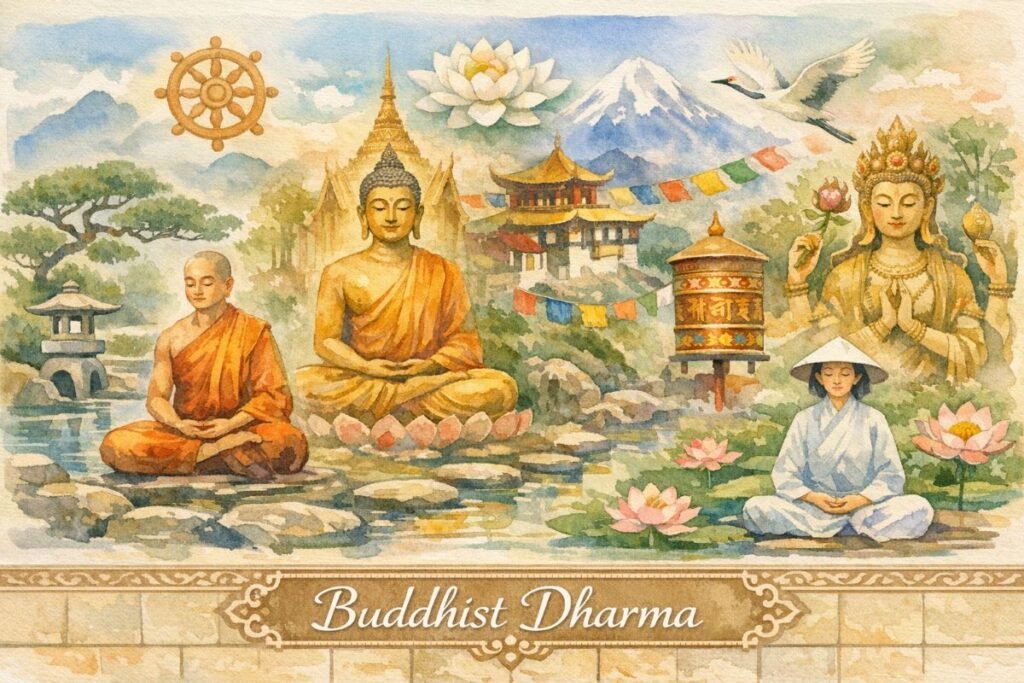
Note: This article draws primarily on the Pāli Canon (the earliest recorded teachings of the Buddha) as preserved in the Theravāda tradition. While the Dharma is expressed in many forms across Buddhist traditions, these contemplations focus on the foundational teachings common to all.
Introduction
The Dharma (Pali: Dhamma) stands as the second of the Three Jewels: the Buddha, the Dharma, and the Sangha, representing the living truth that the Awakened One discovered and taught for the liberation of all beings. More than a collection of doctrines or philosophical propositions, the Dharma is the natural law governing conditioned phenomena, the order that reveals how suffering arises and ceases, and the path that leads beings out of suffering and into the freedom of awakening. When the Buddha attained enlightenment beneath the Bodhi tree, he realized something so profound, so counter to ordinary perception, that he initially hesitated to teach, doubting whether any being could comprehend. Yet out of boundless compassion, he chose to “open the doors of the Deathless,” setting in motion the wheel of the Dharma that continues turning to this day.
The word Dhamma carries multiple layers of meaning that unfold through practice. It refers to the teachings of the Buddha, preserved for twenty-five centuries in the canonical texts. It denotes the truth that those teachings point toward: the way things actually are, independent of our desires or beliefs. And it encompasses the natural laws of causality, particularly the principle of dependent origination (paṭicca-samuppāda), which reveals how suffering arises through ignorance and craving and ceases through wisdom and release. As the Buddha declared in his first discourse, the Dhammacakkappavattana Sutta (SN 56.11), he had discovered a middle way between indulgence and self-mortification, a noble eightfold path that leads to the cessation of all suffering.
The Dharma is not merely a philosophy but a practical path to liberation, to be walked and realized through direct experience. The Buddha explicitly encouraged this investigative approach in the Kālāma Sutta (AN 3.65), instructing the Kālāmas not to accept teachings based on tradition, hearsay, or authority but to test them against their own experience and the criterion of whether they lead to wholesome states and liberation. This invitation to experiential verification remains one of the Dharma’s most distinctive features, it is a teaching that culminates not in belief but in knowing. The Buddha described the Dharma as akālika, “timeless” or “immediately effective,” meaning its benefits are realized in the present moment, not deferred to some distant future.
Contemplation of the Dharma itself constitutes a powerful practice, for the mind that turns repeatedly toward the nature of reality begins to loosen its grip on delusion. The Buddha spoke of the “five subjects for daily recollection” in the Upajjhatthana Sutta (AN 5.57): aging, illness, death, separation from all that is dear, and the principle that one is the heir of one’s actions. These contemplations, far from being morbid, awaken a healthy urgency (saṃvega) and direct the mind toward what truly matters. Similarly, sustained reflection on the Dharma itself: its qualities, its teachings, its practical applications — cultivates faith, confidence, and the inspiration to practice.
The following 108 contemplations invite deep engagement with the Dharma across its many dimensions: foundational teachings, ethical conduct, meditation practice, wisdom, and daily application. Each contemplation is accompanied by a canonical reference, grounding reflection in the Buddha’s own words. These 108 points are not merely to be read but to be returned to again and again, allowing their meaning to penetrate the heart. May they serve as companions on the path, reminders of the truth that the Buddha discovered and offered freely to all beings.
108 Profound Contemplations on the Dharma
I. The Nature of the Dharma: Foundations and Qualities
1. The Dharma Is Well-Expounded by the Buddha
The Buddha declared that the Dharma is svākkhāto, well-expounded, perfectly communicated without error or omission. Unlike worldly teachings that require constant revision, the Dharma remains complete and sufficient for liberation. In the Cūḷahatthipadopama Sutta (MN 27), the Buddha explains how his teaching leads progressively from initial faith to final realization, with each stage verified through direct experience. This quality reminds us that we need not add to or subtract from the Dharma—it is already complete.
2. The Dharma Is Visible Here and Now
The Buddha called the Dharma sanditṭhiko, visible in the present moment, not requiring future lives for verification. When we practice mindfulness, we can observe for ourselves how clinging leads to suffering and letting go leads to peace. The Sāmaññaphala Sutta (DN 2) describes the fruits of renunciation visible in this very life: joy, serenity, freedom from remorse. This contemplative truth invites us to test the Dharma in our own experience, becoming our own witnesses.
3. The Dharma Is Timeless and Immediately Effective
The quality akālika means the Dharma yields results without delay, in the same moment it is practiced. When anger arises, applying patience extinguishes it immediately; when mindfulness is established, confusion clears instantly. The Vīmaṃsaka Sutta (MN 47) instructs monastics to investigate the Buddha himself, confirming his qualities through direct experience. Similarly, we investigate the Dharma by practicing it and tasting its fruits in real-time.
4. The Dharma Invites Investigation
Ehipassiko—”come and see”, is the Buddha’s invitation to examine the teaching rather than accept it blindly. This open-handed approach stands as a hallmark of the Dharma. In the Kālāma Sutta (AN 3.65), the Buddha advises against ten unreliable sources of authority, urging instead that we know for ourselves what leads to wholesome and unwholesome states. This contemplative principle liberates the mind from dogmatic attachment.
5. The Dharma Leads Inward to Liberation
Opanayiko means the Dharma leads inward, toward the heart, toward the goal. Unlike worldly knowledge that points outward, the Dharma directs attention to the nature of mind and experience. The Mahāsatipaṭṭhāna Sutta (DN 22) outlines a practice that leads from external observances to the direct contemplation of phenomena, culminating in the realization of nibbāna. Each step of practice points inward, toward what is ultimately real.
6. The Dharma Is to Be Realized Personally by the Wise
The final quality of the Dharma, paccattaṃ veditabbo viññūhi, affirms that awakening is known individually by the wise. No one can realize it for another. The Soṇa Sutta (AN 6.55) illustrates this through Soṇa Koḷivisa, who learns through his own effort that the middle way between excessive energy and laxity brings results. This contemplation reminds us that while guidance is valuable, the final steps are walked alone.
7. The Dharma Is the Natural Order of Conditioned Reality
The Buddha spoke of dhammaniyāmatā, the fixed nature of things, the regularity of natural law governing conditioned phenomena. Whether Buddhas arise or not, the truths of suffering, its origin, cessation, and path remain true. In the Paccaya Sutta (SN 12.20), the Buddha explains that dependent origination is a natural principle, not created by him but discovered and taught. This contemplation reveals the Dharma as timeless truth, not mere opinion.
8. The Dharma Reveals the Middle Way

Between sensual indulgence and self-mortification lies the path the Buddha discovered. In his first discourse, the Dhammacakkappavattana Sutta (SN 56.11), he identifies the middle way as the Noble Eightfold Path, which avoids both extremes. This contemplative principle applies to all aspects of practice—balance in effort, balance in lifestyle, balance in view. The middle way is not compromise but skillful equilibrium.
9. The Dharma Is Like a Raft for Crossing Over

The famous raft simile in the Alagaddūpama Sutta (MN 22) teaches that the Dharma itself is a tool to be used and ultimately relinquished. Just as a raft built for crossing a river is abandoned upon reaching the far shore, so too the Dharma is for crossing, not for clinging. This contemplation prevents attachment to the teaching itself and reminds us of its pragmatic purpose: liberation.
10. The Dharma Is Both Teaching and Truth
The word dhamma encompasses both the Buddha’s words and the reality they point toward. In the Mahāparinibbāna Sutta (DN 16), the Buddha instructs his disciples to take the Dharma as their refuge after his passing. This contemplation distinguishes between the finger pointing at the moon and the moon itself, encouraging us to use teachings as means to realization rather than ends in themselves.
11. The Dharma Is Free from Secrecy
Unlike esoteric traditions that reserve teachings for initiates, the Buddha taught with an open hand. In the Mahāparinibbāna Sutta (DN 16), he declares that he has no “teacher’s fist” holding back hidden doctrines. This contemplation inspires gratitude for the open availability of the Dharma and commitment to sharing it freely without possessiveness or exclusivity.
12. The Dharma Teaches Non-Attachment to Views

Even attachment to right views can become a fetter if clung to rigidly. In the Madhupiṇḍika Sutta (MN 18), the Buddha explains how conceptual proliferation (papañca) arises from perception and leads to conflict. This contemplation invites a light, open relationship with teachings, holding them as guides rather than identities, using them to uproot clinging rather than to reinforce a sense of self.
13. The Dharma Is a Medicine for Suffering

The Buddha is often compared to a physician, the Dharma to medicine, and the Sangha to nurses. In the Gilāna Sutta (SN 46.16), the Buddha teaches the seven factors of awakening to a sick monk. This contemplation regards the Dharma as precisely what is needed for the illness of suffering, neither more nor less. We apply the appropriate teaching to the specific affliction.
14. The Dharma Is Like the Ocean with a Single Taste
Just as the ocean has but one taste, the taste of salt, the Dharma has but one taste: the taste of liberation. In the Pahārāda Sutta (AN 8.19), the Buddha draws this parallel, emphasizing that all true Dharma, whether profound or accessible, leads ultimately to the same goal. This contemplation unifies the many teachings into a single purpose: the end of suffering.
15. The Dharma Is Not Merely a Philosophy but a Path to End Suffering
Philosophical speculation without practical application was discouraged by the Buddha. In the Cūḷamāluṅkya Sutta (MN 63), he refuses to answer metaphysical questions, comparing them to a man wounded by an arrow who demands to know the archer’s identity before accepting treatment. This contemplation redirects energy from intellectual entertainment toward the urgent work of liberation.
16. The Dharma Is Accessible to All Who Approach It
The Buddha taught that his path is open to all, regardless of caste, gender, or background. In the Mahāvagga (Vinaya Mahāvagga 1.5), he accepts all who come to him, declaring the Dharma like water that purifies all who enter it. This contemplation celebrates the universal accessibility of the Dharma and encourages us to remove any barriers that might prevent others from approaching it.
17. The Dharma Awakens Confidence Through Practice
Faith in the Dharma is not demanded but arises naturally through practice. In the Sāmaññaphala Sutta (DN 2), King Ajātasattu, though he had killed his father, still experiences the fruits of the contemplative life and gains confidence in the Buddha. This contemplation reminds us that sincere practice, not perfect history, is the basis for faith. The Dharma transforms whoever engages with it honestly.
18. The Dharma Is Both Transcendent and Immanent
The Dharma points to nibbāna, the unconditioned beyond all fabrication, yet is realized within conditioned experience. In the Udāna (Ud 8.1), the Buddha speaks of the unborn, unbecome, unmade, unfabricated, the transcendent dimension. Yet this is not separate from the world; it is realized through seeing the fabricated as fabricated. This contemplation holds both immanence and transcendence without contradiction.
19. The Dharma Is Sustained by Practice, Not Belief
The Buddha’s final words in the Mahāparinibbāna Sutta (DN 16) are “All conditioned things decay, strive diligently with mindfulness.” He does not say “believe correctly” but “strive diligently.” This contemplation emphasizes that the Dharma lives through practice, not through intellectual assent. It is kept alive by those who walk the path, not those who merely profess it.
20. The Dharma Is the True Refuge
When the Buddha was about to pass away, he instructed his followers to take the Dharma as their island and refuge. In the Mahāparinibbāna Sutta (DN 16), he declares that those who take the Dharma as their refuge will be among the highest of disciples. This contemplation invites us to orient our entire lives around the Dharma, making it our home, our guide, our ultimate security.
II. Ethical Conduct as the Foundation of Dharma
21. Ethical Conduct Is the Foundation of All Spiritual Progress
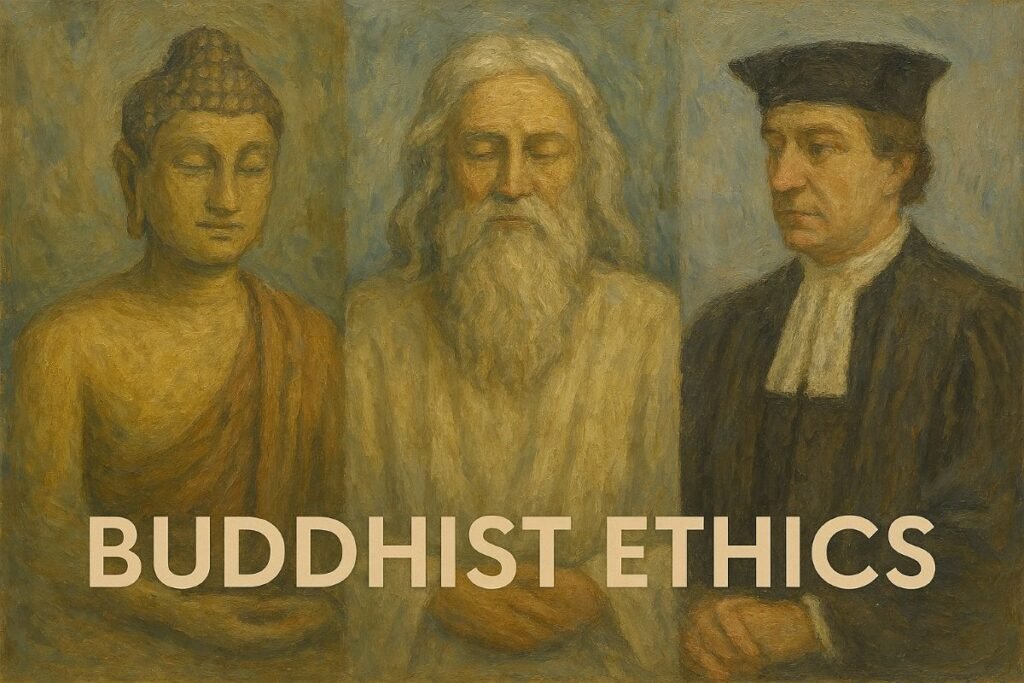
The Buddha taught that just as a house requires a foundation, the spiritual path requires ethical conduct (sīla). In the Sīlānisaṃsa Sutta (AN 8.39), he enumerates the benefits of ethical conduct, including freedom from remorse, which supports meditation. This contemplation establishes ethical conduct not as mere rule following but as the essential ground from which all higher development grows.
22. The Five Precepts Are Training Principles, Not Commandments
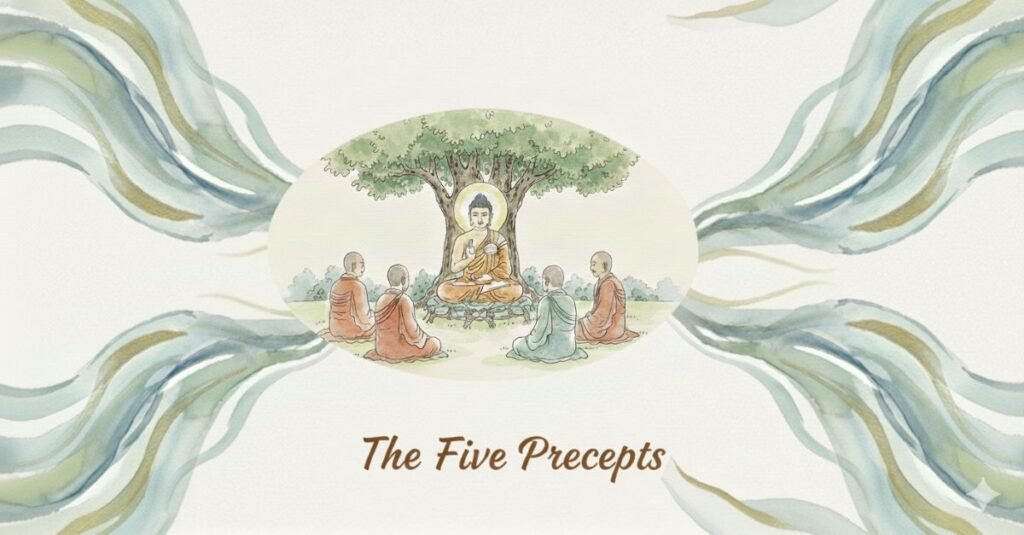
The pañcasīla are undertaken as training rules (sikkhāpada), not divine commandments. In the Sīlānisaṃsa Sutta (AN 8.39), the Buddha explains the benefits of undertaking these precepts. This contemplation reframes precepts as tools for mindfulness and self-reflection, not rigid impositions. Each of the five precepts offers an opportunity to observe the mind’s relationship to harmful impulses.
23. Refraining from Killing Cultivates Compassion
The first precept, pāṇātipātā veramaṇī, invites us to honor all sentient life. In the Mettā Sutta (SN 46.54), the Buddha teaches that loving-kindness, compassion, sympathetic joy, and equanimity lead to concentration. This contemplation extends beyond physical killing to include the “killing” of others’ dignity through harsh words, the “killing” of opportunities through negligence, and the subtle violence of ill will.
24. Refraining from Stealing Supports Contentment
The second precept, adinnādānā veramaṇī, teaches respect for what is not freely given. In the Sigalovāda Sutta (DN 31), the Buddha instructs laypeople to avoid taking what is not given. This contemplation invites reflection on subtle forms of taking: time, attention, credit, and the contentment that arises when we honor boundaries.
25. Refraining from Sexual Misconduct Honors Relationships
The third precept, kāmesumicchācārā veramaṇī, protects the integrity of relationships. In the Sigalovāda Sutta (DN 31), the Buddha gives detailed guidance on how laypeople honor their partners. This contemplation extends to all dimensions of sexual conduct: the power dynamics, the intentions, the commitments. Ethical sexuality is not repression but the expression of respect for oneself and others.
26. Refraining from False Speech Cultivates Truthfulness
The fourth precept, musāvādā veramaṇī, invites alignment between inner truth and outer expression. In the Ambalatthikārāhulovāda Sutta (MN 61), the Buddha instructs his young son Rāhula on the importance of truthfulness, using the simile of a royal elephant’s trunk curling and uncurling in honesty. This contemplation reveals that truthfulness is not merely about factual accuracy but about integrity of being.
27. Refraining from Intoxicants Protects Mindfulness
The fifth precept, surāmerayamajjapamādaṭṭhānā veramaṇī, guards the mind against heedlessness (pamāda). In the Pamāda Sutta (AN 10.86), the Buddha describes heedlessness as the cause of all unwholesome states. This contemplation recognizes that intoxicants are not merely substances but any activity that clouds awareness, excessive consumption, addictive behaviors, anything that leads to loss of mindfulness.
28. Generosity Opens the Heart and Releases Clinging
The practice of generosity (dāna) is the first step on the path and a perfection in itself. In the Dānānisaṃsa Sutta (AN 8.31), the Buddha enumerates the blessings of generosity: it is loved by many, attained by the good, and leads to favorable rebirth. This contemplation invites us to give freely, without calculation, noticing how the act of giving loosens the grip of possessiveness.
29. Patience Is the Highest Practice

The Buddha declared that patience (khanti) is the supreme austerity. In the Kakacūpama Sutta (MN 21), he teaches that even when attacked with saws, the mind should remain free from ill will. This contemplation recognizes patience not as passive endurance but as active non-reactivity, the capacity to remain open and kind in the face of difficulty.
30. Harmlessness Extends to All Beings Without Exception
The principle of non-harming (avihiṃsā) is central to the Dharma. In the Mettā Sutta (Snp 1.8), the Buddha teaches radiating loving-kindness to all beings without distinction. This contemplation challenges us to extend harmlessness to those we consider enemies, to those who have harmed us, to all beings regardless of their behavior. Harmlessness is unconditional.
31. Right Livelihood Supports the Entire Path

The Buddha gave specific guidance on right livelihood in the Vaṇijjā Sutta (AN 5.177), enumerating five trades that should be avoided: trading in weapons, living beings, meat, intoxicants, and poison. This contemplation invites reflection on how we sustain ourselves materially: does our work involve harm? Does it support wholesome states? Does it allow time for practice? Right livelihood is not merely a rule but a way of aligning life with values.
32. Ethical Conduct Naturally Leads to Freedom from Remorse
One of the immediate benefits of ethical conduct is freedom from remorse (avippaṭisāra), which in turn supports joy and concentration. In the Sīlānisaṃsa Sutta (AN 10.1), the Buddha traces how ethical conduct leads sequentially to freedom from remorse, joy, rapture, tranquility, happiness, concentration, knowledge and vision of things as they are, disenchantment, dispassion, and knowledge and vision of liberation. This contemplation reveals ethics as the beginning of a chain leading to awakening.
33. Precepts Support Mindfulness by Reducing Regret
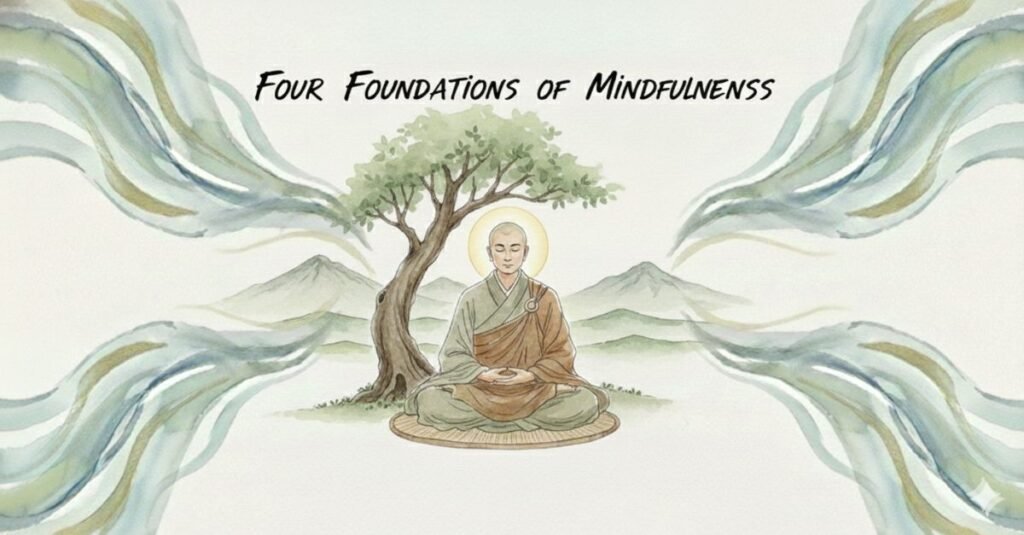
When we refrain from harmful actions, we reduce the mental noise of regret and guilt. In the Ānāpānasati Sutta (MN 118), the Buddha teaches that mindfulness of breathing brings the four foundations of mindfulness to perfection. This contemplation recognizes that ethical conduct clears the ground for mindfulness by removing the distractions of remorse.
34. Ethical Conduct Is Both Self-Respect and Respect for Others
The Buddha described shame (hiri) and fear of wrongdoing (ottappa) as the guardians of the world. In the Hiri Sutta (AN 2.9), he explains that these two bright qualities protect beings from falling into harm. This contemplation invites us to hold ethical conduct as an expression of self-respect, we act ethically because we value ourselves, and as respect for the dignity of all beings.
35. The Precepts Transform Intention into Embodied Wisdom
Each precept is ultimately about intention (cetanā). In the Cetanā Sutta (SN 12.38), the Buddha teaches that intention conditions action, and action conditions rebirth. This contemplation reveals that ethical training refines intention itself, so that wholesome action flows naturally from a purified mind, no longer requiring effortful restraint.
36. Ethical Conduct Creates Conditions for Awakening
Without the foundation of ethical conduct, deeper states of concentration and insight are unstable. In the Sīla Sutta (AN 11.1), Ānanda asks whether ethical conduct is the purpose and benefit of wholesome states. The Buddha responds that it is the foundation, with freedom from remorse as its benefit, and so on up to liberation. This contemplation recognizes that ethics is not an add-on to the path but its very ground.
37. Ethical Conduct Is a Form of Generosity
By refraining from harm, we give safety to others. In the Mettā Sutta (Snp 1.8), the Buddha teaches that just as a mother protects her only child, we should protect all beings. This contemplation reframes ethics as a gift: the gift of safety, the gift of trust, the gift of peace. Each ethical action is an act of generosity toward the world.
38. Ethics Supports Meditation by Stabilizing the Mind
A mind burdened by guilt or haunted by harmful actions cannot settle into concentration. In the Cūḷavedalla Sutta (MN 44), Dhammadinnā explains how ethical conduct leads to freedom from remorse, which leads to joy, and so forth. This contemplation invites us to see ethical conduct as a kindness we do for our own meditation practice, clearing the field before planting seeds of concentration.
39. The Precepts Cultivate the Sense of Enough
The fifth precept against intoxicants, and the broader ethical framework, cultivates contentment (santuṭṭhi). In the Santuṭṭhi Sutta (AN 4.27), the Buddha praises contentment with whatever one has. This contemplation recognizes that ethical restraint is not deprivation but liberation from the endless pursuit of sense pleasures. We discover that enough is enough.
40. Ethical Conduct Is the Expression of Wisdom
Ultimately, ethical conduct is not separate from wisdom but its expression. In the Magga Sutta (SN 45.8), right speech, right action, and right livelihood are listed as factors of the Noble Eightfold Path, inseparable from right view and right intention. This contemplation reveals that when we truly see the nature of suffering, harmlessness is not a rule but a natural response. Wisdom and ethics flow together.
III. Mental Cultivation and the Heart of Practice
41. Mindfulness Is the Heart of the Buddha’s Teaching

The Buddha called mindfulness (sati) the direct path to purification. In the Mahāsatipaṭṭhāna Sutta (DN 22), he declares that this is the one way for the purification of beings, for the overcoming of sorrow and lamentation, for the destruction of suffering and grief, for attaining the noble path, for realizing nibbāna. This contemplation establishes mindfulness not as one technique among many but as the comprehensive framework for awakening.
42. Mindfulness of the Body Grounds Us in Direct Experience
The first foundation of mindfulness is contemplation of the body. In the Ānāpānasati Sutta (MN 118), mindfulness of breathing is taught as a complete practice leading to the perfection of all four foundations. This contemplation invites us to return again and again to bodily experience, the breath, posture, activities, as the anchor that prevents the mind from drifting into conceptual proliferation.
43. Mindfulness of Feelings Reveals the Root of Clinging
The second foundation is contemplation of feelings (vedanā). In the Vedanā Sutta (SN 36.11), the Buddha explains how feelings condition craving and how mindfulness of feelings can break this chain. This contemplation invites us to observe the subtle tones of pleasant, unpleasant, and neutral that color all experience, noticing how we habitually react with grasping or aversion.
44. Mindfulness of Mind Discloses Conditioned States
The third foundation is contemplation of mind (citta). In the Citta Sutta (SN 41.7), the householder Citta demonstrates remarkable insight into the nature of mind. This contemplation invites us to observe the mind’s states directly: greed or its absence, anger or its absence, delusion or clarity, without getting lost in the content. We learn to recognize mind states as mind states, not as self.
45. Mindfulness of Dhammas Reveals the Architecture of Experience
The fourth foundation is contemplation of dhammas: phenomena, mental objects, or the categories of teaching. In the Satipaṭṭhāna Sutta (MN 10), this includes the five hindrances, the five aggregates, the six sense bases, the seven awakening factors, and the Four Noble Truths. This contemplation invites systematic investigation of how experience is structured, revealing the patterns that bind us and the patterns that liberate.
46. Concentration Unifies the Mind for Insight
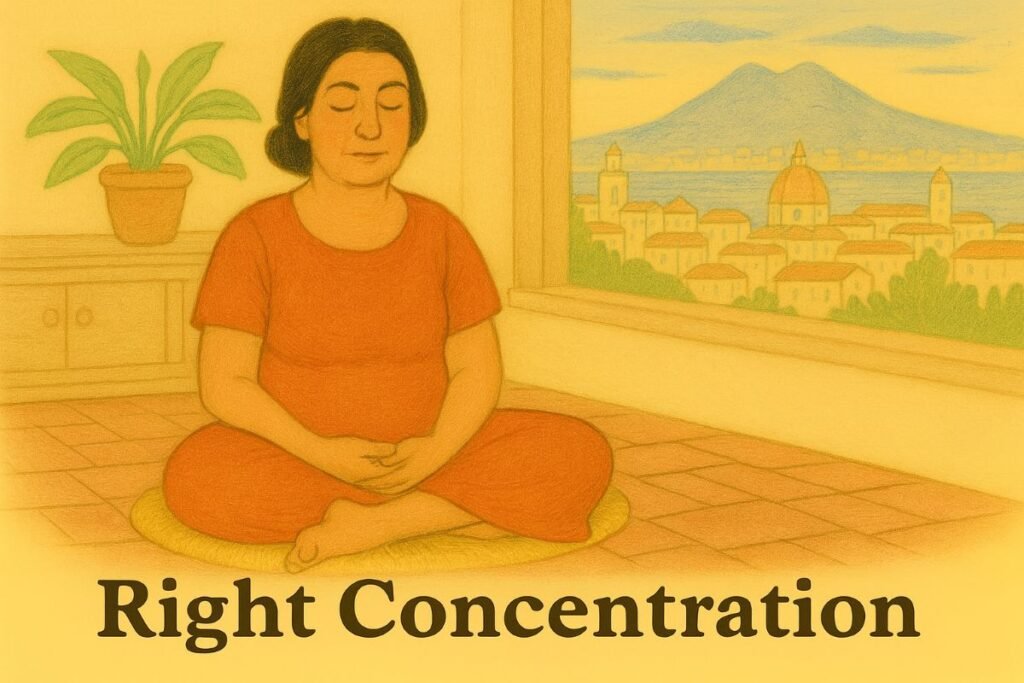
Right concentration (sammā samādhi) is defined as the four jhānas in the Mahāsatipaṭṭhāna Sutta (DN 22). This contemplation recognizes that a scattered mind cannot see deeply. Concentration is not an end in itself but the tool that stabilizes the mind, providing the focused attention necessary for insight to penetrate the nature of phenomena.
47. The Jhānas Are States of Deep Meditative Absorption
The Buddha taught the four jhānas as progressively refined states of concentration. In the Sāmaññaphala Sutta (DN 2), he describes each jhāna with vivid similes, a bathman kneading soap powder with water, a lake fed by cool springs. This contemplation invites us to understand these states as natural developments of sustained attention, not mystical achievements reserved for the few.
48. Meditation Develops Both Calm and Insight

The Buddha taught two complementary aspects of meditation: calm (samatha) and insight (vipassanā). In the Girimānanda Sutta (AN 10.60), Ānanda gives ten contemplations that include both calming and investigative practices. This contemplation recognizes that calm provides the stable platform for investigation, and insight reveals what must be seen. Neither is complete without the other.
49. The Hindrances Are the Primary Obstacles to Meditation

The five hindrances: sensual desire, ill will, sloth and torpor, restlessness and worry, and doubt — are the mind’s barriers to concentration. In the Nīvaraṇa Sutta (SN 46.38), the Buddha explains how the hindrances block the awakening factors. This contemplation invites us to study the hindrances intimately, learning their conditions and their antidotes, so we can work skillfully with whatever arises.
50. Sensual Desire Distracts the Mind with Grasping
The first hindrance, kāmacchanda, is the mind’s reaching toward pleasant sense objects. In the Mahādukkhakkhandha Sutta (MN 39), the Buddha explains how sensual desire leads to suffering. This contemplation reveals that sensual desire is not about objects but about the mind’s relationship to them. We learn to see desire as a mental phenomenon, not a command that must be obeyed.
51. Ill Will Burns the Mind and Others
The second hindrance, vyāpāda, includes anger, resentment, and aversion. In the Āghātapaṭivinaya Sutta (AN 5.161), the Buddha gives five methods for removing resentment. This contemplation invites us to study anger without acting from it, noticing how it arises from perceived threats to the self and how it dissolves when the self is seen as empty.
52. Sloth and Torpor Cloud the Mind with Dullness
The third hindrance, thīnamiddha, is the mind’s tendency toward lethargy and heaviness. In the Āhāra Sutta (SN 46.51), the Buddha teaches how to balance the awakening factors to overcome sloth and torpor by wise attention to the conditions that nourish energy. This contemplation recognizes that sometimes what is needed is not more effort but a different kind of effort, opening the energy channels through walking meditation, reflection, or changing posture.
53. Restlessness and Worry Agitate the Mind
The fourth hindrance, uddhaccakukkucca, is the mind’s inability to settle, darting from past regrets to future concerns. In the Bāhiya Sutta (Ud 1.10), the Buddha instructs Bāhiya to let go of past and future, to see only the seen in the seen. This contemplation invites us to anchor in the present moment, noticing that restlessness is always about what is not here now.
54. Doubt Paralyzes the Mind with Uncertainty
The fifth hindrance, vicikicchā, is the mind’s inability to commit to practice. In the Vicikicchā Sutta (SN 46.3), the Buddha explains how doubt is overcome by wise attention. This contemplation recognizes that doubt often masks deeper fears: of failure, of change, of letting go. We learn to investigate doubt itself rather than its content.
55. The Awakening Factors Lead Directly to Liberation
The seven factors of awakening: mindfulness, investigation, energy, rapture, tranquility, concentration, and equanimity, are the qualities that, when cultivated, lead to enlightenment. In the Gilāna Sutta (SN 46.16), the Buddha recovers from illness when these factors are taught. This contemplation invites us to cultivate these qualities deliberately, knowing they are not separate from the path but the path itself in action.
56. Mindfulness Is the First Awakening Factor
Sati-sambojjhaṅga is the factor that remembers the Dharma and keeps the mind steady. In the Satipaṭṭhāna Sutta (MN 10), mindfulness is established in four ways. This contemplation recognizes that mindfulness is the foundation for all other factors, without it, investigation scatters, energy becomes agitation, and equanimity becomes indifference.
57. Investigation of Dhammas Penetrates Reality
Dhamma-vicaya-sambojjhaṅga is the factor of discerning phenomena. In the Vicaya Sutta (SN 46.2), the Buddha explains how investigation arises from wise attention to wholesome and unwholesome states. This contemplation invites us to inquire into experience with curiosity: What is this? How does it arise? How does it cease?
58. Energy Provides the Sustained Effort for Practice
Viriya-sambojjhaṅga is the factor of joyful effort. In the Padhāna Sutta (AN 4.13), the Buddha defines right effort as the four great endeavors: preventing unarisen unwholesome states, abandoning arisen unwholesome states, arousing unarisen wholesome states, and maintaining arisen wholesome states. This contemplation invites energy that is balanced, neither too tight nor too loose.
59. Rapture Is the Joy That Arises from Letting Go
Pīti-sambojjhaṅga is the factor of zest, happiness, and delight. In the Sāmaññaphala Sutta (DN 2), the Buddha describes rapture arising from seclusion, pervading the whole body. This contemplation recognizes that true rapture is not dependent on sense pleasures but arises naturally when the mind is free from hindrances, a joy born of release.
60. Tranquility Calms Both Body and Mind
Passaddhi-sambojjhaṅga is the factor of serenity. In the Kāyagatāsati Sutta (MN 119), the Buddha describes how mindfulness of the body leads to tranquility. This contemplation invites us to cultivate both bodily and mental calm, recognizing that agitation blocks deep insight. Tranquility is not passivity but the stillness that allows clear seeing.
61. Concentration Unifies All the Factors
Samādhi-sambojjhaṅga is the factor of collectedness. In the Mahāparinibbāna Sutta (DN 16), the Buddha emphasizes that one who is concentrated knows and sees things as they are. This contemplation recognizes that concentration gathers all the other factors into a unified whole, providing the focused mind necessary for the final breakthrough.
62. Equanimity Balances All Conditions

Upekkhā-sambojjhaṅga is the factor of equipoise. In the Ānāpānasati Sutta (MN 118), the Buddha teaches that equanimity arises when the mind is neither overly excited nor overly restrained. This contemplation invites us to cultivate the even mind that does not grasp at pleasure or push away pain, the mind that is free from both attraction and aversion.
63. Meditation Is a Gradual Purification, Not Instant Transformation
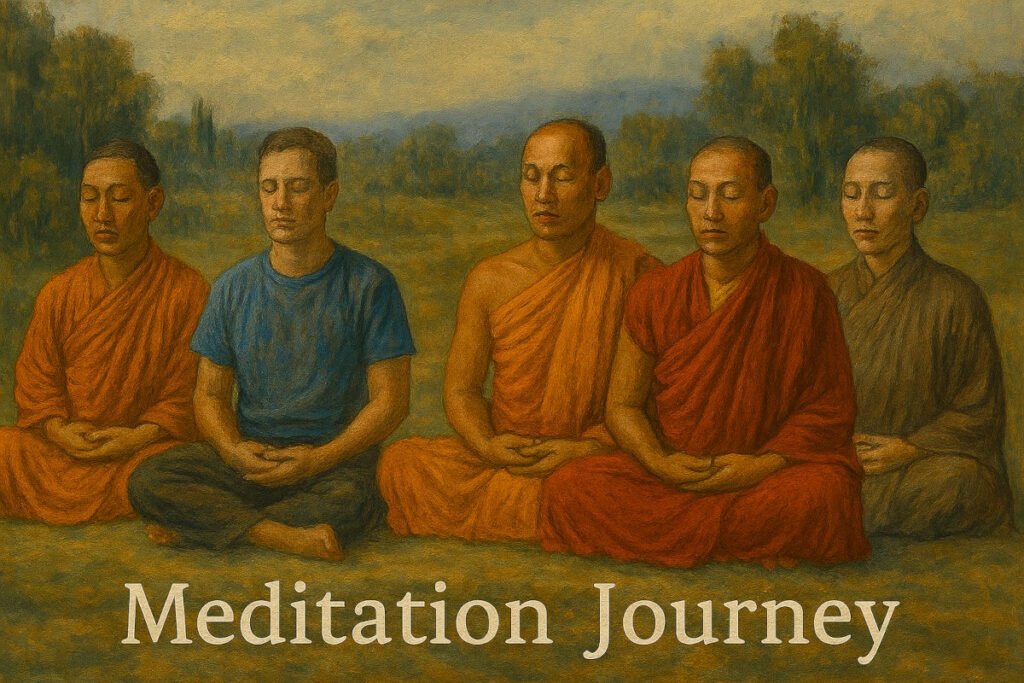
The Buddha taught that progress comes through gradual training. In the Ariyapariyesanā Sutta (MN 26), he describes his own gradual path to awakening. This contemplation protects us from expecting instant results. Meditation is like learning to play an instrument, skill develops through patient, consistent practice over time.
64. The Breath Is an Ever-Present Anchor for Mindfulness
Mindfulness of breathing (ānāpānasati) was the Buddha’s own practice and his primary instruction. In the Ānāpānasati Sutta (MN 118), he teaches sixteen steps that integrate all four foundations of mindfulness. This contemplation celebrates the breath as a perfect meditation object, always available, always present, revealing the nature of conditioned phenomena as it arises and passes.
65. Meditation Is Not Escapism but Engagement with Reality
Some misunderstand meditation as escaping life. In the Vipallāsa Sutta (AN 4.49), the Buddha explains how distorted perceptions create suffering. This contemplation reframes meditation as the ultimate engagement, not fleeing from life but meeting it without the filters of greed, hatred, and delusion. The meditator learns to face reality directly.
66. Walking Meditation Cultivates Mindfulness in Motion
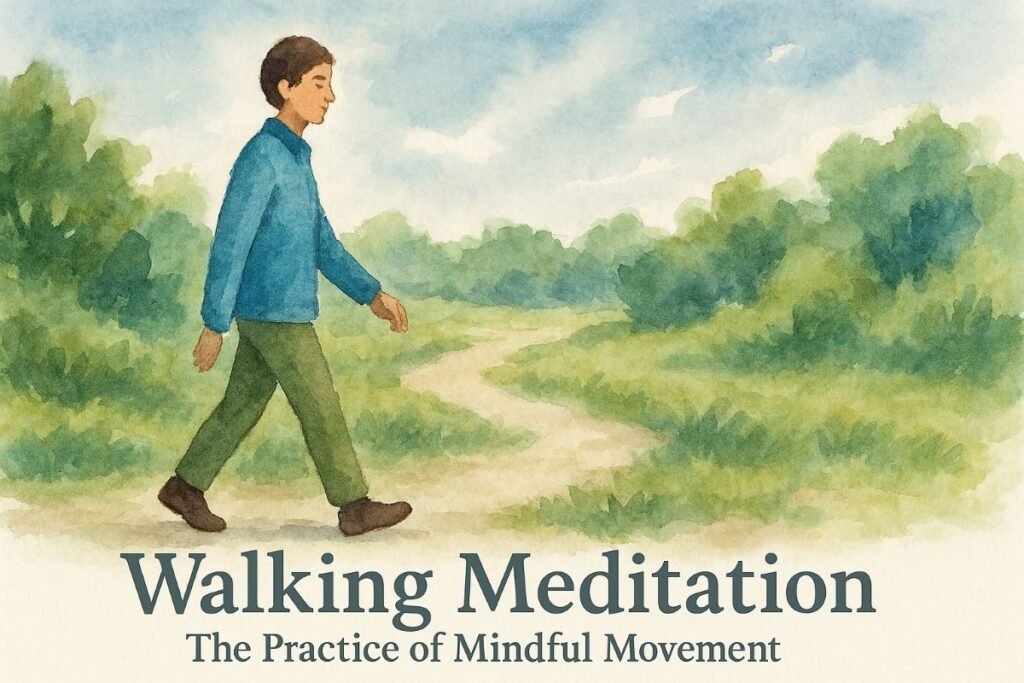
The Buddha taught walking meditation as a complement to sitting. In the Mahāsatipaṭṭhāna Sutta (DN 22), mindfulness of walking is included in the section on postures. This contemplation invites us to extend mindfulness beyond formal sitting, recognizing that every activity: walking, eating, standing, lying down—is an opportunity for awakening.
67. Loving-Kindness Meditation Opens the Heart

The Buddha taught the practice of mettā—loving-kindness, as a powerful antidote to ill will. In the Mettā Sutta (Snp 1.8), he instructs to radiate kindness to all beings without exception. This contemplation invites us to cultivate a heart that is boundless, discovering that loving-kindness is not sentimentality but a radical openness to all that lives.
68. Compassion Arises from Seeing Suffering Clearly

Karuṇā—compassion, is the heart’s response to suffering. In the Mettā Sutta (SN 46.54), the Buddha explains how loving-kindness, along with compassion, sympathetic joy, and equanimity, leads to liberation. This contemplation recognizes that compassion is not pity but the natural response when we truly see that all beings wish to be free from suffering.
69. Sympathetic Joy Celebrates the Good Fortune of Others

Muditā—appreciative joy, counteracts envy and resentment. In the Puññābhisanda Sutta (AN 4.125), the Buddha describes how those who cultivate the divine abodes are reborn in radiant realms. This contemplation invites us to genuinely rejoice in others’ happiness, recognizing that their good fortune does not diminish our own.
70. Equanimity Balances All the Divine Abodes
Upekkhā—equanimity, is the even-mindedness that underlies all the divine abodes. In the Upekkhā Sutta (SN 36.31), the Buddha distinguishes worldly equanimity from the equanimity of awakening. This contemplation recognizes that true equanimity is not indifference but the balance that allows us to act skillfully without being overwhelmed by the suffering of the world.
IV. Wisdom and the Nature of Reality
71. Wisdom Is Seeing Things as They Truly Are
Paññā—wisdom, is not intellectual knowledge but direct insight into the nature of reality. In the Sammādiṭṭhi Sutta (MN 9), Sāriputta defines right view as understanding the Four Noble Truths. This contemplation invites us to distinguish between knowing about the Dharma and knowing the Dharma directly, recognizing that true wisdom transforms, while intellectual knowledge alone does not.
72. Impermanence Is the First Mark of Existence

Anicca—impermanence, is the recognition that all conditioned phenomena arise and pass away. In the Aniccalakkhaṇa Sutta (SN 22.12), the Buddha declares that whatever is impermanent is suffering, and whatever is suffering is not-self. This contemplation invites us to observe impermanence in the breath, in sensations, in thoughts, in all that arises, learning not to cling to what is already passing.
73. Suffering Is the Second Mark of Existence

Dukkha—suffering or unsatisfactoriness, is the inherent instability of conditioned existence. In the Dukkhalakkhaṇa Sutta (SN 22.13), the Buddha teaches that all aggregates are suffering. This contemplation invites us to see that even pleasant experiences are marked by dukkha because they are impermanent, because they require conditions to maintain, because they are not fully within our control.
74. Not-Self Is the Third Mark of Existence
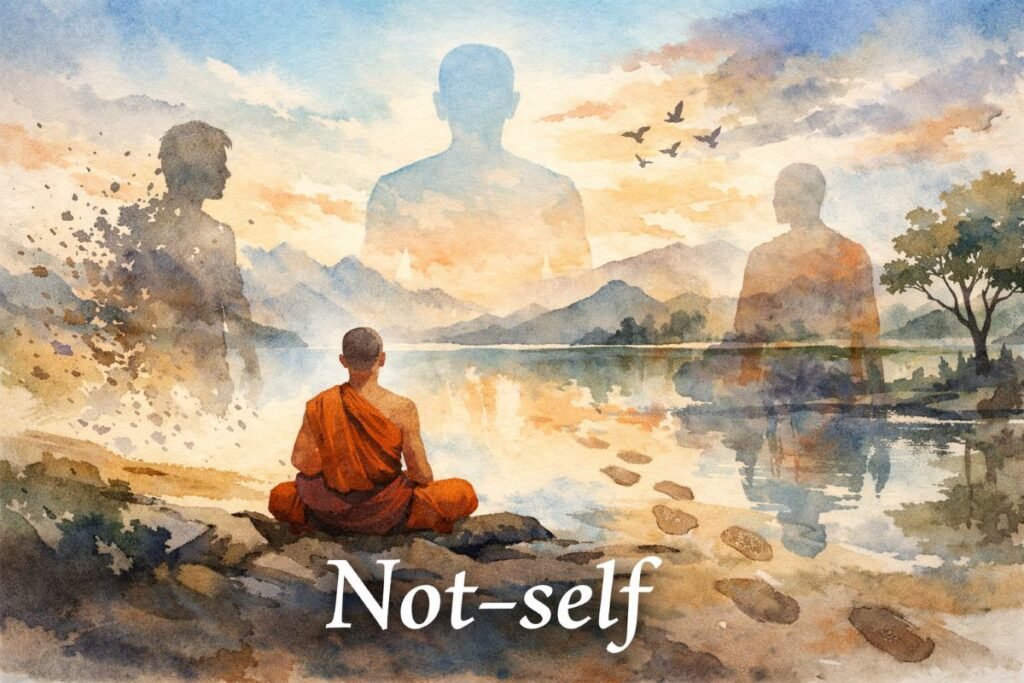
Anattā—not-self, is the recognition that there is no permanent, independent self to be found in any phenomenon. In the Anattalakkhaṇa Sutta (SN 22.59), the Buddha’s second discourse, he demonstrates that each aggregate is not-self and that seeing this leads to liberation. This contemplation invites us to investigate the sense of self, noticing that what we call “I” is a constantly changing process, not a fixed entity.
75. The Five Aggregates Are All That We Cling to as Self
The khandhas—form, feeling, perception, formations, consciousness—are the components of experience. In the Nakulapitā Sutta (SN 22.1), the Buddha teaches Nakulapitā about the aggregates in terms of clinging. This contemplation invites us to examine each aggregate, seeing that what we take to be self is actually a collection of impersonal processes, each arising and passing according to conditions.
76. Form Is the Physical Dimension of Experience
Rūpa—form, includes the body and all material phenomena. In the Mahāhatthipadopama Sutta (MN 28), Sāriputta teaches that the Four Great Elements and form derived from them constitute the aggregate of form. This contemplation invites us to investigate the body not as “me” or “mine” but as an ever-changing configuration of elements, subject to birth, aging, and dissolution.
77. Feeling Is the Affective Tone of Experience
Vedanā—feeling, is the pleasant, unpleasant, or neutral quality of experience. In the Vedanā Sutta (SN 36.1), the Buddha identifies three types of feeling and their conditions. This contemplation invites us to observe feeling as feeling, noticing how it arises from contact and how it conditions craving, without being caught in the content of what is being felt.
78. Perception Labels and Recognizes Experience
Saññā—perception, is the mental factor that recognizes and labels phenomena. In the Khajjanīya Sutta (SN 22.79), the Buddha explains how perception operates, distinguishing between different types of recognition. This contemplation invites us to observe the mind’s tendency to label everything, noticing how perception creates the world of conventional reality and how it can be a source of distortion.
79. Formations Are the Volitional Activities of Mind
Saṅkhāra—formations, include all volitional mental activities, from intentions to habits to constructions of self. In the Khajjanīya Sutta (SN 22.79), the Buddha explains that formations are called saṅkhāra because they construct conditioned phenomena. This contemplation invites us to investigate the layer of mind that intends, plans, and fabricates, seeing that even our sense of agency is a conditioned phenomenon.
80. Consciousness Is the Basic Knowing of Experience
Viññāṇa—consciousness, is the fundamental awareness that cognizes objects through the six sense doors. In the Mahānidāna Sutta (DN 15), the Buddha gives a detailed exposition of consciousness and its conditions. This contemplation invites us to observe consciousness as it arises dependent on sense bases and objects, seeing that there is no “knower” behind the knowing—only knowing itself, conditioned and impermanent.
81. Dependent Origination Reveals the Chain of Causality

Paṭicca-samuppāda—dependent origination, is the Buddha’s profound teaching on how suffering arises and ceases through causal links. In the Paccaya Sutta (SN 12.20), he explains the twelve factors. This contemplation invites us to see that nothing arises in isolation, that all phenomena are conditioned, and that understanding conditionality is key to liberation.
82. Ignorance Is the Root of the Entire Chain
Avijjā—ignorance, is not mere lack of information but fundamental misunderstanding of reality. In the Avijjā Sutta (SN 45.1), the Buddha declares that ignorance leads the way to unwholesome states. This contemplation invites us to investigate the ways we misperceive, taking impermanent as permanent, suffering as happiness, not-self as self, and to see how this misperception fuels the entire cycle of suffering.
83. Craving Is the Immediate Cause of Suffering
Taṇhā—craving, is the thirst that leads to renewed existence. In the Dhammacakkappavattana Sutta (SN 56.11), craving is identified as the origin of suffering. This contemplation invites us to observe craving in its three forms: craving for sense pleasures, craving for existence, craving for non-existence. We learn to recognize craving not as something to suppress but as something to understand and release.
84. Clinging Intensifies Craving into Identity
Upādāna—clinging, is the intensified grasping that constructs a sense of self around objects of craving. In the Mahānidāna Sutta (DN 15), the Buddha traces how clinging conditions becoming. This contemplation invites us to see how we grasp at views, at rituals, at self-identity, at sense pleasures, turning transient phenomena into the basis for a self.
85. Becoming Is the Formation of Identity

Bhava—becoming, is the formation of a sense of self and the momentum that leads to rebirth. In the Bhava Sutta (AN 3.76), the Buddha explains how kamma and intention condition becoming in the three realms. This contemplation invites us to see how we construct a sense of self moment by moment through our choices, our identifications, our patterns of behavior.
86. Birth Is the Arising of the Aggregates
Jāti—birth, is the arising of the aggregates and the establishment of sense bases. In the Saccavibhaṅga Sutta (MN 141), the Buddha defines birth as part of the first noble truth. This contemplation invites us to see that each moment of identification is a “birth” of a new self, and each moment of release is a “death” of that self, revealing the cycle operating in every instant.
87. Cessation Is the End of the Entire Process
Nirodha—cessation, is the third noble truth, the complete ending of suffering. In the Nirodha Sutta (SN 12.28), the Buddha teaches that with the cessation of ignorance comes the cessation of the entire chain. This contemplation invites us to glimpse what it means for suffering to end, recognizing that nibbāna is not annihilation but the cessation of the process that creates suffering.
88. Nibbāna Is the Unconditioned Beyond All Fabrication
Nibbāna—liberation, is the ultimate goal, the unconditioned element that is not subject to arising or passing away. In the Udāna (Ud 8.3), the Buddha speaks of the unborn, unbecome, unmade, unfabricated. This contemplation invites us to hold nibbāna not as a concept but as a possibility, recognizing that it is not a place to go but the extinguishing of the fires that create suffering.
89. The Four Noble Truths Are the Framework for All Teachings
The four truths: suffering, its origin, its cessation, and the path, are the foundation of the entire Dharma. In the Mahāsatipaṭṭhāna Sutta (DN 22), the Buddha returns to the four truths repeatedly. This contemplation invites us to use these truths as the lens for all experience, asking: Is there suffering? What is its cause? Can it cease? What is the path?
90. Right View Is Understanding the Four Truths

Sammādiṭṭhi—right view, is the first factor of the Noble Eightfold Path. In the Sammādiṭṭhi Sutta (MN 9), Sāriputta elaborates the many dimensions of right view. This contemplation invites us to cultivate a view that understands suffering, its cause, its cessation, and the path—not as abstract doctrine but as the direct perception of how experience operates.
91. Right Intention Aligns the Heart with Liberation

Sammāsaṅkappa—right intention, is the intention of renunciation, non-ill will, and harmlessness. In the Mahācattārīsaka Sutta (MN 117), the Buddha explains how right view conditions right intention. This contemplation invites us to examine our motivations, turning the mind toward renunciation of sense pleasures, toward goodwill rather than ill will, toward harmlessness rather than harm.
92. Right Speech Purifies Communication

Sammāvācā—right speech, is abstaining from false speech, divisive speech, harsh speech, and idle chatter. In the Abhaya Sutta (MN 58), the Buddha gives criteria for whether a statement should be spoken. This contemplation invites us to use speech as mindfulness practice—noticing intentions before speaking, observing the effects of words, cultivating speech that is truthful, beneficial, and timely.
93. Right Action Purifies Bodily Conduct

Sammākammanta—right action, is abstaining from killing, stealing, and sexual misconduct. In the Sīlānisaṃsa Sutta (AN 8.39), the Buddha enumerates the benefits. This contemplation invites us to extend ethical consideration to all bodily actions, recognizing that what we do with the body reflects and shapes the mind.
94. Right Livelihood Aligns Work with Values

Sammāājīva—right livelihood, is earning a living in a way that does not harm others. In the Vaṇijjā Sutta (AN 5.177), the Buddha specifies five trades to be avoided. This contemplation invites us to examine our work: Does it support wholesome states? Does it contribute to harm? Does it allow time for practice?
95. Right Effort Directs the Mind Toward Wholesome States

Sammāvāyāma—right effort, is the four great endeavors. In the Padhāna Sutta (AN 4.13), the Buddha defines it as preventing, abandoning, arousing, and maintaining. This contemplation invites us to become active gardeners of the mind, not passive victims of whatever arises. We learn to encourage wholesome states and discourage unwholesome ones with skill and balance.
96. Right Mindfulness Establishes Present-Moment Awareness

Sammāsati—right mindfulness, is the four foundations of mindfulness. In the Mahāsatipaṭṭhāna Sutta (DN 22), the Buddha gives the comprehensive teaching. This contemplation invites us to establish mindfulness in all postures and activities, recognizing that the entire path can be practiced in any moment through sustained awareness.
97. Right Concentration Develops Deep Collectedness
Sammāsamādhi—right concentration, is the four jhānas. In the Mahāparinibbāna Sutta (DN 16), the Buddha emphasizes concentration as the foundation for wisdom. This contemplation invites us to develop the collected mind, understanding that concentration provides the stability necessary for insight to penetrate deeply.
98. The Path Is Eight Factors That Develop Together
The eight factors of the path are not developed sequentially but interdependently. In the Mahācattārīsaka Sutta (MN 117), the Buddha explains how right view conditions right intention, and so forth. This contemplation invites us to see the path as a living system, where each factor supports and is supported by the others, all developing together toward liberation.
99. Wisdom Realizes the End of Suffering
The culmination of the path is the direct realization that ends suffering. In the Araṇa Sutta (SN 35.136), the Buddha describes one who has crossed beyond craving and views. This contemplation invites us to trust that the path leads somewhere, that awakening is possible, and that the peace of liberation is available to those who walk the path to completion.
100. The Dharma Is the Path, and the Path Is the Dharma

In the end, the Dharma and the path to realize it are not separate. In the Mahāparinibbāna Sutta (DN 16), the Buddha declares that whoever sees the Dharma sees him, and whoever sees him sees the Dharma. This contemplation recognizes that the teachings, the practice, and the realization are all expressions of the same truth—the truth that liberates.
V. Living the Dharma in Daily Life
101. The Dharma Is to Be Embodied, Not Merely Studied
The Buddha warned against those who know the teachings but do not practice them. In the Dhammapada (Dhp 19), it is said that though one recites many scriptures, if one is negligent, one is not a true follower of the Dharma. This contemplation invites us to measure our practice not by how much we know but by how much we embody, by the peace in our hearts, the kindness in our actions, the wisdom in our choices.
102. Kindness, Patience, and Humility Are the Dharma in Action
The qualities of the awakened mind manifest in daily interactions. In the Kakacūpama Sutta (MN 21), the Buddha teaches that even when abused, we should maintain a mind of kindness. This contemplation invites us to let the Dharma show itself in small moments, in patience with difficult people, in kindness to strangers, in humility when we are right and grace when we are wrong.
103. The Dharma Transforms Relationships Through Mindfulness
Relationships are the primary field for practicing the Dharma in daily life. In the Sigalovāda Sutta (DN 31), the Buddha gives extensive guidance on relationships with parents, teachers, spouses, friends, and workers. This contemplation invites us to bring mindfulness to every interaction, using relationships as opportunities to practice generosity, patience, truthfulness, and compassion.
104. Generosity and Service Are the Heart of Lay Practice
For lay practitioners, generosity (dāna) is a primary practice. In the Dāna Sutta (AN 7.49), the Buddha explains how the motivation for giving determines its fruit. This contemplation invites us to cultivate generosity in all its forms, material giving, time given in service, patience given to others, the gift of fearlessness through ethical conduct.
105. The Dharma Supports Simplicity and Contentment
The Buddha praised contentment as a great treasure. In the Santuṭṭhi Sutta (AN 4.27), he teaches that contentment with whatever one has is a source of happiness. This contemplation invites us to simplify our lives, recognizing that the pursuit of more is often the pursuit of suffering. Contentment is not complacency but the deep peace of knowing that enough is enough.
106. The Dharma Cultivates Equanimity in All Conditions
Equanimity (upekkhā) allows us to meet life’s ups and downs without being destabilized. In the Upekkhā Sutta (SN 36.31), the Buddha distinguishes between worldly equanimity, born of ignorance, and the equanimity of awakening, born of wisdom. This contemplation invites us to develop the balanced mind that can hold both pleasure and pain, gain and loss, praise and blame, without being swept away.
107. The Dharma Is Not Separate from Life but Life Itself Understood
The Dharma is not something to be added to life; it is life understood clearly. In the Bāhiya Sutta (Ud 1.10), the Buddha teaches Bāhiya that in the seen, only the seen; in the heard, only the heard; in the sensed, only the sensed; in the cognized, only the cognized. This contemplation invites us to meet life directly, without adding the layers of craving, aversion, and self-reference that create suffering.
108. May All Beings Awaken to the Dharma
The ultimate expression of the Dharma is boundless compassion for all beings. In the Mettā Sutta (Snp 1.8), the Buddha teaches radiating loving-kindness to all without exception. This contemplation invites us to dedicate the fruits of our practice to the welfare of all beings, recognizing that our liberation is not separate from theirs. May all beings be free. May all beings be happy. May all beings awaken to the Dharma.
Glossary of Pāli Terms
| Pāli Term | English Translation |
|---|---|
| Adhiṭṭhāna | Determination, resolution |
| Avihiṃsā | Non-harming, non-violence |
| Akālika | Timeless, immediate in result |
| Anattā | Not-self, absence of permanent self |
| Anicca | Impermanence, inconstancy |
| Avijjā | Ignorance, fundamental misunderstanding |
| Bhava | Becoming, formation of identity |
| Bodhi | Awakening, enlightenment |
| Bojjhaṅga | Factor of awakening |
| Cetanā | Intention, volition |
| Citta | Mind, consciousness |
| Dāna | Generosity, giving |
| Dhamma (Dharma) | Teaching, truth, natural law |
| Dukkha | Suffering, unsatisfactoriness |
| Ehipassiko | Come and see, inviting investigation |
| Hiri | Shame, moral self-respect |
| Jāti | Birth, arising of aggregates |
| Jhāna | Meditative absorption, state of concentration |
| Kāmacchanda | Sensual desire, first hindrance |
| Karuṇā | Compassion |
| Khanti | Patience, endurance |
| Khandha | Aggregate, heap, component of experience |
| Magga | Path, the Noble Eightfold Path |
| Mettā | Loving-kindness, goodwill |
| Muditā | Sympathetic joy, appreciative joy |
| Nekkhamma | Renunciation, letting go |
| Nibbāna (Nirvāṇa) | Liberation, extinguishing of craving |
| Nirodha | Cessation, third noble truth |
| Ottappa | Fear of wrongdoing, moral dread |
| Paññā | Wisdom, insight |
| Papañca | Conceptual proliferation, mental fabrication |
| Paṭicca-samuppāda | Dependent origination, conditioned arising |
| Pīti | Rapture, zest, joy |
| Rūpa | Form, materiality |
| Samādhi | Concentration, collectedness |
| Samatha | Calm, tranquility meditation |
| Sammāājīva | Right Livelihood |
| Sammākammanta | Right Action |
| Sammāsaṅkappa | Right Intention |
| Sammāsati | Right Mindfulness |
| Sammāsamādhi | Right Concentration |
| Sammāvācā | Right Speech |
| Sammāvāyāma | Right Effort |
| Sammādiṭṭhi | Right View |
| Saṅkhāra | Formations, volitional activities |
| Saññā | Perception, recognition |
| Santuṭṭhi | Contentment |
| Sati | Mindfulness, awareness |
| Saṃvega | Spiritual urgency, healthy disenchantment |
| Sīla | Ethical conduct, moral discipline |
| Sikkhāpada | Training rule, precept |
| Taṇhā | Craving, thirst |
| Thīnamiddha | Sloth and torpor, third hindrance |
| Uddhaccakukkucca | Restlessness and worry, fourth hindrance |
| Upādāna | Clinging, grasping |
| Upāya | Skillful means, adaptable teaching |
| Upekkhā | Equanimity, even-mindedness |
| Vedanā | Feeling, sensation |
| Vicikicchā | Doubt, uncertainty, fifth hindrance |
| Viññāṇa | Consciousness |
| Vipassanā | Insight, clear seeing |
| Viriya | Energy, effort |
| Vyāpāda | Ill will, aversion, second hindrance |
Conclusion
The Dharma, as these 108 contemplations reveal, is vast and multifaceted yet unified in its purpose: the complete liberation of beings from suffering. It encompasses the ethical foundations that allow the mind to settle, the meditative practices that stabilize and purify the heart, and the profound wisdom that sees through the illusions of self and permanence that bind us to the cycle of birth and death. The Buddha did not offer the Dharma as a system of beliefs to be accepted on authority but as a path to be walked, a medicine to be taken, a raft to be used for crossing the turbulent waters of conditioned existence.
What makes the Dharma so extraordinary is its accessibility. It does not require special status, particular birth, or extraordinary intelligence. It requires only the willingness to turn the mind toward truth, to examine one’s own experience with honesty, and to cultivate the qualities that lead to peace. The Four Noble Truths provide the framework; the Noble Eightfold Path provides the practical steps; the Three Marks of Existence provide the insight; and the entire body of the Buddha’s teachings, preserved in the Suttas, Vinaya, and Abhidhamma, provides the guidance. Yet ultimately, the Dharma is realized not through study alone but through practice that transforms the heart and mind from within.
As we conclude this collection of contemplations, we return to the fundamental invitation that the Buddha extended to all who would listen: come and see. Not come and believe, not come and follow, but come and see for yourself. The Dharma is not a secret to be guarded but a truth to be shared freely, a light that shines for all who are willing to open their eyes. Each of these 108 points is a door, some small, some grand, through which we can enter more deeply into the living truth of the Buddha’s teaching.
May these contemplations serve as companions on the path, reminders in times of forgetfulness, and inspirations when the way seems difficult. May all who encounter them find something that speaks to their heart, something that encourages continued practice, something that awakens faith in the possibility of liberation. And may all beings, without exception, come to know the peace that is the Dharma’s final gift: the peace of nibbāna, the end of suffering, the freedom beyond all conditions.
May the Dharma endure for the benefit of all beings. May we walk the path with diligence, patience, and joy. May we realize for ourselves what the Buddha realized, and may that realization become the ground of boundless compassion for all who still suffer.
Sadhu, sadhu, sadhu.