Introduction:
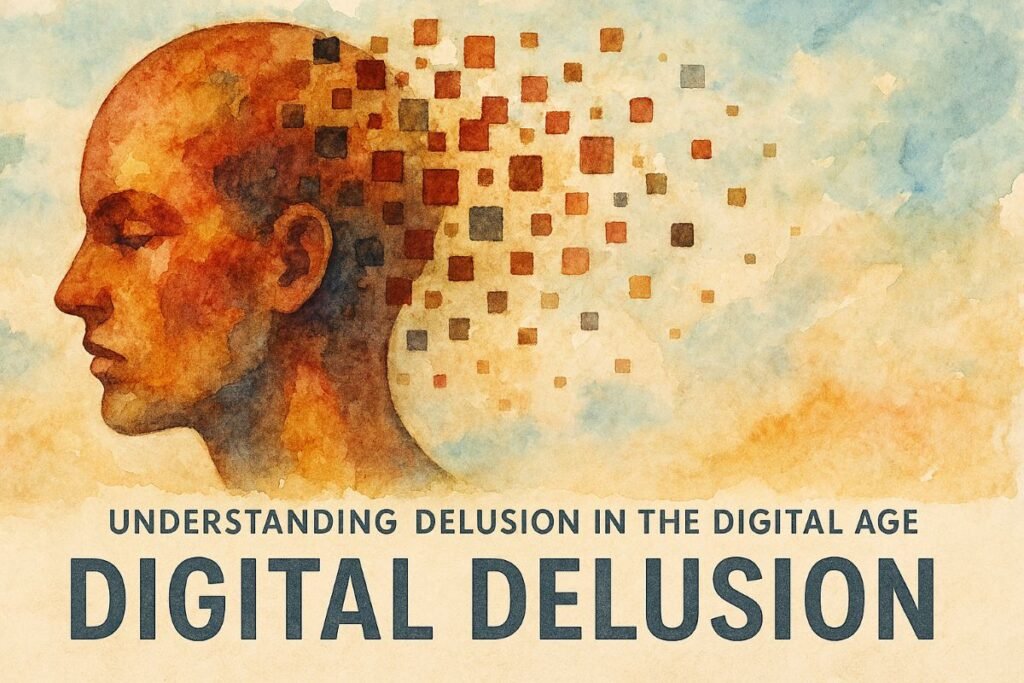
Delusion (moha) , together with greed (lobha) and hatred (dosa) , forms the three unwholesome roots that perpetuate suffering. Delusion fundamentally obscures the mind’s ability to see reality clearly, it is not mere ignorance of facts but a deep misperception that distorts all experience. In the context of the digital age, where screens and online distractions are pervasive, delusion can intensify, making it harder to see clearly and act wisely. The digital realm, with its curated identities, endless streams of information, and algorithmic manipulation, creates conditions where the three unwholesome roots easily flourish.
The Buddha taught that liberation from suffering arises through insight into the true nature of existence, impermanence (anicca) , unsatisfactoriness (dukkha) , and non-self (anattā) . This insight is cultivated through mindfulness, ethical conduct, and wisdom. The following 108 Buddhist contemplations offer a structured path to investigate delusion deeply, especially as it manifests in our relationship with digital technology. Each contemplation builds upon the last, guiding the reader progressively from recognizing the nature of delusion, through understanding its mechanisms, to developing practical antidotes and finally realizing freedom. This continuous thread of investigation transforms abstract Buddhist concepts into lived experience, particularly in how we engage with screens, social media, and online environments.
Part One: The Nature of Delusion and Its Effects
Section 1: Understanding Delusion Itself
- Delusion (moha) is the fundamental ignorance that obscures the mind’s ability to see reality as it truly is. It is not mere lack of information but a deep-rooted misperception that distorts all experience, like wearing colored glasses that tint everything we see.
- The mind’s natural clarity is hidden by delusion, like the sun obscured by clouds, preventing true understanding from arising. Just as clouds temporarily block sunlight without diminishing the sun itself, delusion conceals our innate wisdom without destroying it.
- Delusion supports the false belief in a permanent, independent self, known as self-view (sakkāya-diṭṭhi) , which provides the foundation for clinging and suffering. This mistaken identity creates the illusion of a solid “me” that exists separately from the world.
- This mistaken self-view enables attachment and craving, binding beings to the cycle of samsara, the endless round of birth and death, becoming and dissolution. The Second Noble Truth identifies craving (taṇhā) as the origin of suffering, with self-view providing its cognitive support.
- Delusion fuels the mind’s tendency to proliferate concepts and narratives (papañca), as described in the Madhupiṇḍika Sutta (MN 18), which deepens confusion and emotional turmoil. A single unpleasant notification can spark an entire internal story about rejection, inadequacy, and social failure.
- Latent tendencies (anusaya) condition perception, reinforcing delusion and making it difficult to break free. Years of reaching for a phone at the first hint of boredom creates deep dispositions that automatically trigger the same response.
- The three poisons: greed (lobha) , hatred (dosa) , and delusion (moha), work together to perpetuate suffering. Delusion provides the fertile ground in which greed and hatred can grow and flourish, while they in turn reinforce confusion.
- Delusion obscures the impermanent (anicca) and unsatisfactory (dukkha) nature of all conditioned phenomena. We mistake fleeting pleasures for lasting happiness because we cannot see their constant change.
- It also hides the truth of non-self (anattā) , the absence of any permanent, unchanging essence in beings or things. The feeling of a solid, continuous self is actually a construction, renewed moment by moment through the five aggregates.
Section 2: Delusion in the Digital World
- In the digital world, delusion manifests as attachment to curated online personas, intensifying dissatisfaction and anxiety. We compare our messy real lives with others’ highlight reels, forgetting that everyone suffers and struggles behind the screen.
- The illusion of control over digital content feeds craving and the endless search for validation. Each like, share, or comment becomes temporary confirmation of worth, requiring constant repetition to maintain the feeling.
- Delusion drives compulsive behaviors like infinite scrolling, which promise satisfaction but deliver only temporary distraction. The promise of “just one more post” conceals the underlying dissatisfaction that drives the behavior.
- The restless mind is amplified by constant digital stimuli, making concentration difficult. Each notification trains the mind to seek novelty, weakening our capacity for sustained attention.
- Digital environments often reduce rich human experience to data points, creating a veil of measurement that deepens delusion. Friends become follower counts, experiences become photo opportunities, and wisdom becomes content to be consumed.
- The digital self is a constructed illusion, reinforcing false identity and separation. We curate personas that may have little relation to our actual thoughts, feelings, and struggles.
- Delusion is not fixed; it can be weakened through consistent mindfulness and insight practice. Like rust on iron, it can be removed through sustained effort and appropriate methods.
- Recognizing delusion is the essential first step toward liberation and peace. We cannot abandon what we do not first acknowledge and understand.
- The Buddha’s teachings provide practical tools to dismantle delusion and cultivate wisdom. These ancient methods remain powerfully relevant for navigating modern challenges, including our relationship with technology.
Part Two: The Path to Overcoming Delusion
Section 3: Foundational Understanding
- Cultivating Right View (sammā diṭṭhi) is essential to dispel delusion and see reality clearly. Right View is the forerunner of the entire path, as taught in AN 10.121 and MN 117, and is elaborated in detail in the Sammādiṭṭhi Sutta (MN 9).
- Right View involves understanding the Four Noble Truths, which diagnose suffering and prescribe a path to its cessation. This framework applies directly to digital suffering: identifying its causes, recognizing its end, and following the way out.
- The First Noble Truth acknowledges the presence of suffering in life, including the specific suffering generated by digital engagement: fear of missing out, comparison anxiety, information overwhelm, and the pain of online conflict.
- The Second Noble Truth identifies craving (taṇhā) as the cause of suffering. In digital contexts, this includes craving for validation through likes, craving for novel content, and craving for connection that technology promises but never fully delivers.
- The Third Noble Truth affirms the possibility of ending suffering. Freedom from digital compulsion is attainable through dedicated practice and clear understanding.
- The Fourth Noble Truth outlines the Noble Eightfold Path as the way to liberation. Each factor of this path can be applied to transform our relationship with technology.
Section 4: Ethical and Mental Cultivation
- Ethical conduct (sīla) supports mental clarity and reduces confusion, forming the foundation of practice. When our online behavior aligns with our values, the mind experiences less conflict and remorse.
- Mindfulness (sati) develops continuous awareness of body, feelings, mind, and phenomena. The four foundations of mindfulness are detailed in the Satipaṭṭhāna Sutta (MN 10), providing a comprehensive framework for investigating digital experience.
- Concentration (samādhi) stabilizes the mind, enabling deep insight and calm. The development of concentration is taught in AN 4.41 and other suttas. The ability to sustain attention on a single object directly counters the fragmentation caused by digital multitasking.
- Wisdom (paññā) penetrates the nature of reality, revealing impermanence, suffering, and non-self. Direct insight transforms intellectual understanding into liberating knowledge.
- Understanding emptiness (suññatā) means realizing that phenomena are empty of self and not owned by a self. Digital content, online identities, and even the devices themselves arise dependently, they are not a permanent self or belonging to a self.
- Meditation on impermanence loosens attachment to transient digital experiences and identities. Today’s viral post is tomorrow’s forgotten content; this awareness reduces clinging.
- Contemplating suffering reveals the unsatisfactory nature of craving for online approval. Even when we receive validation, the satisfaction fades quickly, requiring more.
- Practicing non-attachment to digital personas reduces anxiety and fear of loss. When we stop identifying with our online image, criticism and praise lose their power to disturb.
- Developing loving-kindness (mettā) softens aversion and hostility in online interactions. This practice transforms digital spaces from battlegrounds into fields for cultivating goodwill.
- Patience (khanti) helps endure discomfort without reactive behavior, especially in digital conflicts. The ability to pause before responding prevents much suffering.
- Right speech online involves truthfulness, kindness, and necessity, avoiding harm. Before posting, we can ask: Is it true? Is it kind? Is it necessary? Does it bring benefit?
Section 5: Practical Digital Dharma
- Ethical digital consumption means avoiding harmful content and protecting privacy. Just as we would not consume physically poisonous food, we can avoid mentally poisonous media.
- Digital mindfulness includes setting boundaries and creating tech-free times to restore balance. Regular periods of disconnection allow the mind to integrate and settle.
- Ritualizing use and non-use of technology fosters intentional engagement and respect for the mind. Beginning and ending digital sessions with conscious intention transforms automatic behavior into deliberate practice.
- Regular reflection on digital habits supports ongoing adjustment and balance. Weekly reviews of technology use reveal patterns and opportunities for improvement.
- Recognizing algorithmic curation reveals the constructed nature of online reality and reduces reactivity. What we see is not “the world” but a selection designed by commercial interests to maximize engagement.
- Observing causes and conditions behind digital stimuli cultivates wisdom and freedom. Each notification has a cause, understanding this reduces the sense of being personally targeted or controlled.
- Digital meditation transforms scrolling into a practice of awareness and choice. With mindfulness, we can observe the impulse to scroll, the experience of scrolling, and the choice to continue or stop.
- In Mahāyāna Buddhism, the Bodhisattva ideal inspires using all activities, including digital platforms, for compassion and the benefit of beings. This motivation can transform how we engage online.
- Cultivating a sanctuary of focus within the digital jungle protects the mind’s clarity. Regular meditation practice creates an inner refuge that remains accessible even amidst distraction.
- Withdrawal from digital stimuli provides space for integration and insight. Periodic digital retreats, even for a few hours, allow the mind to process experience and restore natural clarity.
- The Middle Way (majjhimā paṭipadā) balances engagement and detachment from technology, avoiding extremes of indulgence and complete rejection. Wisdom lies in skillful use, not in avoidance or addiction.
Section 6: Deepening Understanding
- Overcoming delusion requires patience, perseverance, and community support. The path is long, but each step brings genuine freedom.
- Faith in the Dhamma strengthens commitment to the path. Confidence in the Buddha’s teachings provides motivation when practice becomes difficult.
- Inquiry and personal experience deepen understanding beyond intellectual knowledge. Reading about non-self is different from directly experiencing it through meditation.
- Recognizing defilements as impersonal events reduces identification with them. Greed, hatred, and delusion arise due to conditions, they are not “me” or “mine.”
- Developing antidotes like generosity and loving-kindness weakens delusion’s hold. Wholesome mental states create space for wisdom to arise.
- Visualization practices support concentration and compassion. Imagining light, loving-kindness radiating to all beings, or the Buddha’s qualities can transform the mind.
- Dedication of merit to all beings fosters humility and altruism. Whatever goodness we cultivate, we offer for the benefit of all, reducing self-clinging.
- The path is a dynamic process of continuous learning and adjustment. Each day brings new opportunities to apply Dhamma to changing circumstances.
- Liberation is marked by boundless compassion and clarity within the world. Freedom is not escape but engaged presence, untainted by clinging.
- The ultimate goal is freedom from clinging and the realization of perfect peace. This peace is available in every moment of non-attachment, even while using technology skillfully.
Part Three: Practical Contemplations on Delusion in Daily Life
Section 7: Working with Digital Cravings
- Notice when craving arises for digital validation or distraction. Observe the physical sensations: tension, restlessness, anticipation, that accompany the urge to check devices.
- Observe aversion to boredom or silence that triggers device use. Notice the discomfort with simply being present, and investigate the stories that arise about why this is unbearable.
- Reflect on the impermanence of online trends and identities. Today’s must-have app or viral challenge will soon be forgotten—recognizing this reduces their power over the mind.
- Question the solidity of digital personas and their emotional impact. The carefully constructed profile is a collection of pixels and choices, not a real person, yet we suffer when it is criticized.
- Recognize the conditioned nature of reactions to notifications and alerts. The ping is just sound; the vibration just sensation. The meaning we add: urgency, importance, social pressure, is mind-made.
- Contemplate the emptiness of online praise and criticism. Both are just words appearing and disappearing, yet we grasp one and push away the other as if they were solid realities.
- Practice single-tasking to strengthen attention and reduce fragmentation. When reading online, just read. When writing, just write. Return attention patiently each time it wanders.
- Turn off non-essential notifications to introduce friction and choice. Each notification trains conditioned responses; removing them creates space for intentional engagement.
- Create tech-free zones and times to restore mental depth. The bedroom, meal times, and the first hour of the day can become sanctuaries from digital distraction.
- Use digital tools like website blockers to support mindful use. Technology itself can serve the path when used with wisdom and clear intention.
- Audit your digital environment regularly to prune harmful influences. Unfollow accounts that trigger comparison, envy, or anger. Subscribe to those that support well-being and wisdom.
- Engage deeply in a few meaningful online communities rather than many shallow ones. Quality of connection matters more than quantity of contacts.
Section 8: Transforming Digital Interaction
- Approach digital work as a form of service, alleviating suffering. Even mundane tasks can be performed with the intention to benefit others.
- See difficult online interactions as opportunities to practice patience and compassion. Each challenging comment becomes a teacher, revealing where we are still attached and reactive.
- Apply the three filters of right speech before posting: Is it true? Is it kind? Is it necessary? This ancient wisdom prevents much online suffering.
- Cultivate equanimity toward online praise and blame. Both are empty phenomena, welcomed, they pass; resisted, they also pass. Neither touches who we truly are.
- Recognize that the digital world is experienced through perception and mental construction, rather than being ultimate reality. Screens display patterns of light; meaning is added by mind.
- Reflect on the Buddha’s teaching that all conditioned things are impermanent. Every post, every account, every platform will eventually cease. This is not pessimism but freedom.
- Use mindfulness to observe the arising and passing of digital cravings. Watch the impulse to check arise, intensify, and then, if not acted upon, naturally fade.
- Develop clear comprehension (sampajañña) of mental states during device use. Are we mindful or automatic? peaceful or agitated? present or distracted?
- Practice non-identification with thoughts and feelings triggered by online content. Anger arises, “anger is here” not “I am angry.” The difference is liberation.
- Contemplate the interdependence of all phenomena, including digital interactions. Each post depends on countless causes: the device, the network, the platform, the education of its creator, and on and on.
- Recognize that digital content is designed to elicit emotional responses. Outrage, fear, and desire keep us engaged. Seeing this design reduces its power.
- Question the commercial incentives behind online posts and ads. What is being sold? What attention is being captured? What behavior is being encouraged?
- Observe how digital engagement can reinforce tribalism and aversion. Us-versus-them thinking thrives online; mindfulness reveals this pattern before it hardens.
- Reflect on the suffering caused by online comparison and envy. Others’ curated lives are not their actual lives, yet we compare our actual lives to their fiction.
- Cultivate loving-kindness toward oneself and others in the digital space. May I be happy. May you be happy. May we all be free from suffering.
Section 9: Advanced Digital Dhamma
- Use digital sabbaths to reconnect with the primordial ground of being. Regular periods of complete disconnection reveal the peace that is always present beneath distraction.
- Recognize the digital dream as a veil of heedlessness (pamāda) . Heedlessness is the opposite of diligent awareness, the path is waking up from the dream.
- Understand that the digital self is a constructed character, not the true self. The profile, the history, the preferences, all are aggregates, not a permanent identity.
- Practice the emptiness scan: observe that digital phenomena are empty of self during scrolling. Where is the solid content? Pixels on a screen. Where is the solid self? Constructed moment by moment.
- Pause before opening apps to set mindful intentions. Why am I opening this? What do I hope to find? Is this likely to bring well-being?
- Observe the causes and conditions that lead to specific digital content appearing. Algorithmic selection, friends’ choices, commercial interests, this is conditioned arising, not personal fate.
- Notice the emotions digital content is designed to elicit and your response. The hook and the bitten, both are empty phenomena arising and passing.
- Reflect on the karmic consequences of digital speech and actions. Words posted online can spread far and last long; they create effects that return to us.
- Use digital platforms to distribute wisdom rather than self-promotion. The Dhamma is a gift; sharing it benefits all, including the sharer.
- Recognize the power of digital words to ripple through karmic networks. A single kind comment can affect someone deeply; a single harsh word can cause lasting harm.
- Cultivate the ten perfections (pāramī) in digital conduct, according to the Theravāda tradition: generosity (dāna), ethical conduct (sīla), renunciation (nekkhamma), wisdom (paññā), energy (viriya), patience (khanti), truthfulness (sacca), resolution (adhiṭṭhāna), loving-kindness (mettā), and equanimity (upekkhā).
- Transform social media feeds into fields for practicing loving-kindness. Each person appearing can become a recipient of goodwill: “May you be happy. May you be free from suffering.”
- Develop a strong moral compass that functions even when no one is watching. True ethical conduct is not performance but inner integrity, present whether online or offline.
- Understand that digital minimalism, as a form of renunciation (nekkhamma) , is liberation, not deprivation. Reducing unnecessary digital engagement frees time, attention, and mental energy for what truly matters.
- Use digital seclusion as a modern retreat for mental integration. Even one hour without devices allows the mind to settle and clarify.
- Recognize the illusion of presence in digital communication. Text, video, and voice are representations, not actual presence. This awareness prevents mistaking connection for communion.
- Contemplate the difference between appearance and reality in online interactions. The friendly comment may conceal resentment; the critical post may arise from caring. We cannot know others’ minds.
- Use visualization to embody compassion and wisdom online. Before engaging digitally, visualize light filling your heart, radiating to all beings you will encounter.
- Dedicate all digital merits to the enlightenment of all beings. Whatever goodness arises through online engagement: kind words, helpful information, patient responses, offer it for the benefit of all.
Section 10: Culmination and Freedom
- Maintain continuous effort to weaken delusion through practice. Liberation is not a single achievement but ongoing cultivation, moment by moment, choice by choice.
- Seek guidance from qualified teachers and community support. The path is best traveled with others who share the intention to wake up.
- Adapt practice skillfully to changing digital circumstances. New platforms, new devices, new challenges, all can be met with wisdom and compassion.
- Balance self-interest and altruism in digital engagement. Practice benefits oneself and others; these are not separate.
- See difficult colleagues or online opponents as opportunities for spiritual growth. Each challenging interaction reveals where clinging remains, offering the chance to release it.
- Cultivate contentment with the present moment, free from craving, and realize that true freedom is peace within the world—including the digital world. Liberation is not found elsewhere but here, not later but now, in the midst of whatever arises, when the mind is no longer bound by delusion.
Glossary of Key Terms
| English Term | Pali Term | Explanation |
|---|---|---|
| Clear Comprehension | Sampajañña | The quality of clearly understanding what one is doing, feeling, and thinking in the present moment |
| Concentration | Samādhi | Focused, unified state of mind that serves as foundation for insight |
| Craving | Taṇhā | Thirst or desire that drives suffering, identified in the Second Noble Truth as the origin of dukkha |
| Delusion | Moha | Fundamental ignorance about the true nature of reality, one of the three unwholesome roots |
| Dhamma | Dhamma | The Buddha’s teachings; also the natural law of cause and effect |
| Emptiness | Suññatā | The characteristic that phenomena are empty of self and not owned by a self |
| Ethical Conduct | Sīla | Moral discipline that supports mental development and wisdom |
| Greed | Lobha | Attachment and craving for sense pleasures, one of the three unwholesome roots |
| Hatred | Dosa | Aversion, anger, and ill-will, one of the three unwholesome roots |
| Heedlessness | Pamāda | Careless, unmindful state that leads to unwholesome actions |
| Impermanence | Anicca | The characteristic of all conditioned things to arise and pass away |
| Latent Tendencies | Anusaya | Deeply ingrained dispositions that condition perception and behavior |
| Loving-kindness | Mettā | Unconditional goodwill toward all beings without exception |
| Mental Proliferation | Papañca | The mind’s tendency to elaborate concepts and narratives, creating complexity |
| Middle Way | Majjhimā Paṭipadā | The path avoiding extremes of sensual indulgence and self-mortification |
| Mindfulness | Sati | Present-moment, non-judgmental awareness of experience |
| Non-self | Anattā | The absence of any permanent, unchanging essence in beings or phenomena |
| Perfections | Pāramī | Ten qualities cultivated on the path to enlightenment in Theravāda Buddhism |
| Right View | Sammā Diṭṭhi | Correct understanding of the Four Noble Truths and the nature of reality |
| Self-view | Sakkāya-diṭṭhi | The mistaken belief in a permanent, independent self |
| Suffering | Dukkha | The unsatisfactory nature of all conditioned existence |
| Three Unwholesome Roots | Lobha, Dosa, Moha | Greed, hatred, and delusion, the root causes of all unwholesome actions |
| Wisdom | Paññā | Insight into the true nature of reality that liberates the mind |
Conclusion: Freedom in the Digital Age
Delusion is one of three unwholesome roots that perpetuate suffering, clouding our perception and supporting the cycles of craving and dissatisfaction. In the digital age, where screens and online distractions are omnipresent, cultivating mindfulness and insight is more crucial than ever. The 108 contemplations presented here offer a continuous, deepening investigation into the nature of delusion and practical ways to overcome it, not by escaping technology, but by engaging with it wisely.
The path from recognizing delusion to realizing freedom is gradual but certain when practiced consistently. Each contemplation builds upon the last, creating a thread of investigation that transforms abstract understanding into lived wisdom. We begin by seeing how delusion operates among the three unwholesome roots, understand its mechanisms through early Buddhist psychology, develop practical antidotes through ethical conduct and meditation, and finally realize that freedom is always available, even in the midst of digital engagement.
By integrating these reflections into daily life, especially in our digital interactions, we can develop clarity, compassion, and wisdom. This path does not reject technology but encourages a balanced, intentional, and ethical engagement with it, fostering liberation and peace. The same mind that creates digital distraction can, when trained, use digital tools for awakening. The same technology that amplifies delusion can, when approached with mindfulness, become a vehicle for sharing wisdom and supporting practice.
May these contemplations inspire your journey toward freedom from delusion and the realization of true wisdom and peace. May all beings everywhere be free from suffering and the causes of suffering. May the Dhamma flourish in the digital age, bringing benefit to countless beings.
Sādhu, sādhu, sādhu.
(Well said, well practiced, well accomplished.)
References and Further Reading
- Majjhima Nikaya 9: Sammādiṭṭhi Sutta – Right View
- Majjhima Nikaya 10: Satipaṭṭhāna Sutta – Foundations of Mindfulness
- Majjhima Nikaya 18: Madhupiṇḍika Sutta – The Honeyball
- Majjhima Nikaya 117: Mahācattārīsaka Sutta – The Great Forty
- Digha Nikaya 15: Mahānidāna Sutta – Great Discourse on Causation
- Samyutta Nikaya 22.95: Pheṇapiṇḍūpama Sutta – The Simile of the Lump of Foam
- Anguttara Nikaya 4.41: Samādhibhāvanā Sutta – Development of Concentration
- Anguttara Nikaya 10.121: Pubbaṅgama Sutta – The Forerunner
- SuttaCentral – Complete collection of Buddhist texts in multiple languages
- Access to Insight – Classic Theravāda texts and teachings
For further reading on mindfulness and digital well-being, see contemporary Dhamma teachings available through major Buddhist publishers and online Dhamma centers.