Introduction
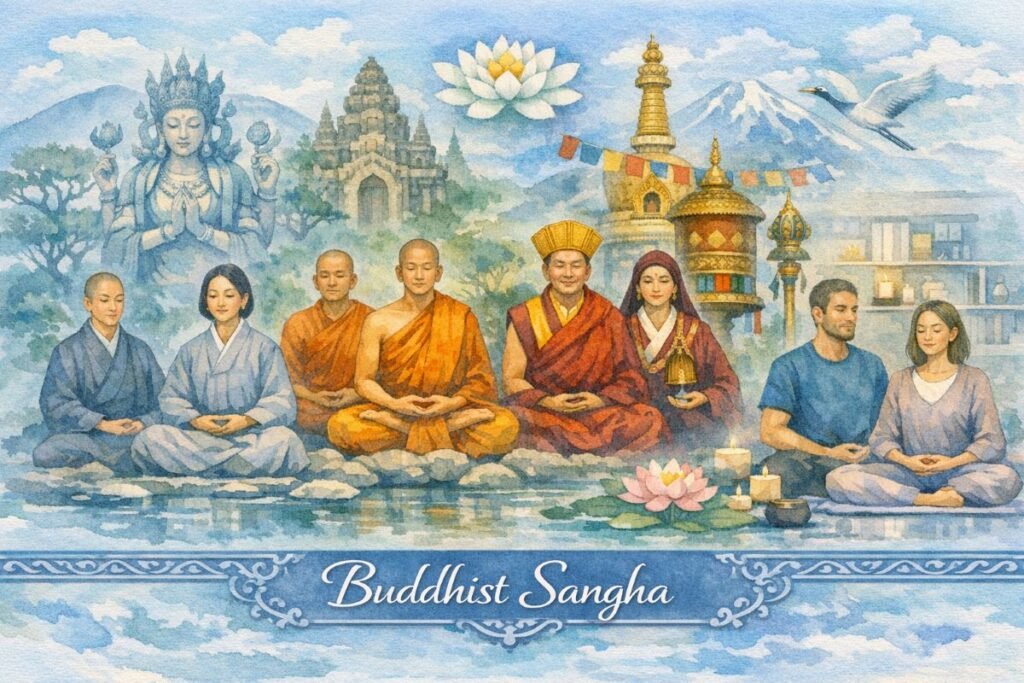
The Sangha (Saṅgha in Pāli) is the third of the Three Jewels (Tiratana), the supreme refuge for all who follow the path laid out by the Buddha (the Awakened One). The term Sangha literally means “assembly,” “community,” or “harmonious gathering,” and it signifies the living tradition of those who have dedicated themselves to realizing the Dhamma (the teaching) for themselves. When the Buddha first set in motion the Wheel of Dhamma in the Dhammacakkappavattana Sutta (SN 56.11), the five ascetics who heard his words became the first members of the Sangha, a community founded not on birth, wealth, or social standing, but on a shared aspiration for liberation. From that moment, the Sangha has served as the indispensable container within which the Dhamma is preserved, practiced, and transmitted from generation to generation.
The Buddha repeatedly emphasized the irreplaceable value of spiritual community. In the Upaddha Sutta (SN 45.2), he declared to Venerable Ānanda that spiritual friendship is not merely half of the holy life but the whole of it. This teaching reveals that the Sangha is not an optional addition to individual practice; it is the very context in which the path unfolds. The Sangha provides ethical support, mutual accountability, shared wisdom, and the living example of those who have gone before. When the Buddha approached his final passing, he instructed the Sangha to take the Dhamma itself as their teacher and to live in harmony, upholding the monastic discipline as their guiding light (Mahāparinibbāna Sutta, DN 16). This instruction ensures that the Sangha would continue as a self-governing body dedicated to awakening, not dependent on any single leader.
Within the Buddhist tradition, the term Sangha carries two primary meanings. The Ariya Sangha (Noble Sangha) refers to those who have attained any of the four stages of awakening: stream-enterers, once-returners, non-returners, and arahants, regardless of whether they are ordained or lay. The conventional Sangha refers to the ordained monastic community of bhikkhus (monks) and bhikkhunis (nuns) who follow the Vinaya, the monastic code established by the Buddha. Both meanings converge in the understanding that the Sangha is a field of unsurpassed merit, as the Buddha taught in the Dakkhināvibhaṅga Sutta (MN 142): an offering given to the Sangha with faith yields immeasurable fruit because the Sangha embodies the Dhamma in its purest form.
Contemplating the Sangha is a profound spiritual exercise. When practitioners reflect upon the Sangha, they connect with a lineage stretching back to the Buddha himself. This contemplation cultivates faith (saddhā), humility, and a sense of belonging that counters the isolation of modern life. The Itivuttaka (Iti 90) speaks of the supreme confidence that arises from unwavering faith in the Sangha, describing it as foremost and yielding the foremost results as a field of merit. By exploring the Sangha across its diverse expressions: Theravāda, Mahāyāna, Vajrayāna, and secular, these 108 contemplations draw primarily upon the early discourses for foundational reflections, while honoring expressions in later traditions and contemporary adaptations.
The following 108 contemplations are organized into six sections, each offering a progressive exploration of the Sangha’s meaning, manifestations, and transformative power.
I. Foundations: Understanding the Sangha (1–20)
1. The Meaning of Sangha as Harmonious Assembly
The word Sangha derives from the Pāli root meaning “to strike together” or “to bring together,” suggesting a coming together in harmony. This harmony is not merely the absence of conflict but the active cultivation of mutual respect, shared purpose, and collective dedication to the Dhamma. The Mahāparinibbāna Sutta (DN 16) records the Buddha’s instruction that the Sangha should meet regularly in harmony, transact their business in harmony, and part in harmony, recognizing that unity is the foundation of the holy life.
2. The Sangha as the First Spiritual Community
When the Buddha delivered his first discourse, the Dhammacakkappavattana Sutta (SN 56.11), the five ascetics who listened became the first Sangha upon their attainment of stream-entry. This moment marked the birth of the spiritual community: a community founded not on family ties, social status, or shared ethnicity, but on a shared commitment to liberation. The Sangha was revolutionary in its inclusivity, welcoming all regardless of caste or background.
3. The Sangha as One of the Three Refuges
Taking refuge in the Sangha means entrusting oneself to the community of practitioners who embody the Dhamma. The Mahāpadesa Sutta (AN 4.180) teaches that when one encounters a teaching, it must be checked against the Suttas and Vinaya and the consensus of the Sangha. This refuge is not blind devotion but a practical acknowledgment that spiritual progress is nurtured within a community that upholds the Dhamma as its highest authority.
4. The Distinction Between Noble and Conventional Sangha
The Ariya Sangha consists of those who have directly experienced the Dhamma through the stages of awakening: stream-enterers, once-returners, non-returners, and arahants. The conventional Sangha comprises ordained monastics who uphold the Vinaya. The Dasuttara Sutta (DN 34) explains that the Ariya Sangha is the unsurpassed field of merit for the world, for even a moment of faith directed toward such beings yields immeasurable benefit.
5. The Sangha as the Living Embodiment of the Dhamma
The Dhamma is not merely a collection of texts but a living reality that manifests in the conduct, wisdom, and compassion of those who practice it. The Dhammapada (Dhp 362) states that one who restrains their hands, feet, and speech, who delights in meditation and is solitary and content, is called a true monastic. The Sangha makes the Dhamma visible, demonstrating through their lives that liberation is possible.
6. The Sangha’s Role in Preserving the Teachings
The preservation of the Buddha’s teachings across 2,500+ years is a testament to the Sangha’s dedication to memorization, recitation, and practice. The Vinaya, account of the First Council in Cūḷavagga (pli-tv-kd11) describes how the Sangha convened shortly after the Buddha’s passing to recite and codify the Dhamma and Vinaya, ensuring transmission to future generations. This legacy continues today as monastics and lay practitioners alike transmit the Dhamma.
7. The Sangha as a Field of Merit
The Buddha frequently described the Sangha as the “unsurpassed field of merit for the world.” The Dakkhināvibhaṅga Sutta (MN 142) explains that offerings made to the Sangha, whether to monastics or to the Noble Sangha, generate immeasurable merit precisely because the Sangha embodies purity, virtue, and wisdom. Even a small gift given with faith to the Sangha yields great fruit.
8. The Sangha’s Unity Based on Dhamma, Not Identity
Unlike worldly communities formed around ethnicity, nationality, or personal preference, the Sangha’s unity derives solely from shared commitment to the Dhamma and Vinaya. The Gaṇakamoggallāna Sutta (MN 107) illustrates how the Buddha established a gradual training that unites practitioners around a common purpose, transcending all divisions of birth and social standing.
9. The Inclusivity of the Early Sangha
From its inception, the Sangha welcomed individuals from all strata of society. Stories preserved in the Theragāthā and Vinaya traditions, such as Upāli the barber, who became foremost in Vinaya knowledge, and Sunīta the scavenger (Thag 12.2), who attained arahantship, illustrate that the Dhamma is open to all, regardless of birth, making the Sangha a refuge for the marginalized and outcast.
10. The Four Assemblies of the Buddha’s Disciples
The Buddha taught that the Dhamma would endure as long as four assemblies existed: monks, nuns, laymen, and laywomen. The Mahāparinibbāna Sutta (DN 16) records that the Buddha established this fourfold assembly to ensure the Dhamma’s complete transmission. Each assembly supports the others, creating a complete ecosystem for practice.
11. The Sangha as a Source of Spiritual Inspiration
Merely seeing a monastic walking mindfully, robed in simplicity, can inspire faith and reflection on the possibility of freedom. The Pabbajjā Sutta (Snp 3.1) describes the young Siddhartha’s encounter with a wandering ascetic, which ignited his aspiration for renunciation. The Sangha continues to serve as such an inspiration, reminding all who encounter them of the path beyond worldly pursuits.
12. The Relationship Between Sangha and Lay Practitioners
The relationship between monastics and laypeople is one of mutual support. Laypeople offer material requisites: food, robes, shelter, medicine, while monastics offer the gift of the Dhamma. This symbiotic relationship, depicted in various discourses, is a condition conducive to the flourishing of the holy life.
13. The Sangha’s Reliance on the Vinaya
The Vinaya, the monastic code of discipline, is the constitution of the Sangha. The Bāhitika Sutta (AN 8.20) explains that the Vinaya exists not to constrain but to create the optimal conditions for awakening. By relinquishing worldly pursuits and adhering to a shared ethical framework, monastics free themselves to dedicate their lives entirely to meditation, study, and service.
14. The Sangha as a Container for Practice
The Sangha provides a protected environment where practitioners can develop mindfulness, concentration, and wisdom without the distractions and pressures of lay life. The Ariyapariyesanā Sutta (MN 26) recounts the Buddha’s own search for awakening, which began with renunciation and the seeking of a conducive environment—a principle that the Sangha institutionalizes for all who wish to follow his example.
15. The Sangha’s Teaching Function
The Buddha appointed the Sangha to carry on the work of teaching the Dhamma after his passing. The Mahāparinibbāna Sutta (DN 16) records his final instruction: “I have taught the Dhamma without making any distinction of public and private.” The Sangha fulfills this by offering teachings freely to all who seek them, carrying the torch of wisdom across generations.
16. The Sangha’s Role in Maintaining Right View
Right View is the forerunner of the path, and the Sangha serves as its guardian. The Sammādiṭṭhi Sutta (MN 9), delivered by the Venerable Sāriputta, exemplifies how monastics within the Sangha elucidate the subtleties of right view for one another. Through such mutual instruction, the Sangha ensures that the Dhamma remains pure and uncorrupted.
17. The Sangha as a Mirror for Self-Examination
Living in community provides constant opportunities to observe one’s own defilements. The Kandaraka Sutta (MN 51) describes how the Buddha praised the monastic who, like a mirror reflecting one’s face, reflects upon one’s own actions. The Sangha provides this mirror through both the support of spiritual friends and the inevitable frictions that arise, revealing where one remains attached.
18. The Sangha’s Foundation in Renunciation
Renunciation (nekkhamma) is the heart of the monastic Sangha. By renouncing wealth, status, family ties, and sensual pleasures, monastics embody the teaching that true happiness is found not in accumulation but in letting go. The Rathavinīta Sutta (MN 24) describes the path as a series of relinquishments, culminating in the complete freedom of arahantship.
19. The Sangha’s Stability Through Shared Practice
The Sangha endures not through charismatic leaders or institutional power but through shared practice. The Girimānanda Sutta (AN 10.60) lists the ten contemplations that sustain the holy life, including contemplation of the Sangha. When each member diligently practices, the whole community is strengthened, creating a self-perpetuating cycle of mutual support and inspiration.
20. The Sangha as the Continuation of the Buddha’s Mission
The Buddha did not appoint a successor but entrusted the Sangha with the continuation of his mission. His final words, recorded in the Mahāparinibbāna Sutta (DN 16), were: “All conditioned things are subject to decay. Strive with diligence.” The Sangha embodies this striving, carrying forward the Buddha’s legacy through collective diligence and unwavering commitment to the Dhamma.
II. The Sangha in Theravāda Tradition (21–40)
21. The Theravāda Sangha as Preserver of the Original Dispensation
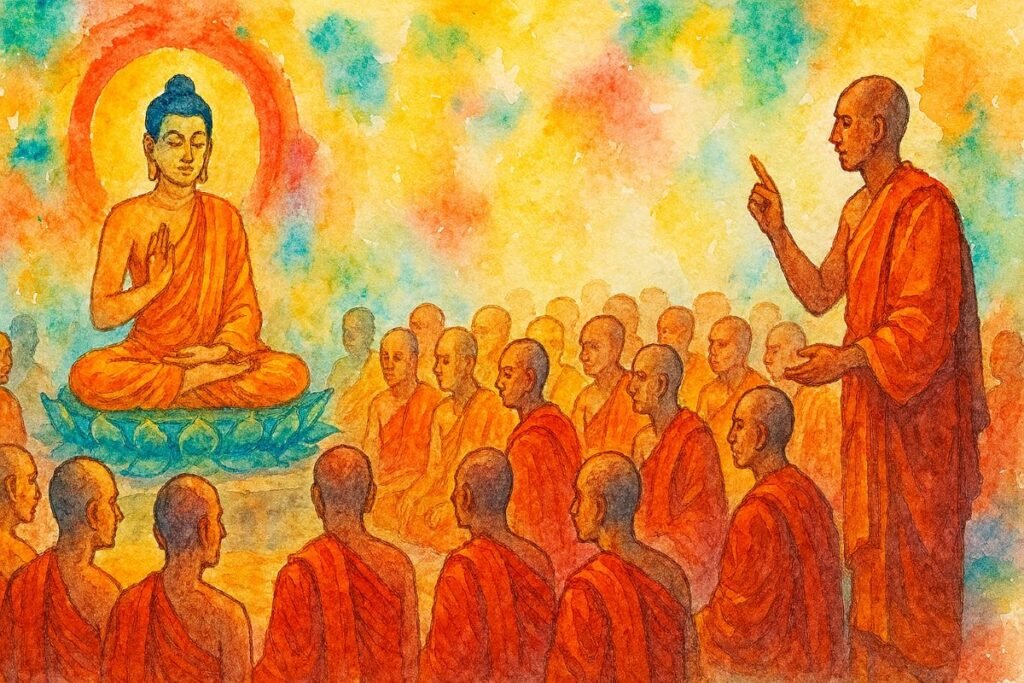
The Theravāda tradition traces its monastic lineage directly to the Buddha’s original disciples. The Cūḷavagga (Vinaya) contains the account of the First Council, where five hundred arahants recited and codified the Dhamma and Vinaya. This lineage has been preserved through generations, maintaining the Buddha’s teachings with meticulous fidelity.
22. The Bhikkhu and Bhikkhunī Orders
The Theravāda Sangha maintains the distinction between bhikkhus (monks) and bhikkhunis (nuns). The Bhikkhunī Saṃyutta (SN 5) records the teachings and accomplishments of the first nuns, demonstrating that women are equally capable of awakening. Though the bhikkhunī order declined historically, its restoration in modern times reflects the Buddha’s original intention for a fourfold assembly.
23. The 227 Rules of the Pātimokkha
The monastic code for bhikkhus consists of 227 training rules recited fortnightly. The Pātimokkha (Vinaya) is not a list of prohibitions but a framework for mindfulness, ethical purity, and communal harmony. Each rule was established by the Buddha in response to specific circumstances, serving as a skillful means to prevent defilements from taking root.
24. The Fortnightly Recitation as a Practice of Confession
Every full and new moon, the Sangha gathers to recite the Pātimokkha. The Pātimokkha (Vinaya) recitation includes an invitation for those who have broken a rule to confess. This practice of confession (āpatti desanā) keeps the Sangha clean and harmonious, preventing hidden faults from festering and disrupting the community.
25. The Rainy Season Retreat (Vassa)
During the three-month rainy season, monastics cease their wandering and dwell in a single monastery for intensive practice. The Vassa was established by the Buddha partly to prevent damage to crops and harm to living beings during travel, and to provide a period of sustained meditation and study. This annual retreat remains a cornerstone of monastic life, deepening both individual practice and communal bonds.
26. The Monastic Life of Simplicity and Renunciation
Theravāda monastics own only eight requisites: robes, bowl, belt, razor, needle, and water filter. The Dhammapada (Dhp 185) praises those who are content with little, free from craving, and devoted to meditation. This simplicity is not poverty but freedom, a deliberate shedding of the burdens that keep beings bound to suffering.
27. The Mutual Dependence of Monastics and Laypeople
The relationship between the monastic Sangha and lay supporters is a form of reciprocity known as mutual dependence (aññamañña). The Maṅgala Sutta (Snp 2.4) lists “supporting one’s parents, cherishing one’s children, and caring for one’s relatives” as blessings, while also praising generosity toward monastics. This symbiotic relationship sustains the Dhamma in both directions.
28. The Monastic as an Exemplar of the Eightfold Path
By adhering to Right Livelihood (abstaining from trade, money, and worldly professions), Right Speech (avoiding false, divisive, or harsh speech), and Right Action (abstaining from killing, stealing, and sexual activity), monastics embody the Eightfold Path. The Sāmaññaphala Sutta (DN 2) describes the visible fruits of the contemplative life, inspiring confidence in those who witness it.
29. The Role of Elders (Theras) in the Sangha
Senior monastics (theras and therīs) provide guidance, teach the Dhamma, and maintain the standards of the tradition. The Theragāthā (Thag) and Therīgāthā (Thig) contain the inspired verses of these elders, revealing the depths of realization attained through a life of dedicated practice.
30. The Pali Canon as the Sangha’s Scriptural Heritage
The Theravāda Sangha preserved the Tipiṭaka (Three Baskets) through oral transmission for centuries before it was written down. The Dīgha Nikāya, Majjhima Nikāya, Saṃyutta Nikāya, Aṅguttara Nikāya, and Khuddaka Nikāya constitute the complete record of the Buddha’s teachings, entrusted to the Sangha for preservation and propagation.
31. Lay Attainments in the Pali Canon
The Theravāda tradition does not restrict awakening to monastics. The Gihi Sutta (AN 8.25) and many other discourses record laypeople attaining stream-entry, once-return, and even non-return. The Sangha includes these Noble Ones within the Ariya Sangha, demonstrating that the path is open to all who practice sincerely.
32. The Forest Tradition and Ascetic Practices
Some Theravāda monastics adopt the dhutaṅgas (ascetic practices), such as living in the forest, eating only one meal a day, or dwelling at the foot of a tree, to simplify life and deepen practice. The Dhutaṅga Sutta (AN 8.30) describes how Anuruddha took up such practices, leading to his awakening. These practices embody the spirit of contentment and renunciation.
33. The Sangha’s Role in Buddhist Education
Monastic monasteries have traditionally served as centers of learning, preserving not only Buddhist scriptures but also literature, philosophy, and practical arts. The Khuddaka Pāṭha (Kp), a collection of basic texts, is often the first text memorized by young novices, illustrating the Sangha’s commitment to education from the earliest stages of training.
34. The Sangha’s Guidance for Lay Practitioners
The Buddha instructed that monastics should teach laypeople appropriate topics: generosity, ethical conduct, heaven, the dangers of sensual pleasures, and the benefits of renunciation. The Ugga Sutta (AN 8.23) shows the Buddha himself praising a layman for his qualities, and the Sangha continues this tradition of tailored guidance.
35. The Ordination Process as a Rite of Passage
Ordination (upasampadā) in the Theravāda tradition requires the consent of a quorum of ten monastics (five in border regions). The Vinaya (Cūḷavagga) details the requirements: freedom from debt, disease, and obligations, and a genuine desire for liberation. This process ensures that those who join the Sangha do so with integrity and commitment.
36. The Sangha’s Role in Social Welfare
Throughout history, Theravāda Sangha members have built schools, hospitals, and provided relief during famines and disasters. The Siṅgālovāda Sutta (DN 31), which outlines lay ethics, includes the reciprocal duties between monastics and laypeople, implying that the Sangha should share its blessings with the wider community.
37. The Emphasis on Personal Effort in Theravāda
The Theravāda Sangha emphasizes that each individual must walk the path themselves. The Dhammapada (Dhp 160) states: “You yourself are your own protector. What other protector could there be?” The Sangha provides support, guidance, and the Dhamma, but each monastic takes responsibility for their own awakening.
38. The Unity of the Sangha Across National Boundaries
Despite differences in language, culture, and monastic practices, Theravāda Sangha members worldwide share the same Vinaya and sutta heritage. The Mahāvagga (Vinaya) records the Buddha’s instruction that ordination is valid across all regions, fostering a sense of universal belonging.
39. The Monastic as a Wanderer
In the Buddha’s time, monastics wandered from village to village, teaching and receiving alms. The Pāṭika Sutta (DN 24) describes this lifestyle, which continues today in various forms. Wandering prevents attachment to any single place and allows the Dhamma to reach remote communities.
40. The Legacy of the Theravāda Sangha
The Theravāda Sangha has preserved the Buddha’s teachings for over two millennia, spreading from India to Sri Lanka, Southeast Asia, and now the West. The Mahāparinibbāna Sutta (DN 16) records the Buddha’s assurance that the Dhamma would endure as long as it is practiced. The Theravāda Sangha stands as a testament to that assurance.
III. The Sangha in Mahāyāna Tradition (41–60)
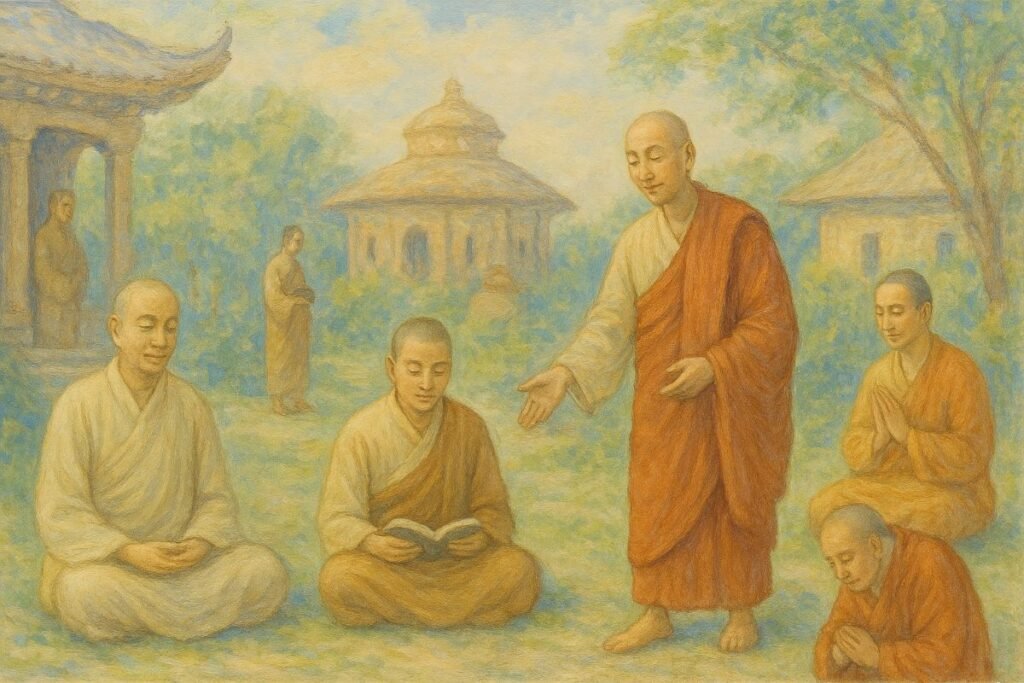
Note: The Mahāyāna tradition, developing several centuries after the early discourses, expands the Sangha concept to emphasize universal compassion and the bodhisattva ideal, while maintaining monastic structures adapted in East Asia.
41. The Mahāyāna Sangha as a Community of Bodhisattvas

Mahāyāna Buddhism expands the concept of Sangha to include the entire community of bodhisattvas—beings who, motivated by great compassion, vow to attain Buddhahood for the sake of all sentient beings. Mahāyāna sūtras such as the Lotus Sūtra portray the assembly of bodhisattvas as the true Sangha, dedicated not only to personal liberation but to the liberation of all.
42. The Bodhisattva Vow as the Foundation of Sangha Life
In Mahāyāna traditions, taking the bodhisattva vow marks one’s entry into the Mahāyāna Sangha. Texts like the Bodhisattvabhūmi outline the precepts and commitments of the bodhisattva, emphasizing that the Sangha exists to support beings in fulfilling this universal aspiration.
43. The Mahāyāna Monastic and Lay Sangha
Mahāyāna traditions, particularly in East Asia, maintain a strong monastic order while also affirming the spiritual potential of lay practitioners. The Vimalakīrti Nirdeśa Sūtra features a layman, Vimalakīrti, who surpasses even the Buddha’s disciples in wisdom, illustrating that lay practitioners are equally vital to the Sangha.
44. The Six Perfections (Pāramitās) as Sangha Practice
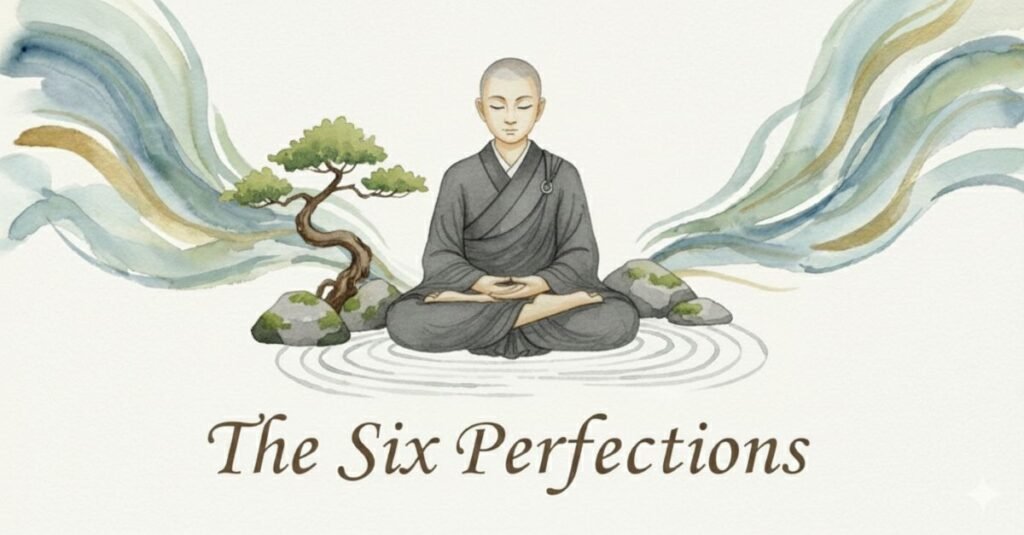
Mahāyāna Sangha members cultivate the six perfections: generosity, ethical conduct, patience, diligence, meditation, and wisdom. The Prajñāpāramitā sūtras teach that these perfections are practiced not for self-benefit but for the benefit of all beings, making the Sangha a vehicle of universal compassion.
45. The Sangha as a Spiritual Family
In Mahāyāna, the Sangha is often described as a spiritual family (kalyāṇamitra parivāra) where members address each other as Dharma brothers and sisters. This familial relationship fosters mutual care and accountability, transcending biological ties.
46. The Role of the Patriarchs and Lineage Holders
Mahāyāna traditions place great importance on lineage, with patriarchs transmitting the Dharma from generation to generation. The Platform Sūtra of the Sixth Patriarch records the transmission from Bodhidharma to Huineng, showing how the Sangha preserves not only texts but direct realization.
47. The Mahāyāna Monastic Code (Dharmaguptaka Vinaya)
East Asian Mahāyāna monastics follow the Dharmaguptaka Vinaya, a translation of the Indian monastic code adapted to Chinese culture. This code preserves the essential structure of the Buddha’s original discipline.
48. The Bodhisattva Precepts
Mahāyāna Sangha members, both monastic and lay, often take the bodhisattva precepts in addition to the monastic code. The Brahmajāla Sūtra (Fanwang Jing) outlines ten major and forty-eight minor precepts that emphasize compassion, non-harming, and the commitment to benefit all beings.
49. The Sangha in Pure Land Traditions
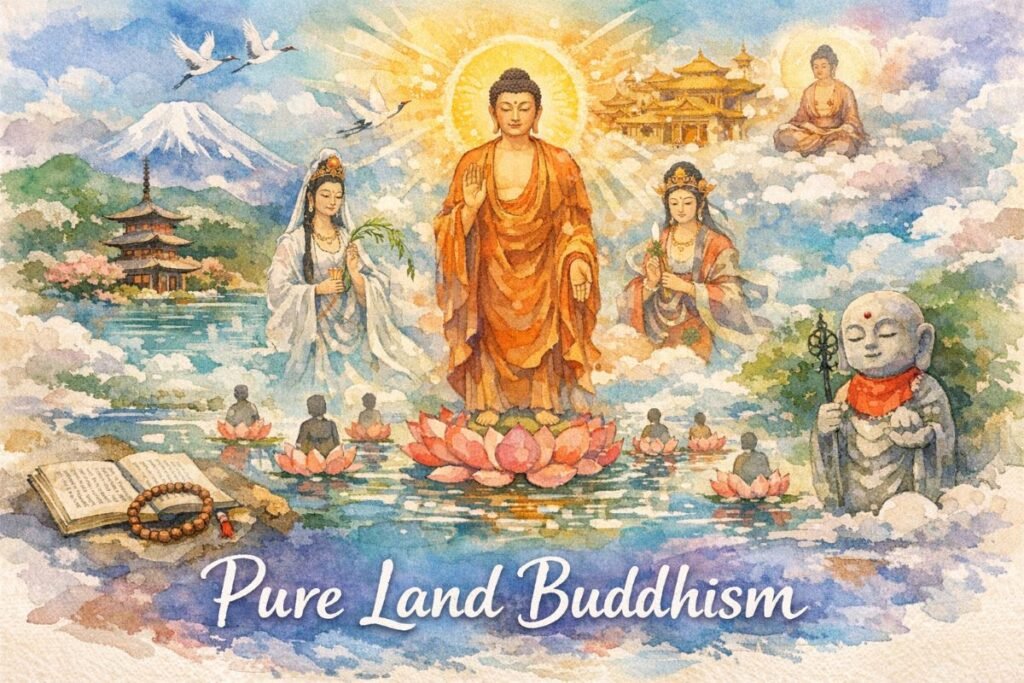
In Pure Land Buddhism, the Sangha includes not only the earthly community but also the celestial assembly of bodhisattvas in Amitābha Buddha’s pure land. The Larger Sukhāvatīvyūha Sūtra describes how practitioners aspire to be reborn in the pure land where they can practice in the company of noble beings.
50. The Sangha in Zen (Chan) Traditions
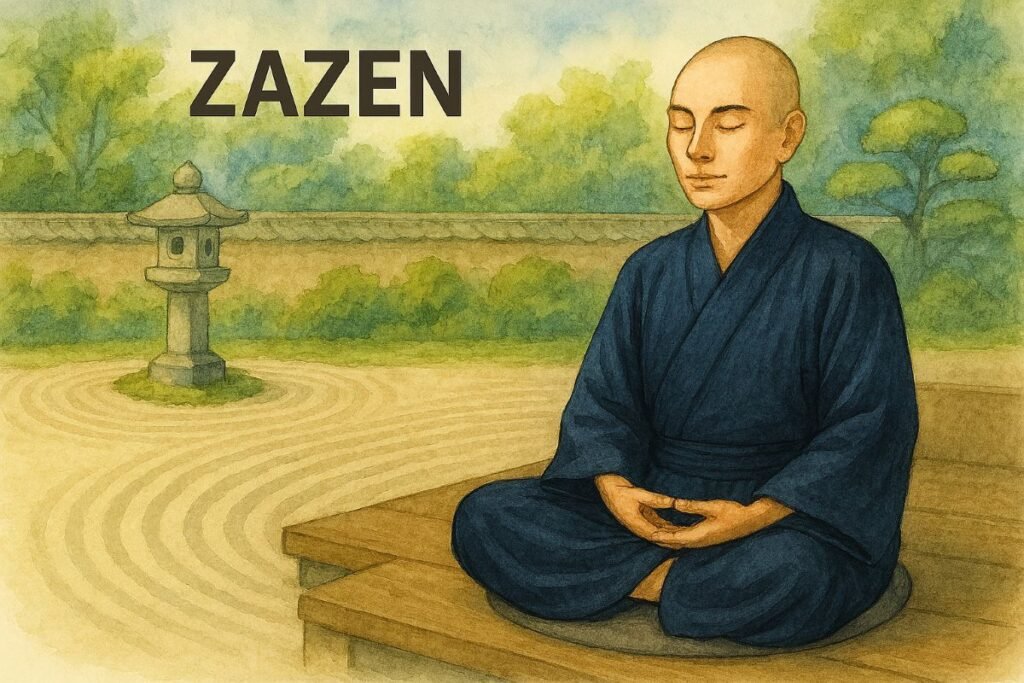
Zen emphasizes the transmission of wisdom outside scriptures, “pointing directly to the mind.” Collections like the Blue Cliff Record contain the public cases (kōans) exchanged between teachers and students within the Zen Sangha, illustrating how the community serves as a crucible for awakening.
51. The Practice of Sesshin and Intensive Retreats
Mahāyāna Sanghas, particularly in Zen, engage in intensive meditation retreats (sesshin) where the entire community practices together for days or weeks. Dōgen’s Eihei Shōbōgenzō describes the profound interdependence of practitioners during such retreats, where the Sangha becomes one body of practice.
52. The Role of Chanting and Liturgy
Mahāyāna Sanghas maintain rich liturgical traditions, including chanting sūtras, reciting the names of bodhisattvas, and performing repentance rituals. The Lotus Sūtra itself is chanted as a practice of embodying the Dharma, uniting the Sangha in a shared sonic expression of awakening.
53. The Mahāyāna Emphasis on Universal Salvation
The Mahāyāna Sangha is driven by the ideal that no being is left behind. Texts like the Śūraṅgama Sūtra teach that the Sangha’s practice is not complete until all beings are liberated, inspiring a boundless compassion that reaches beyond the immediate community.
54. The Sangha as a Field of Merit in Mahāyāna
Just as in the early tradition, the Mahāyāna Sangha is considered a supreme field of merit. The Sūtra of the Golden Light explains that offerings to the Sangha generate merit that supports not only the donor but the entire world, reinforcing the interdependence of all beings.
55. The Inclusion of Lay Bodhisattvas
Mahāyāna Sanghas actively include lay bodhisattvas who maintain households and professions while practicing the bodhisattva path. The Upāsakaśīla Sūtra provides guidelines for lay bodhisattvas, affirming that the Sangha transcends the monastic-lay divide.
56. The Sangha’s Engagement with Society
Mahāyāna traditions, especially in East Asia, have a long history of social engagement. The Vimalakīrti Nirdeśa Sūtra depicts the ideal lay bodhisattva who works within society for the benefit of all, inspiring Sangha members to engage in education, healthcare, and social justice.
57. The Cultivation of Compassion (Karuṇā) in Sangha Life
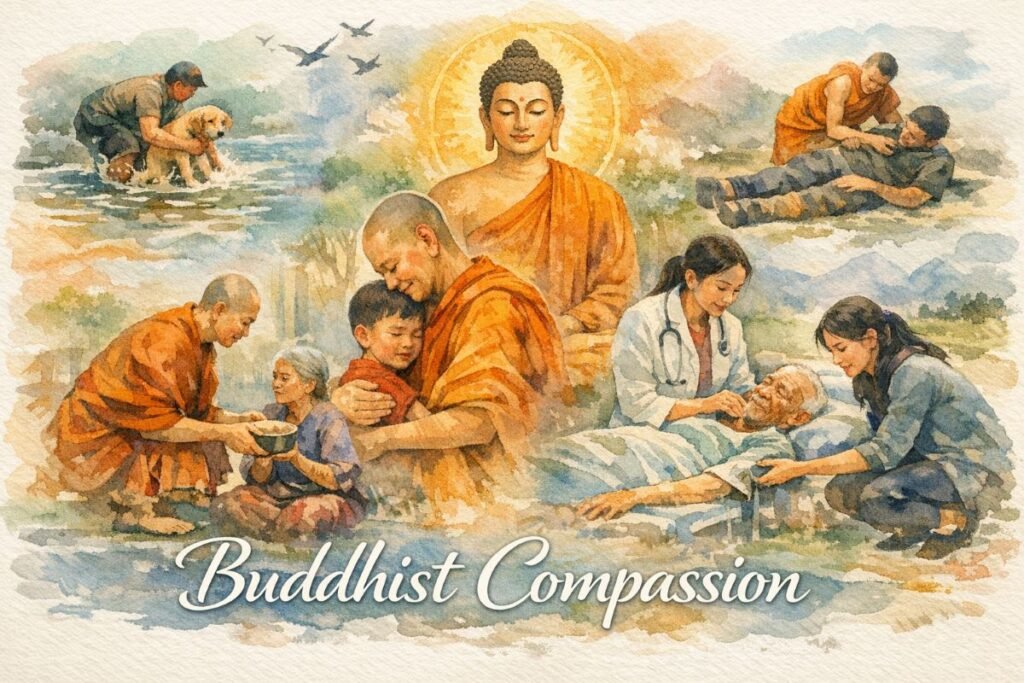
Compassion is the hallmark of the Mahāyāna Sangha. The Karuṇāpuṇḍarīka Sūtra describes the bodhisattva’s vow to remain in saṃsāra until all beings are freed, a vow that shapes every aspect of Sangha practice.
58. The Unity of Wisdom and Compassion
Mahāyāna Sangha members strive to balance wisdom (prajñā) and compassion (karuṇā). The Heart Sūtra, chanted daily in many Mahāyāna communities, teaches that form is emptiness and emptiness is form, a wisdom that, when realized, naturally expresses as compassionate action.
59. The Transmission of the Dharma through Sangha
Mahāyāna Sanghas place great emphasis on Dharma transmission (shihō), where a teacher certifies a disciple’s realization. Records like the Denkōroku chronicle this transmission from Buddha to later generations, showing how the Sangha preserves not only teachings but awakening itself.
60. The Mahāyāna Sangha as a Vast Net of Interconnection
The Mahāyāna vision sees the Sangha as an interconnected web of beings supporting one another across time and space. The Avataṃsaka Sūtra (Flower Ornament Scripture) describes the universe as a net of jewels where each jewel reflects all others, a perfect metaphor for the Sangha, where each practitioner’s practice benefits the whole.
IV. The Sangha in Vajrayāna Tradition (61–80)
Note: Vajrayāna, emerging later through tantric developments (primarily in India and Tibet), emphasizes esoteric practices, guru devotion, and rapid paths to awakening within a committed community framework.
61. The Guru-Disciple Relationship as the Heart of Vajrayāna Sangha
In Vajrayāna, the relationship between guru (teacher) and disciple is the foundation of Sangha life. Tantric texts emphasize that the guru embodies the entire Three Jewels: Buddha, Dhamma, and Sangha — making devotion to the guru essential for awakening.
62. The Vajrayāna Sangha as a Tantric Assembly
Vajrayāna practitioners form a Sangha bound by tantric commitments (samaya). Tantras describe how the assembly of tantric practitioners maintains sacred bonds through shared practices, empowerments, and vows.
63. The Four Schools of Tibetan Buddhism
Tibetan Vajrayāna is organized into four major schools (Nyingma, Kagyu, Sakya, Gelug), each with its own monastic institutions and lineages. Historical records show how the Sangha has adapted to preserve and transmit the tantric teachings.
64. Empowerment (Abhiṣeka) as Entry into the Vajrayāna Sangha
Entry into the Vajrayāna Sangha requires receiving empowerment (abhiṣeka) from a qualified guru. Tantric rituals connect the disciple to the lineage and authorize practice.
65. The Monastic and Ngakpa (Lay Tantric) Traditions
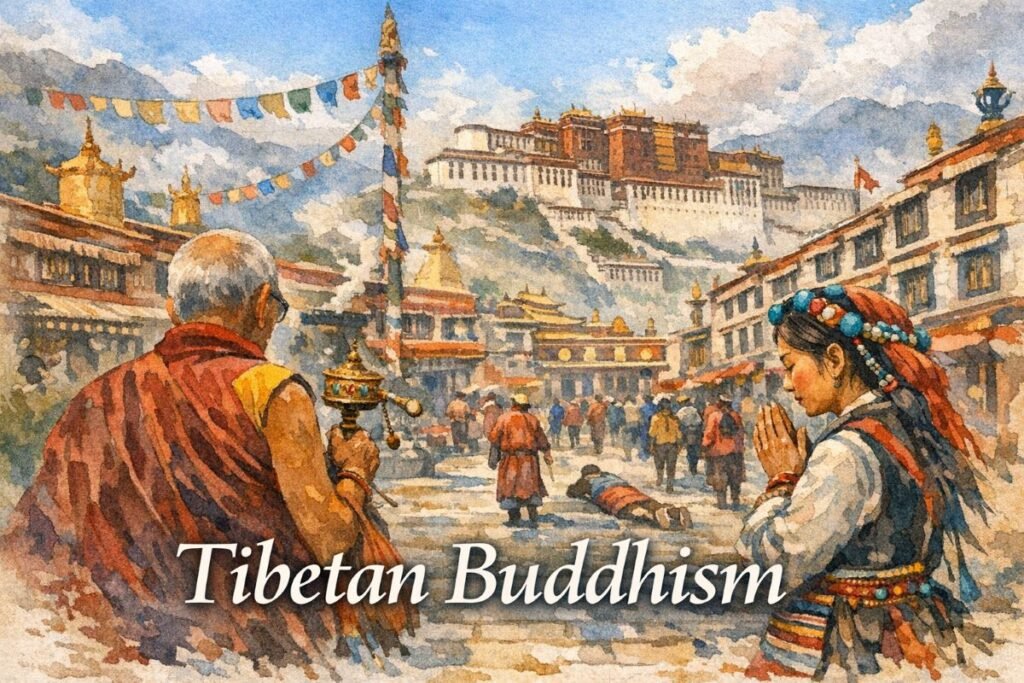
Tibetan Buddhism includes both monastic practitioners and lay tantric practitioners (ngakpas) who maintain householder lives while holding tantric vows. Both lineages preserve the Vajrayāna tradition.
66. The Sangha as a Vajra Family
Vajrayāna practitioners consider themselves part of a vajra family where all members share the same root guru and tantric lineage. This family bond creates a powerful container for practice, accelerating spiritual development.
67. The Role of Retreat Centers (Drubdra)
Vajrayāna Sanghas establish retreat centers where practitioners engage in intensive, often three-year, retreats. The solitary retreats of great yogis like Milarepa remain a model for Vajrayāna practitioners.
68. The Practice of Tsok (Ganachakra) as Sangha Ritual
Vajrayāna Sanghas gather for ganachakra (tsok) rituals, offering symbolic substances and sharing feast offerings. This practice strengthens samaya bonds and accumulates merit collectively.
69. The Emphasis on Lineage Transmission
Vajrayāna places extraordinary importance on faithful lineage transmission from teacher to teacher. Texts trace lineages of teachings like Mahāmudrā, showing how the Sangha’s continuity depends on this transmission.
70. The Sangha’s Role in Preserving Esoteric Teachings
Vajrayāna Sanghas have preserved complex esoteric teachings, including deity yoga, phowa (transference of consciousness), and tummo (inner heat). These are transmitted within traditions like Kagyu, requiring close mentorship.
71. The Integration of Art, Ritual, and Architecture
Vajrayāna Sanghas have created vast artistic and architectural traditions: thangkas, mandalas, stupas, that serve as supports for practice. These forms aid in spiritual navigation and are often a communal activity.
72. The Role of Debate and Philosophical Training
Tibetan monastic universities (shedra) emphasize rigorous philosophical debate as a method of sharpening wisdom. Debate traditions foster sharp intellect and confidence.
73. The Sangha and the Tulku System
Tibetan Buddhism developed the tulku (reincarnate lama) system, where realized practitioners are recognized and enthroned as reincarnations of previous masters. This sustains institutional continuity and spiritual authority.
74. The Role of Ritual Dance (Cham) and Music
Vajrayāna Sanghas perform ritual dances (cham) and complex musical traditions as offerings and means of subduing negativity. These practices were introduced to pacify local spirits and establish the Dharma.
75. The Sangha as Protector of the Dharma
Vajrayāna traditions include protector deities (dharmapāla) invoked by the Sangha to safeguard the teachings. These are seen as manifestations of enlightened compassion.
76. The Blending of Monastic and Tantric Practice
Many Vajrayāna monastics practice tantric rituals alongside their Vinaya discipline. Gradual path texts outline integration of sūtra and tantra within a monastic framework.
77. The Importance of Pilgrimage and Sacred Sites
Vajrayāna Sanghas maintain pilgrimage traditions to sacred sites associated with Padmasambhava, Yeshe Tsogyal, and other masters. These sites serve as power places for connecting with enlightened energy.
78. The Vajrayāna Sangha’s Adaptation to Western Culture
In recent decades, Vajrayāna Sanghas have established centers worldwide, adapting traditional forms to modern contexts while maintaining core lineages.
79. The Role of Women in Vajrayāna Sangha
Vajrayāna honors many female masters, such as Yeshe Tsogyal, Machig Labdrön, and Niguma. Records of these women demonstrate the Sangha’s inclusion of realized female practitioners.
80. The Vajrayāna Sangha’s Vow to Achieve Buddhahood for All
The ultimate aspiration of the Vajrayāna Sangha is to attain Buddhahood swiftly to liberate all beings. The Bodhicaryāvatāra by Śāntideva expresses this vow: “As long as space endures and as long as sentient beings remain, may I too remain to dispel the miseries of the world.”
V. The Sangha as Spiritual Friendship and Practice (81–100)
81. Spiritual Friendship as the Whole of the Holy Life
The Buddha declared in the Upaddha Sutta (SN 45.2) that spiritual friendship (kalyāṇamittatā) is not half the holy life but the whole of it. The Sangha, as the community of spiritual friends, provides the relational container without which the path cannot be fully realized.
82. The Qualities of a True Spiritual Friend
The Kalyāṇamitta Sutta (AN 7.36) lists seven qualities of a good spiritual friend: they are endearing, respected, admirable, a good speaker, tolerant, capable of giving deep teachings, and never urges one to unwholesome actions. The Sangha cultivates these qualities in its members.
83. The Sangha as a Mirror for Reflecting Defilements
Living in community inevitably brings conflicts that reveal one’s attachments, pride, and aversions. The Kandaraka Sutta (MN 51) praises the monastic who uses the Sangha as a mirror to reflect on their conduct, turning every interpersonal challenge into an opportunity for growth.
84. Mutual Accountability in the Sangha
The Sangha holds its members accountable through the formal act of admonition (avavāda). The Vinaya (Cūḷavagga) outlines the procedures for correcting a fellow monastic, emphasizing that such correction must be motivated by compassion and the desire for purity, not by personal animosity.
85. The Four Factors of Stream-Entry and the Sangha
The Cūḷavedalla Sutta (MN 44) explains that stream-entry requires unshakable faith in the Buddha, Dhamma, and Sangha, along with virtuous conduct. Contemplation of the Sangha thus directly supports the first stage of awakening.
86. The Sangha as a Support for Sila (Ethical Conduct)
Ethical conduct is difficult to maintain in isolation. The Vinaya creates a structure of mutual support and transparency that helps monastics uphold the precepts. For lay practitioners, regular association with the Sangha similarly strengthens their commitment to ethical living.
87. The Sangha as a Support for Samādhi (Concentration)
Meditative absorption flourishes in a supportive environment. The Girimānanda Sutta (AN 10.60) lists the perception of the Sangha as one of the ten perceptions that lead to Nibbāna, suggesting that recollecting the Sangha can calm the mind and facilitate concentration.
88. The Sangha as a Support for Paññā (Wisdom)
Wisdom is cultivated not only through solitary reflection but also through discussion and questioning within the Sangha. The Sammādiṭṭhi Sutta (MN 9) exemplifies how the Venerable Sāriputta taught deep Dhamma to his fellow monastics, sharpening their understanding through dialogue.
89. The Role of Harmonious Conduct in Sangha Life
The Buddha taught seven principles for the Sangha’s non-decline, including holding frequent meetings, meeting in harmony, respecting elders, and honoring the established rules. The Mahāparinibbāna Sutta (DN 16) records these principles, which remain the foundation of harmonious community.
90. The Six Principles of Cordiality
The Kosambiya Sutta (MN 48) lists six principles of cordiality (sāraṇīyā dhammā) that maintain harmony: kindness in body, speech, and mind, sharing of gains, sharing of virtues, and sharing of right view. These principles transform a collection of individuals into a genuine Sangha.
91. The Practice of Rejoicing in Others’ Merit
In the Sangha, members are encouraged to rejoice in each other’s spiritual accomplishments. The Aṅguttara Nikāya (AN 4.116) describes the benefits of muditā (sympathetic joy), which counteracts envy and strengthens communal bonds.
92. The Sangha’s Role in Times of Doubt and Difficulty
When practitioners face doubt or discouragement, the Sangha provides perspective and encouragement. The Sallekha Sutta (MN 8) teaches that the path requires association with those who speak wisely and live virtuously, exactly what the Sangha offers.
93. The Practice of Forgiveness and Reconciliation
Conflicts inevitably arise, and the Sangha provides structured ways to forgive and reconcile. The Vinaya (Mahāvagga) details the procedures for settling disputes, including the use of impartial panels and the emphasis on acknowledging offenses.
94. The Sangha’s Collective Energy in Practice
There is a palpable energy that arises when many practitioners meditate together. The Pāyāsi Sutta (DN 23) illustrates how collective practice can inspire faith and deepen individual effort, showing that the whole is greater than the sum of its parts.
95. The Sangha as a Place of Refuge in a Turbulent World
The world is often filled with confusion, conflict, and uncertainty. The Mahāparinibbāna Sutta (DN 16) describes the Sangha as a refuge where beings can find safety from the storms of saṃsāra. Entering the Sangha, even for a short time, offers a taste of peace.
96. The Importance of Regular Sangha Gatherings
Regular gatherings, whether for sutta study, meditation, or communal meals, strengthen the bonds of the Sangha. The Dhammapada (Dhp 206) declares that “association with the wise is always a blessing,” and consistent contact ensures that association remains alive.
97. The Sangha’s Role in Celebrating Festivals and Holy Days
Buddhist festivals, such as Vesak (the Buddha’s birth, awakening, and passing), are traditionally celebrated in the company of the Sangha. The Vesākha Sutta (AN 3.61) points to the importance of remembering the Buddha’s awakening, and celebrating together strengthens collective faith.
98. The Sangha as a Continuation of the Buddha’s Compassion
The Buddha’s compassion is channeled through the Sangha, which continues to offer teachings, support, and guidance. The Sāriputta Sutta (AN 8.100) describes how the Buddha’s disciples, following his example, dedicate themselves to the welfare of all beings.
99. The Sangha as an Antidote to Spiritual Loneliness
The path of awakening can feel lonely, especially when one’s aspirations differ from those of mainstream society. The Sangha provides a community of like-minded practitioners, alleviating that loneliness and affirming that one is not alone in their journey.
100. The Sangha as a Living Teaching
Ultimately, the Sangha itself is a teaching. The Dhammapada (Dhp 184) states: “Patience and forbearance are the supreme austerity.” The Sangha demonstrates this teaching through its daily life, offering a living example of the Dhamma in action.
VI. Contemporary Expressions and Final Reflections (101–108)
101. The Secular Sangha: Reimagining Community Without Dogma
In modern secular contexts, the Sangha has been reimagined as communities of meditation practitioners who may not identify as Buddhist but who gather for mindfulness, ethical reflection, and mutual support. The Kalāma Sutta (AN 3.65), with its emphasis on inquiry and personal verification, is often cited as a basis for such communities, allowing the Sangha to adapt while preserving its essence.
102. The Digital Sangha: New Forms of Connection
Online meditation groups, virtual retreats, and global Dharma forums have created digital Sanghas that transcend geographic boundaries. While lacking the embodied presence of traditional Sangha, these communities fulfill the function of spiritual friendship, as encouraged in the Upaddha Sutta (SN 45.2), offering support and connection to practitioners worldwide.
103. The Sangha’s Engagement with Social and Environmental Justice
Many contemporary Sanghas are actively engaged in social and environmental causes, applying Buddhist principles to pressing global issues. The Karuṇīya Mettā Sutta (Snp 1.8), which teaches boundless compassion for all beings, inspires these efforts, demonstrating that the Sangha’s concern extends beyond individual liberation to the welfare of the whole planet.
104. The Challenge of Inclusivity and Equality
Modern Sanghas face the ongoing challenge of becoming fully inclusive across lines of gender, race, sexuality, and ability. The Buddha’s own radical inclusivity, ordaining women and welcoming outcasts, sets a precedent for the Sangha to continually examine and expand its embrace, as seen in the Bhikkhunī Saṃyutta (SN 5) and stories of early inclusivity.
105. The Integration of Practice and Daily Life
For many contemporary practitioners, the Sangha supports the integration of spiritual practice with work, family, and civic life. The Siṅgālovāda Sutta (DN 31) provides guidance for lay ethics, showing that the Sangha has always recognized that the path must be lived in the midst of the world, not apart from it.
106. The Sangha as a Field of Training in Relational Mindfulness
Modern mindfulness movements have emphasized relational mindfulness, bringing mindful awareness to interactions. The Sangha serves as an ideal training ground for this, as practitioners learn to communicate with kindness, listen deeply, and navigate conflict skillfully, embodying the principles of Right Speech (SN 45.8).
107. The Unbroken Thread of the Sangha
Despite the many changes in the Sangha over 2,500 years, cultural adaptations, institutional developments, and modern innovations, a thread of transmission connects today’s practitioners to the Buddha’s original assembly. The Saṅgīti Sutta (DN 33) reminds us that the Dhamma was recited by the Sangha and has been preserved by the Sangha, ensuring its authenticity.
108. The Sangha as the Heart of Awakening
The Sangha is not merely a support for awakening; it is awakening manifesting in relationship. When two or more gather in the Dhamma, the Buddha is present, the Dhamma is spoken, and the Sangha is realized. The Ratana Sutta (Snp 2.1) celebrates the Sangha as the “field of merit unsurpassed,” the assembly whose very existence makes liberation possible for all beings. In taking refuge in the Sangha, we take refuge in the countless beings, past, present, and future – who have walked and will walk this path together.
Glossary of Pāli Terms
| Pāli Term | English Translation |
|---|---|
| Ariya Sangha | Noble Sangha; those who have attained stages of awakening |
| Bhikkhu | Buddhist monk (ordained) |
| Bhikkhunī | Buddhist nun (ordained) |
| Bodhisatta | Bodhisattva; one on the path to Buddhahood |
| Buddha | The Awakened One |
| Dhamma | The teaching of the Buddha; universal truth |
| Dhutaṅga | Ascetic practice for simplifying life |
| Kalyāṇamittatā | Spiritual friendship; wholesome companionship |
| Karuṇā | Compassion |
| Nekkhamma | Renunciation; the mind of letting go |
| Paññā | Wisdom; insight into the true nature of reality |
| Pātimokkha | The monastic code of 227 rules for bhikkhus |
| Saddhā | Faith; confidence in the Three Jewels |
| Samādhi | Concentration; meditative absorption |
| Samaya | Sacred bond; tantric commitment (Vajrayāna) |
| Saṅgha | Community of practitioners; the third jewel |
| Sīla | Ethical conduct; moral virtue |
| Sutta | Discourse of the Buddha or his disciples |
| Thera / Therī | Elder (male / female monastic) |
| Tiratana | Three Jewels: Buddha, Dhamma, Saṅgha |
| Upasampadā | Higher ordination as a bhikkhu or bhikkhunī |
| Vassa | The rainy season retreat |
| Vinaya | The monastic discipline |
Conclusion
The Sangha is far more than an institution, it is the living heart of the Buddha’s dispensation, the space where the Dhamma is preserved, practiced, and passed on. Across the diverse traditions of Theravāda (rooted in the early discourses), Mahāyāna, Vajrayāna, and modern secular adaptations, the Sangha fulfills the same essential function: it provides the supportive conditions for awakening. Within the Sangha, practitioners find spiritual friendship, ethical accountability, shared wisdom, and the inspiration of those who have gone before. The Sangha is a mirror revealing our defilements, a field of merit cultivating our virtues, and a family of the heart where we learn to love without possession.
These 108 contemplations, drawing primarily from the early discourses where possible and reflecting the living tradition across vehicles, invite us to appreciate the profound gift of the spiritual community. Whether one participates as a monastic dedicated to renunciation or as a lay practitioner engaged in daily life, the Sangha offers a refuge that is at once timeless and ever-adapting. To take refuge in the Sangha is to recognize that liberation is not a solitary achievement but a collective journey. In the words of the Buddha, recorded in the Dhammadāyāda Sutta (MN 3) (with the vivid “born from the mouth” imagery also appearing in the Aggañña Sutta (DN 27)): “Monks, be heirs in the Dhamma, not heirs in material things… You are my true-born sons, born from my mouth, born of the Dhamma, created by the Dhamma, heirs of the Dhamma.” May all beings find their place in this noble assembly, and may the Sangha continue to shine as a beacon of peace, wisdom, and compassion for countless generations to come.
Sadhu, sadhu, sadhu. (Well said, well practiced, well accomplished.)