The Unshakeable Ground: Cultivating Truthfulness (Sacca) on the Buddhist Path

Truthfulness (Sacca) in Buddhism extends far beyond avoiding deliberate deception; it serves as a foundational ethical practice that aligns thought, speech, and action. By examining the nuances of Right Speech, the Fourth Precept, and the interplay between honesty and compassion, this reflection explores how practicing integrity builds genuine trust, clears the mind of self-deception, and creates the essential conditions for spiritual insight.
The Two Truths Doctrine: A Nuanced Guide with Sutta References

Distinguishing conventional appearances from ultimate analysis is not about dividing reality, but about understanding the same dependently arisen phenomena with clarity and compassion. What follows traces that distinction as it developed—from early suttas on conditionality and not-self, through Abhidharma systematization, to Nāgārjuna’s Madhyamaka. Theravāda and Mahāyāna interpretations differ, yet both preserve the integrity of ethical action and meditative investigation. Grounded in canonical references, this is offered as a practical companion for seeking a middle way between reification and nihilism, without turning insight into another fixed view.
Non-Attachment and Moral Action: A Buddhist Perspective on Engaged Practice
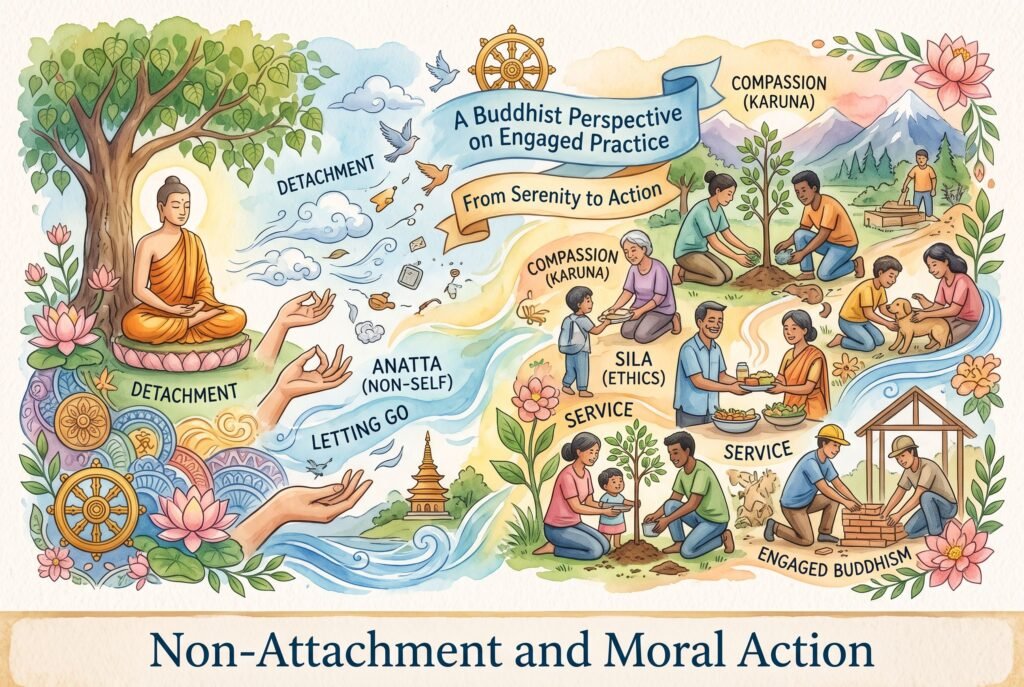
Addressing the perceived tension between inner equanimity and social justice, an exploration of Buddhist non-attachment reveals it as freedom from reactive clinging rather than passive indifference. By applying foundational frameworks such as the Two Arrows principle, Right Intention, and the Bodhisattva ideal, practitioners can replace the exhausting fuel of anger with sustainable compassion. Engaged Buddhism demonstrates how systemic suffering can be confronted vigorously without compromising mental clarity, allowing for effective moral action free from hatred and burnout.
Setting Intentions with the Buddhist Mindset
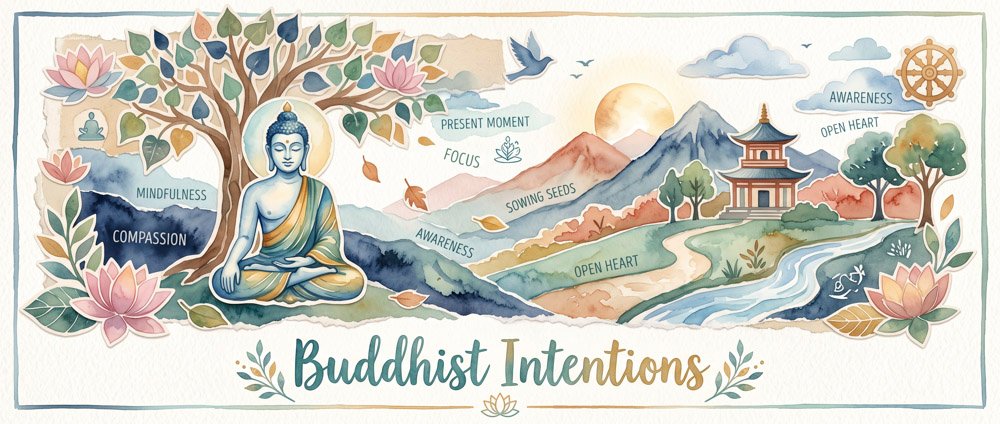
Understanding how to set intentions in Buddhism requires a shift from chasing future outcomes to observing present mental states. At the core of Buddhist ethics lies cetanā (intention), which the Buddha identified as the driving force of kamma. By exploring the roots of our choices — distinguishing impulses driven by greed and delusion from those grounded in generosity and wisdom — we can actively cultivate Right Intention on the Noble Eightfold Path. Through mindfulness and straightforward daily reflection, practitioners can gradually train the mind toward renunciation, goodwill, and harmlessness, shaping their actions and their consequences with clarity.
Buddhist Clear Seeing: Seeing Things as They Really Are

Developing Buddhist clear seeing requires observing the mind and the world without the habitual distortions of craving or aversion. Rooted in the foundational teachings of vipassanā and Right View, this steady practice of mindfulness helps us recognize the impermanent, ever-changing nature of our experiences. By directly perceiving reality as it actually is — rather than how we wish it to be — we can gradually loosen the grip of attachment, diminish daily suffering, and cultivate a more peaceful, grounded approach to life.
Integrity: A Buddhist Approach

How does Buddhist teaching understand integrity? An exploration of sīla, intention, truthfulness, and the Five Precepts as a foundation for daily practice, grounded in early Buddhist teachings and Theravāda and Mahāyāna perspectives.
Buddhism and Overthinking: When Thought Becomes Suffering
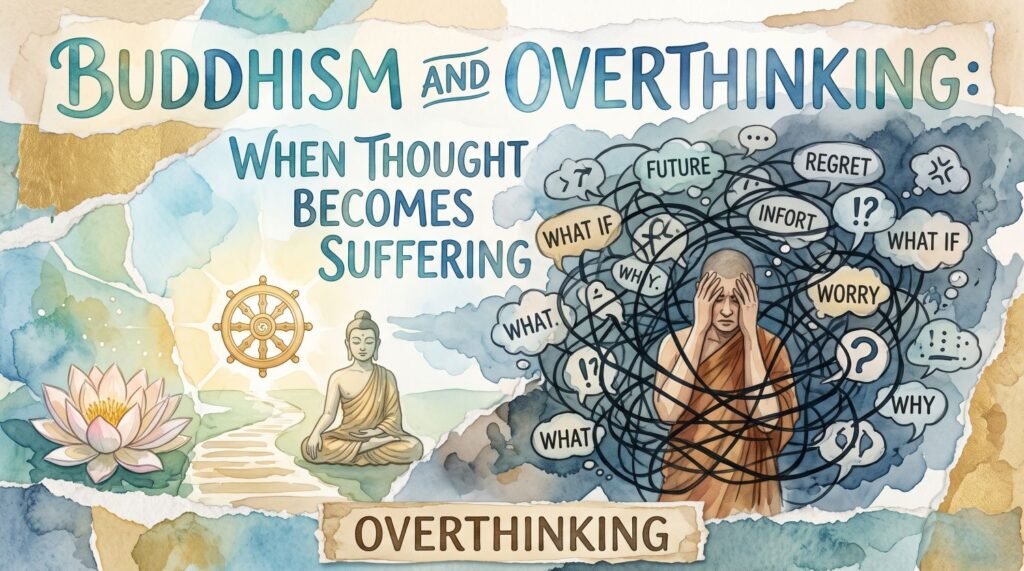
Explore the Buddhist perspective on overthinking — how the mind turns simple perceptions into suffering through mental proliferation (papañca), and how mindfulness, wise attention, and letting go offer a path to freedom from repetitive thoughts. Drawing on early Buddhist teachings from the Pali Canon, this article distinguishes between skilful thinking and rumination, examines the role of the three poisons in obsessive thinking, and provides practical guidance for working with an overthinking mind. Suitable for those new to Buddhism and experienced practitioners alike
The Buddhist Way of Dealing with Regret: Transforming the Past into a Peaceful Present
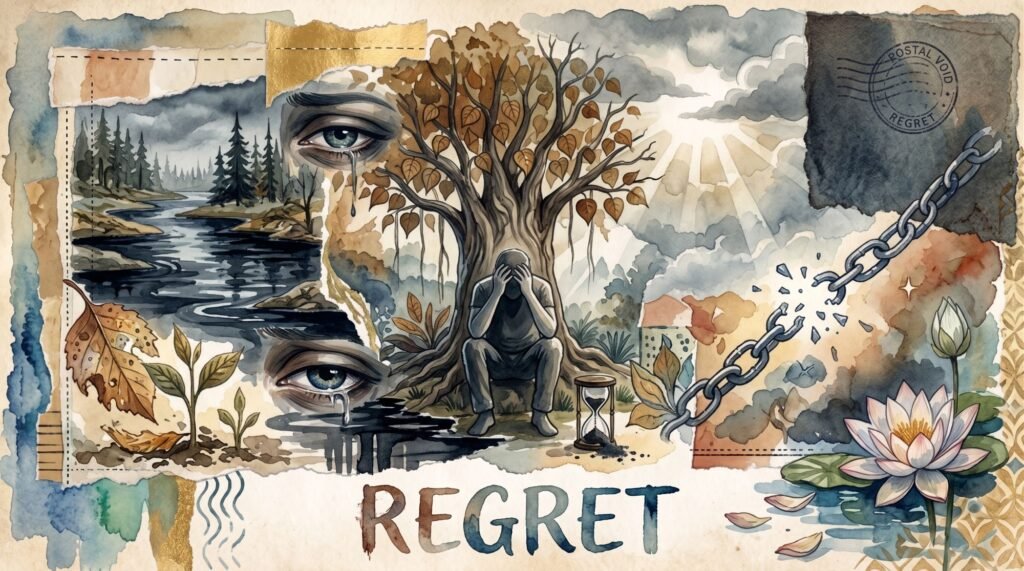
A practical framework for working with regret through core Buddhist teachings on karma, impermanence, and the Two Arrows. Learn to recognize unproductive remorse, take ethical responsibility, make amends, and cultivate wholesome qualities drawn from Early Buddhist, Theravada, and Tibetan Mahayana traditions.
Finding Connection in Solitude: A Buddhist Perspective on Loneliness

A practical Buddhist framework for understanding loneliness as a state of mind rooted in craving rather than external circumstance. This guide explores the distinction between painful isolation and chosen solitude, offering teachings from Theravada and Mahayana traditions alongside accessible practices in mindfulness, compassion, and spiritual friendship.
When Everyone Needs You: A Buddhist Approach to the Sandwich Generation

Caring for ageing parents while supporting children can stretch time, energy, and emotional resources. A Buddhist approach to the sandwich generation offers a grounded way to meet these demands: seeing clearly what is within your control, acting with compassion and wisdom, and letting go of clinging to outcomes. Drawing on early Buddhist teachings on impermanence, patience, equanimity, and right speech, it explores practical ways to care for family without losing yourself — and to meet each moment as it is.
Navigating the Unknown: A Buddhist Approach to Uncertainty
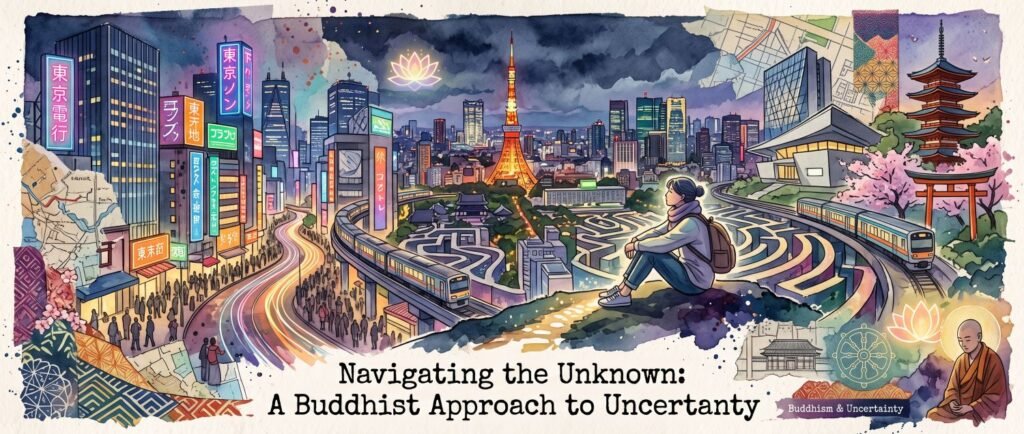
Uncertainty is a fundamental feature of conditioned existence. A Buddhist approach to uncertainty draws on Early Buddhist teachings on impermanence (aniccā), craving (taṇhā), and clinging (upādāna), alongside practices of mindfulness (sati), equanimity (upekkhā), and ethical conduct (sīla). These teachings offer a framework for meeting the unknown with clarity rather than fear, not by controlling circumstances but by understanding how the mind relates to them. The path is gradual, and its goal is liberation from suffering.
Dealing with Difficult People: The Buddhist Approach

The Buddhist approach to dealing with difficult people offers a practical path of patience, compassion, and equanimity rather than avoidance or retaliation. Drawing on Theravada and Mahayana teachings, including the Simile of the Saw, the Sedaka Sutta, and Tibetan mind training, it explores how to work with reactivity, set wise boundaries, and respond with clarity. Real-life examples show how these teachings can be applied in daily life, not as a quick fix but as a gradual practice toward less suffering for oneself and others.