Key Takeaways
- Meditation is a training of the heart and mind, not a quick fix for stress or a means to instantly “empty” the mind.
- Common challenges include physical discomfort, a restless “monkey mind,” difficult emotions, and unrealistic expectations. These are not signs of failure but the very material of the practice.
- The rewards develop gradually and include greater emotional balance, reduced reactivity, deeper self-understanding, and a resilient sense of inner well-being.
- The practice is deeply rooted in core Buddhist teachings like the Four Noble Truths and the Noble Eightfold Path, particularly Right Effort, Right Mindfulness, and Right Concentration.
- Applying meditation to daily life transforms it from a seated exercise into a way of being, fostering patience, compassion, and wise response in relationships and work.
- This guide draws from the earliest Buddhist teachings (Theravāda) and also acknowledges perspectives from Mahāyāna traditions, emphasizing that meditation is a universal tool for reducing suffering.
1. Introduction: Beyond the Instant Calm
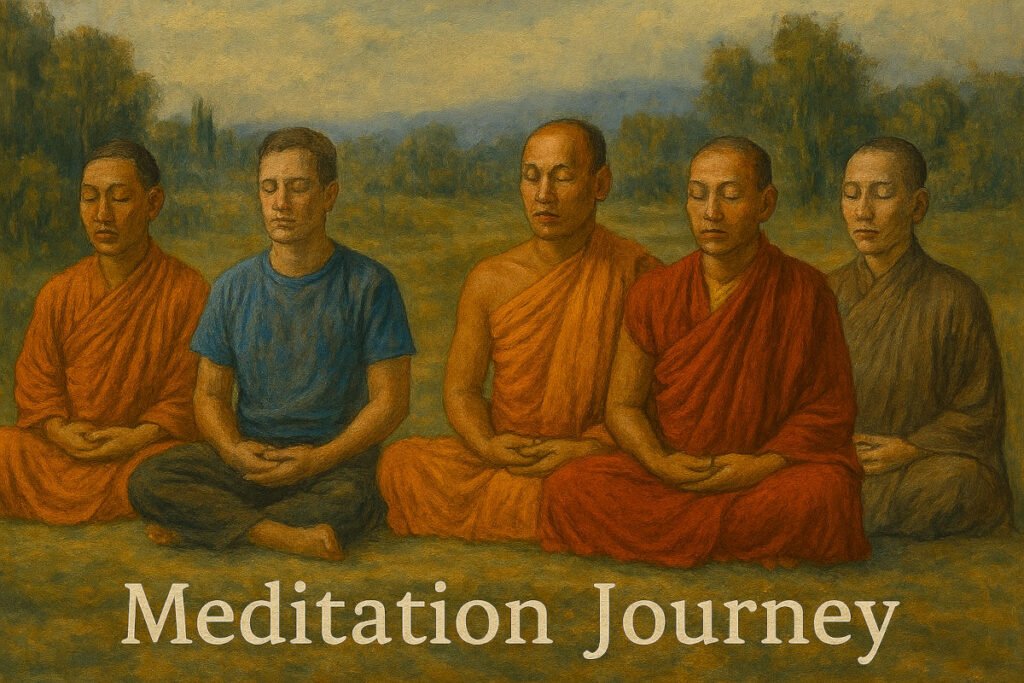
The image of meditation in popular culture is often one of serene bliss, a person sitting perfectly still with a blank, peaceful mind. When we first sit down to meditate and encounter instead a whirlwind of thoughts, physical itchiness, and impatience, we can feel we are doing it wrong. This disconnect between expectation and reality is why many people give up.
This article aims to provide a clear, honest, and practical map of the meditative journey as understood within Buddhist practice. We will explore the common challenges not as obstacles, but as expected milestones on the path. We will detail the profound, often subtle rewards that unfold with patience and consistency. Most importantly, we will ground this in the Buddha’s own teachings, using his frameworks to understand why we practice and how it leads to freedom from suffering.
Meditation, or bhāvanā [Pali] meaning “development” or “cultivation,” is a core component of the Buddhist path. It is the practical training ground for the wisdom taught in the scriptures. Whether you approach it from a secular perspective for well-being or as part of a spiritual path, understanding its full picture, the struggles and the liberation, empowers you to practice with realistic confidence and enduring commitment.
2. The Buddhist Foundation: Why We Meditate
To understand meditation’s role, we must first understand the problem it aims to solve. The Buddha’s central teaching is the Four Noble Truths:
- The truth of dukkha [Pali]: often translated as suffering, stress, or unsatisfactoriness.
- The truth of the origin of dukkha: craving (taṇhā [Pali]) our wanting, clinging, and aversion.
- The truth of the cessation of dukkha: the possibility of liberation, of Nirvāṇa (Nibbāna [Pali]).
- The truth of the path leading to the cessation of dukkha: The Noble Eightfold Path.
Meditation is the heart of this Noble Eightfold Path, encompassing Right Effort, Right Mindfulness, and Right Concentration. It is not a relaxation technique divorced from ethics and wisdom, but an integrated training. As stated in the Mahāsatipaṭṭhāna Sutta (DN 22), the foundational discourse on mindfulness, meditation is “the direct path for the purification of beings, for the overcoming of sorrow and lamentation, for the disappearance of pain and grief, for the attainment of the true way, for the realization of Nibbāna.”
In simpler terms, we meditate to see clearly. We train the mind to observe the constant flow of thoughts, feelings, and sensations without getting swept away by them. This clear seeing (vipassanā [Pali] / vipaśyanā [Sanskrit]) reveals the impersonal, changing nature of all experience. When we see that a painful feeling is just a feeling, not “my” permanent suffering, we can let it be without adding layers of mental struggle. This insight weakens craving and aversion, the roots of dukkha, and cultivates peace.
3. Common Challenges in Meditation Practice
Challenges in meditation are universal. The ancient texts describe them in detail, assuring us they are normal. The skillful response is not to fight them, but to understand and work with them using the Buddha’s guidance.
3.1 The Restless, “Monkey” Mind
The Challenge: You sit down, close your eyes, and intend to focus on your breath. Within seconds, your mind is planning dinner, replaying a conversation, or worrying about a deadline. This is often called the “monkey mind,” jumping from branch to branch.
The Buddhist Framework: This is the nature of the untrained mind. The Buddha called this distracted thinking papañca [Pali], mental proliferation. A single sensation can trigger a long chain of associative thoughts, stories, and judgments.
Skillful Response (An Example):
- The Situation: David, a project manager, tries to meditate after work. He aims for 20 minutes of calm but spends 18 minutes mentally rehashing a tense team meeting, imagining future conflicts, and feeling frustration towards a colleague.
- The Unskillful Reaction: David thinks, “I’m terrible at this. My mind won’t shut up. This is useless.” He gives up in frustration, reinforcing the belief that meditation doesn’t work for him.
- The Skillful, Meditative Response: David remembers his practice is awareness, not thought-stopping. He gently notices, “Ah, planning.” or “Remembering.” He acknowledges the thought without judgment, and softly returns his attention to the physical sensation of his breath in his belly. He does this dozens of times in the session. The victory is not a blank mind, but the moment of awareness that interrupts the automatic chain of thinking. As taught in the Vitakkasaṇṭhāna Sutta (MN 20), “The Removal of Distracting Thoughts,” when unskillful thoughts arise, one can simply replace them with a skillful object of attention, like the breath.
3.2 Physical Discomfort and Restlessness
The Challenge: Pain in the knees, an aching back, an intense urge to move, or simple lethargy (thīna-middha [Pali]).
The Buddhist Framework: The body’s discomfort is a primary object of mindfulness. The first foundation of mindfulness in the Mahāsatipaṭṭhāna Sutta (and its parallel, the Satipaṭṭhāna Sutta, MN 10) is mindfulness of the body (kāyānupassanā). Pain is not an enemy to be defeated but a phenomenon to be investigated with curiosity.
Skillful Response (An Example):
- The Situation: Maria is on a weekend meditation retreat. After 25 minutes of sitting, a sharp pain arises in her hip. Her immediate impulse is to shift violently or stand up.
- The Unskillful Reaction: She grits her teeth, tries to “power through” the pain while resenting it, creating a battle of “me vs. the pain.” This increases tension and suffering.
- The Skillful, Meditative Response: Maria first makes a wise adjustment to her posture, acknowledging the body’s need for care. If the pain persists, she turns toward it as her object of meditation. She explores it with gentle attention: Where exactly is it? Is it sharp, throbbing, or burning? Does it change from moment to moment? She discovers it is not a solid “thing” called “my pain,” but a constellation of changing sensations. This shift from aversion to investigation often reduces the suffering around the pain, even if the sensation remains.
3.3 The Five Hindrances (Nīvaraṇa)
The Buddha specifically identified five mental states that obstruct meditation and clear seeing. Recognizing them is half the battle.
- Sensory Desire (Kāmacchanda): Wanting pleasant sights, sounds, tastes, etc. (e.g., daydreaming about a vacation during meditation).
- Ill-will or Aversion (Vyāpāda): Feeling irritated, angry, or resentful (e.g., annoyance at a noise outside).
- Sloth and Torpor (Thīna-Middha): Dullness, lethargy, sleepiness.
- Restlessness and Worry (Uddhacca-Kukkucca): The “monkey mind” and anxiety about past or future.
- Doubt (Vicikicchā): Uncertainty about the practice, the teacher, or your own ability (“Is this working? Am I doing it right?”).
Skillful Response: The Buddha offered specific antidotes in the suttas. For ill-will, the direct antidote is loving-kindness (mettā [Pali]). For restlessness, traditional commentaries often suggest grounding practices like mindfulness of breathing or cultivating lightness of body. For sloth, energize the mind by reflecting on inspiration. The key is to identify the hindrance without guilt “Ah, doubt is here”, and apply the appropriate antidote as found in teachings like the Sabbāsava Sutta (MN 2).
3.4 Emotional Storms and Old Wounds
The Challenge: In the stillness of meditation, buried sadness, grief, or fear may surface. This can be frightening and make one want to avoid meditation.
The Buddhist Framework: The mind, when quiet, begins to process what it has pushed aside. This is part of purification. The second foundation of mindfulness is feelings (vedanānupassanā), which includes pleasant, unpleasant, and neutral emotional tones. A Note on Safety: If intense, trauma-related emotions arise, it is wise to seek the support of a mental health professional or a trauma-informed meditation teacher. The practice should be a container for healing, not re-traumatization.
Skillful Response (An Example):
- The Situation: Chloe, whose father passed away a year ago, has been keeping busy. During a quiet meditation, a deep wave of grief suddenly washes over her.
- The Unskillful Reaction: She panics, thinks, “Meditation is making me depressed!” She suppresses the feeling, opens her eyes, and distracts herself with her phone.
- The Skillful, Meditative Response: Chloe allows herself to feel the grief, sensing it as physical sensations in her body: tightness in the chest, warmth behind the eyes. She mentally notes “sadness, sadness” or “heavy, heavy” with kindness. She might even offer silent phrases of compassion to herself: “May I be kind to myself in this pain.” She holds the emotion like a crying child, with presence rather than analysis. This allows for natural healing and integration, as she learns she can be with difficult emotions without being destroyed by them.
3.5 Unrealistic Expectations and the “Progress” Trap
The Challenge: Expecting linear progress, special blissful states, or immediate life transformation. When these don’t appear, disappointment sets in.
The Buddhist Framework: This is a form of craving, craving for becoming or for special meditative states (bhava-taṇhā). The Buddha taught Right View, which includes understanding that the path is gradual, as illustrated in the Simile of the Ocean (attributed to Udāna 5.5), where the Buddha explains that just as the ocean slopes gradually, this spiritual path is a gradual training, a gradual practice, and a gradual progression.
Skillful Response: Cultivate Right Intention: the intention of renunciation (letting go of craving for sense pleasures), good will, and harmlessness. Approach each session with a beginner’s mind, not to “get something,” but simply to be present with what is. The reward is in the mindful moment itself, not in a future result.
4. The Gradual Rewards: How to Cultivate Mindfulness and Concentration
The benefits of meditation are not always dramatic, but they are profound and transformative. They seep into your life, changing how you relate to yourself and the world.
4.1 Emotional Regulation and the Pause
The Reward: You develop a space between a stimulus and your reaction. This “mindful pause” is where freedom lies.
In Daily Life (Continuing David’s Story):
A week into consistent practice, David is in another meeting. A colleague criticizes his proposal. He feels the familiar heat of anger rise. But instead of snapping back, he feels the pause. He notices the anger as a clenching in his stomach. He takes one conscious breath. In that space, he sees his colleague’s stress. He responds, “I hear your concern. Let’s look at the data together.” The meeting shifts from conflict to collaboration. This is the fruit of Right Mindfulness and Right Action.
4.2 Increased Patience and Compassion
The Reward: As you learn to sit with your own discomfort with kindness, your capacity to be with the discomfort of others grows. You see shared humanity.
In Daily Life (Continuing Maria’s Story):
Maria, after her retreat, is in a long supermarket queue. People are irritable. Previously, she would have been inwardly fuming. Now, she notices her own impatience and smiles inwardly at it. She looks at the tired cashier and the stressed parent with a child, feeling a sense of shared human impatience. She spends the wait feeling her breath, not fighting reality. This is the cultivation of karuṇā Pali and khanti Pali, perfections emphasized in both Theravāda and Mahāyāna paths.
4.3 Deepened Self-Understanding and Insight (Vipassanā)
The Reward: You begin to see the patterns of your mind. You notice how a slight criticism triggers a cascade of self-doubt, or how desire for a new possession creates an undercurrent of discontent. This insight (paññā [Pali] / prajñā [Sanskrit]) is liberating.
The Buddhist Framework: This is seeing the Three Marks of Existence in your own experience: anicca (impermanence—thoughts and feelings arising and passing), dukkha (the stress of clinging to the impermanent), and anattā (not-self—the lack of a permanent, solid “you” behind the experience).
4.4 Unshakable Inner Grounding
The Reward: You develop a source of well-being that is less dependent on external conditions: good health, praise, or success. This is the taste of true contentment (santuṭṭhi [Pali]).
In Daily Life (Continuing Chloe’s Story):
Months later, Chloe faces a professional setback. While disappointed, she doesn’t fall into the abyss of “I’m a failure.” She can feel the disappointment while also sensing a deeper, steady space of awareness that holds it. She remembers, “This too is impermanent. This is a feeling, not all of me.” She recovers her equilibrium much faster. This reflects the stability of a mind trained in Right Concentration (samādhi).
5. Integrating Meditation into the Buddhist Path
Meditation is not isolated. It is supported by and supports the other parts of the Noble Eightfold Path.
- Supported by Ethics (Sīla): Virtuous behavior (Right Speech, Right Action, Right Livelihood) creates a life with less regret and agitation. A calm conscience makes it much easier to sit in peaceful meditation.
- Fueled by Wisdom (Paññā): Study of the teachings (Right View, Right Intention) provides the map and the motivation. Understanding why we observe the breath makes the practice meaningful.
- Expressed as Wisdom in Life: The clarity from meditation helps you act more ethically and wisely in complex situations, closing the loop.
This integration is beautifully described in the Dvedhāvitakka Sutta (MN 19), where the Buddha explains how he observed the results of skillful and unskillful thoughts, abandoned the unskillful, and cultivated the skillful through persistent attention.
6. Practical Guide: Starting and Sustaining a Practice
- Start Small and Concrete: Commit to 5-10 minutes daily, not 30. Consistency is infinitely more important than duration. Use a gentle timer.
- Establish a Routine: Link it to an existing habit—after your morning coffee, before your evening shower.
- Find Your Anchor: The breath at the nostrils or abdomen is most common. You can also use sound, body sensations, or a repeated phrase of loving-kindness.
- Adopt the Attitude of a Kind Scientist: Your mind is the laboratory. Observe with curiosity, not judgment.
- Practice the “Magic Moment”: The moment you realize your mind has wandered is the magic moment of awakening. Gently return to the breath. That is the rep, the bicep curl for your awareness.
- Seek Community (Saṅgha): Join a local meditation group or an online community. Shared practice provides invaluable support and inspiration.
- Be Patient with the Process: Trust the gradual training. As the Buddha said in the Dhammapada (Verse 239), “Little by little, moment by moment, a wise person removes their own impurities, like a smith removes dross from silver.”
7. A Note on Different Buddhist Traditions
- Theravāda: Emphasizes Vipassanā (insight) and Samatha (tranquility) meditation as found in the Pali Canon. Focuses on mindfulness of body, feelings, mind, and phenomena (the Four Foundations).
- Mahāyāna (e.g., Zen, Tibetan Buddhism): Incorporates insight and tranquility but often within different frameworks. Zen emphasizes shikantaza (“just sitting“) and koan inquiry. Tibetan Buddhism uses sophisticated visualization and mantra practices (sādhana) to cultivate compassion and wisdom, seeing them as inseparable (śūnyatā [Sanskrit] / emptiness).
While methods differ, the essence, training attention, developing insight, and reducing suffering, is universal.
Glossary of Key Terms
| English Term | Pali/Sanskrit Term | Explanation |
|---|---|---|
| Anattā | Anattā [Pali] / Anātman [Sanskrit] | “Not-self,” the teaching that there is no permanent, unchanging core identity within any phenomenon. |
| Anicca | Anicca [Pali] / Anitya [Sanskrit] | “Impermanence,” the fundamental characteristic that all conditioned things are in constant flux. |
| Bhāvanā | Bhāvanā [Pali/Sanskrit] | “Development” or “cultivation,” the general term for meditation. |
| Dukkha | Dukkha [Pali] / Duḥkha [Sanskrit] | Often translated as “suffering,” but more accurately stress, unsatisfactoriness, or the inherent difficulty of conditioned existence. |
| Hindrances | Nīvaraṇa [Pali] | The five mental states that obstruct meditation: desire, ill-will, sloth, restlessness, and doubt. |
| Loving-Kindness | Mettā [Pali] / Maitrī [Sanskrit] | The unconditional wish for beings to be happy. A specific meditation practice. |
| Mindfulness | Sati [Pali] / Smṛti [Sanskrit] | The ability to remember to pay attention to present-moment experience with non-judgmental awareness. |
| Nirvāṇa | Nibbāna [Pali] / Nirvāṇa [Sanskrit] | The ultimate goal of the Buddhist path; the extinguishing of the fires of greed, hatred, and delusion (not annihilation, but the cessation of craving and suffering). |
| Samādhi | Samādhi [Pali/Sanskrit] | “Concentration,” the unified, stable, focused state of mind developed in meditation. |
| Vipassanā | Vipassanā [Pali] / Vipaśyanā [Sanskrit] | “Insight,” the clear seeing into the true nature of reality (as impermanent, unsatisfactory, and not-self). |
References & Further Resources
Web Articles & Texts:
- Access to Insight: A vast, free library of translated Theravāda Buddhist texts. Read the Mahāsatipaṭṭhāna Sutta (DN 22) or Satipaṭṭhāna Sutta (MN 10) for the full teaching on the foundations of mindfulness.
- Sutta Central: Another excellent resource for accessing translations of the Buddha’s discourses from multiple canons.
- The Barre Center for Buddhist Studies: Offers insightful articles connecting classical teachings with contemporary practice.
Books:
- The Heart of the Buddha’s Teaching by Thich Nhat Hanh. A beautifully clear and accessible overview of core teachings, including meditation.
- Mindfulness in Plain English by Bhante Henepola Gunaratana. A practical, no-nonsense guide to Vipassanā meditation.
- The Miracle of Mindfulness by Thich Nhat Hanh. A classic on bringing meditative awareness into everyday activities.
- How to Meditate: A Practical Guide by Kathleen McDonald. A comprehensive manual from the Tibetan Buddhist tradition.
Audio & Video:
- Dharma Seed: A massive collection of free dharma talks from Insight Meditation (Vipassanā) teachers. Search for talks by teachers like Gil Fronsdal, Tara Brach, or Joseph Goldstein on topics like “Working with Hindrances.”
- Tergar Meditation Community: Founded by Yongey Mingyur Rinpoche, offering clear, step-by-step meditation instructions from the Tibetan tradition. Their “Joy of Living” course is highly recommended for beginners.
- Ajahn Sona’s YouTube Channel: Theravāda monk Ajahn Sona provides deep, wise, and often humorous talks on Buddhist practice.
Podcasts:
- Metta Hour Podcast with Sharon Salzberg: Focuses on loving-kindness and the integration of meditation into life.
- The Daily Meditation Podcast with Mary Meckley: Offers short, practical guided meditations for daily use.
- Buddhist Society of Western Australia’s Podcasts: Features talks by renowned monks like Ajahn Brahm, known for his accessible and humorous teaching style.