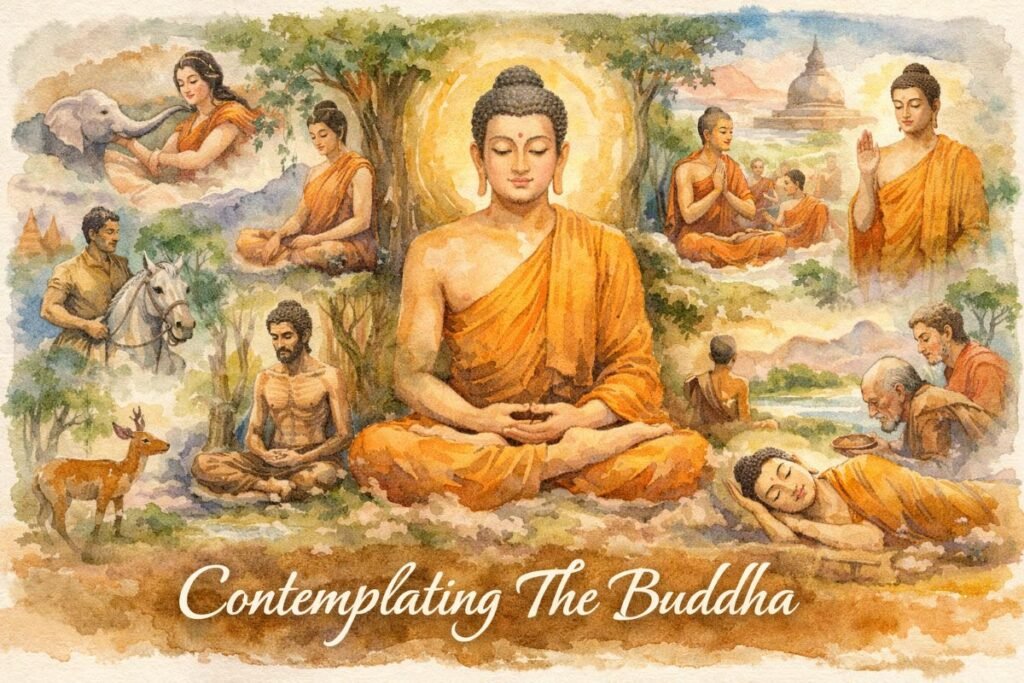
Author’s Note: Many events in the Buddha’s life are recorded across the early Pāli Canon, while others come from ancient commentaries and traditional biographies. This article presents the traditional Buddhist narrative while grounding it in early canonical sources where available, and distinguishing commentarial material where appropriate.
Introduction
The life of the Buddha, Siddhattha Gotama, stands as the supreme example of the human potential for awakening. His journey from a sheltered prince to the Fully Enlightened One illustrates the core Buddhist principles of renunciation (nekkhamma), ethical conduct (sīla), meditation (samādhi), wisdom (paññā), and compassion (karuṇā). More than a mere historical narrative, the Buddha’s life is a living teaching, a blueprint for the path from suffering to liberation that each practitioner can follow.
Born into luxury as Prince Siddhattha, he was shielded from the realities of aging, sickness, and death. According to traditional Buddhist accounts, his encounters with these truths, the Four Sights, pierced the veil of his comfortable existence and awakened in him a profound spiritual urgency (saṃvega). While the story of the Four Sights as applied to Gotama comes from later commentaries, the essence of his renunciation is recorded in the Ariyapariyesanā Sutta (MN 26), where he describes his own reflection as a young man: “Why, being myself subject to birth, do I seek what is also subject to birth?” This realization set in motion his great renunciation: the leaving behind of kingdom, family, and privilege to seek the unborn, unaging, unailing, deathless supreme security from bondage.
The value of contemplating the Buddha’s life lies in its power to inspire and guide our own practice. His story demonstrates that liberation is possible, that the causes of suffering can be uprooted, and that compassion for all beings naturally flows from profound wisdom. As the Mahāparinibbāna Sutta (DN 16) recounts, even in his final hours, the Buddha continued to teach by example, showing us how to meet death itself with perfect mindfulness and peace. His last words, “All formations are subject to dissolution. Strive on with diligence,” remain the essential instruction for all who follow in his footsteps. The following 108 contemplations are offered to deepen your connection with the life of the Awakened One and to illuminate the path he so compassionately revealed.
The Birth and Early Life of the Bodhisatta
1. The Future Buddha Resides in Tusita Heaven
Before his final birth, according to traditional accounts, the Bodhisatta, the being destined for Buddhahood, dwelt in the Tusita heaven, awaiting the right time and place for his final existence. This understanding of his preparatory existence is reflected in the Acchariyabbhūta Sutta (MN 123), which details the marvelous and wonderful qualities surrounding his conception and birth.
2. Queen Mahāmāyā’s Dream
On the night of conception, according to tradition, Queen Mahāmāyā dreamed that a white elephant, holding a white lotus in its trunk, entered her side. This auspicious dream, interpreted by brahmins as a sign that she would give birth to a son destined to become either a universal monarch or a fully enlightened Buddha, is recounted in the Mahāpadāna Sutta (DN 14), which describes the traditional accounts of all Buddhas’ births.
3. The Birth at Lumbinī Grove
While traveling to her parental home, Queen Mahāmāyā gave birth standing, holding onto a sal tree branch in the Lumbinī Grove. The Buddha later identified Lumbinī as one of four places of pilgrimage for his followers. This sacred site is confirmed in the Mahāparinibbāna Sutta (DN 16), where he declares that faithful followers may visit such places with a sense of spiritual urgency.
4. The Sage Asita’s Visit
According to tradition, the ascetic Asita, seeing the devas rejoicing, came to the palace to behold the newborn prince. Perceiving the marks of a Great Being on the child, he rejoiced and then wept, realizing he would not live to hear the Buddha’s teaching. This account, found in the Nālaka Sutta (Snp 3.11), reveals the preciousness of encountering a Buddha’s teaching.
5. The Naming Ceremony
On the fifth day, the naming ceremony was held, and the prince was named Siddhattha, meaning “one who has accomplished his goal.” According to traditional accounts, eight brahmins were invited; seven raised two fingers, predicting he could become either a wheel-turning monarch or a Buddha, while the youngest, Koṇḍañña, confidently raised one finger, declaring he would become the Fully Enlightened One. This story is preserved in the Buddhavaṃsa and its commentary.
6. The Death of the Queen Mother
Seven days after the birth, according to tradition, Queen Mahāmāyā passed away and was reborn in the Tusita heaven. The infant was raised by her sister, Mahāpajāpatī Gotamī. This early experience of loss, though not remembered, foreshadowed the universal truth of impermanence that the Buddha would later teach in the Piyajātika Sutta (MN 87).
7. A Life of Refined Sensuality
King Suddhodana, determined to prevent his son from following Koṇḍañña’s prediction, surrounded the prince with every conceivable luxury. According to the Sukhumāla Sutta (AN 3.38), three palaces were built for the different seasons, named in the commentaries as Ramma, Suramma, and Subha, and only beauty and pleasure filled his days. This sheltered existence is described as the kind of indulgence the Bodhisatta later abandoned.
8. Mastery of Worldly Skills
As a khattiya prince, Siddhattha was trained in the arts of warfare and governance, excelling in all manly sports. His prowess demonstrated that he possessed the strength and determination necessary for the great spiritual struggle ahead, qualities later praised in the Padhāna Sutta (Snp 3.2) during his encounter with Māra.
9. The Marriage to Yasodharā
At sixteen, according to tradition, Prince Siddhattha married his beautiful cousin, Princess Yasodharā (also known as Bhaddakaccānā). Their union, based on mutual love and respect, provided him with every worldly happiness. Yet the Nāradakassapa Jātaka reminds us that even such perfect worldly happiness could not ultimately satisfy his questing spirit.
10. The Birth of Rāhula
When he was twenty-nine, according to traditional accounts, Yasodharā gave birth to a son, whom Siddhattha named Rāhula, meaning “fetter” or “bond,” recognizing that the child could become a tie binding him to household life. This moment, while not detailed in the early suttas, sets the stage for his great renunciation described in the Mahāsaccaka Sutta (MN 36).
11. The Four Sights: The Divine Messengers
According to traditional biographies, Prince Siddhattha ventured beyond the palace walls and encountered four sights that transformed his life: an old man, a sick man, a corpse, and a serene ascetic. While this specific narrative as applied to Gotama is commentarial, the Devadūta Sutta (MN 130) explains that aging, sickness, and death are the “divine messengers” sent to awaken beings from their complacency. The Mahāpadāna Sutta (DN 14) applies this same four-sight narrative to the previous Buddha Vipassī.
12. The Shock of Recognition
The sight of old age struck Siddhattha deeply, as he realized that he too was subject to this natural law. His charioteer Channa (named in later tradition) explained that all beings without exception grow old. This universal truth, later expounded in the Jarā Sutta (SN 3.3), shows that even kings cannot escape the ravages of time.
13. The Encounter with Sickness
The second journey revealed a diseased body, reinforcing the fragile nature of human existence. Siddhattha saw that health is merely temporary and that sickness inevitably visits all beings. The Gelañña Sutta (SN 36.7) later teaches how an enlightened one maintains mindfulness even in the midst of severe illness.
14. The Certainty of Death
The third sight, a corpse being carried to cremation, brought the reality of death directly before the prince. He understood that death is not an exception but the certain end of all born beings. The Mahāparinibbāna Sutta (DN 16) later records his own final passage, completing this circle of contemplation.
15. The Ascetic as Hope
The fourth sight, a recluse with calm demeanor and controlled senses, revealed that there is a path beyond these sufferings. This ascetic represented the possibility of liberation, the hope that the cycle of birth, aging, sickness, and death could be transcended. The Pabbajjā Sutta (Snp 3.1) poetically captures this moment of inspiration.
16. The Great Renunciation
That very night, according to traditional accounts, after visiting the sleeping forms of his wife and newborn son, Prince Siddhattha made his decision. He took one last look, then departed on his horse Kanthaka with his charioteer Channa. This courageous act of letting go embodies the renunciation (nekkhamma) praised throughout the Dhammapada (vv. 83-84).
17. Crossing the River Anomā
Riding through the night, according to tradition, Siddhattha crossed the river Anomā at dawn. There, he cut off his hair with his sword, exchanged his royal garments for the simple robes of an ascetic, and sent Channa and Kanthaka back to Kapilavatthu. This moment marked his formal entry into the homeless life, as described in the Ariyapariyesanā Sutta (MN 26).
18. The Sorrow of Those Left Behind
When the royal court discovered the prince’s departure, profound grief arose. As the Piyajātika Sutta (MN 87) teaches, from what is dear, sorrow arises, a truth now directly experienced by the very family of the one who would later teach this.
19. Kanthaka’s Heart Breaks
According to later commentarial tradition, the faithful horse Kanthaka, unable to bear separation from his master, died upon returning to the palace and was reborn in heaven as a deva. This touching detail from the commentaries illustrates the depth of devotion the Bodhisatta inspired even in animals.
20. The Quest Begins
Now as the ascetic Gotama, the former prince wandered through Magadha, seeking teachers who could guide him to the deathless. He approached Āḷāra Kālāma and mastered his teaching, reaching the sphere of nothingness, yet found it did not lead to final liberation. This honest assessment of even the highest meditative attainments is recorded in the Mahāsaccaka Sutta (MN 36).
The Ascetic Life and the Struggle for Awakening
21. Training with Uddaka Rāmaputta
Unsatisfied, Gotama next approached Uddaka Rāmaputta and quickly attained the sphere of neither perception nor non-perception, the peak of formless meditation. Yet again, he recognized that this state, while profound, was not Nibbāna. The Pañcattaya Sutta (MN 102) explores such high attainments and their limitations.
22. The Search for the Unborn
Having mastered all that his teachers could offer, Gotama realized that these paths led only to rebirth in higher realms, not to the complete cessation of suffering. He therefore left, determined to find the unborn, unaging, unailing, deathless state through his own efforts. This independent resolution reflects the spirit of the Kalyāṇamitta Sutta (SN 3.18).
23. The Five Ascetics Join Him
Five companions: Koṇḍañña, Bhaddiya, Vappa, Mahānāma, and Assaji, impressed by his determination, joined Gotama in his quest. They attended on him, believing that his enlightenment would also illuminate their path. Their unwavering support during the coming years is noted in the Dhammacakkappavattana Sutta (SN 56.11), where they later become his first disciples.
24. The Practice of Severe Asceticism
For six years, Gotama practiced extreme austerities, pushing his body to its limits. He subsisted on tiny amounts of food, held his breath until his head pounded, and subjected himself to various tortures. The Mahāsaccaka Sutta (MN 36) describes these practices in vivid detail, showing his complete dedication to the path.
25. So Emaciated He Touched His Belly
His body became so emaciated that when he touched his belly, he could feel his spine. His skin lost its color, his hair fell out, and he resembled a living skeleton. Yet even this extreme mortification did not bring the awakening he sought. This powerful image of his physical state serves as a testament to his unwavering effort (vīriya).
26. The Realization of the Middle Way
One day, remembering a childhood experience of natural meditative absorption while sitting under a rose-apple tree, Gotama realized that awakening might not require such extremes. He understood that the path lay between indulgence and self-torture. This profound insight, the discovery of the Middle Way, is recounted in the Mahāsaccaka Sutta (MN 36) as the turning point.
27. Sujātā’s Milk-Rice Offering
According to traditional accounts, a young woman named Sujātā, mistaking the emaciated ascetic for a tree spirit, offered him a bowl of milk-rice. Accepting this nourishing food, Gotama regained his strength. While this specific story with Sujātā is commentarial (the Mahāsaccaka Sutta (MN 36) simply states he took solid food), this act of generosity (dāna) from a simple village girl became a pivotal moment in the journey to Buddhahood.
28. The Five Ascetics Depart
Seeing Gotama accept food and abandon his austerities, the five companions were disappointed. They concluded that he had given up the struggle and returned to abundance. Leaving him, they went to the Deer Park at Isipatana. This moment of seeming failure is recorded in the Ariyapariyesanā Sutta (MN 26) as the prelude to his greatest victory.
29. The Seat of Enlightenment
Alone but resolute, Gotama walked to the Bodhi tree at Uruvelā, near the river Nerañjarā. There, he gathered grass and sat down with an unshakeable determination: “Let only my skin, sinews, and bones remain, and let the flesh and blood dry up on my body, I will not give up my effort until I have attained what can be attained by human strength, energy, and effort.” This famous resolve is preserved in the Mahāsaccaka Sutta (MN 36).
30. Māra’s First Assault
As Gotama sat in meditation, Māra, the embodiment of delusion and death, approached and sought to disrupt his meditation. The Padhāna Sutta (Snp 3.2) describes Māra’s challenge and the Bodhisatta’s response, though the elaborate imagery of armies and storms is developed more fully in later commentarial traditions.
31. Calling the Earth to Witness
According to later Buddhist tradition, when Māra challenged his right to occupy the seat of enlightenment, Gotama touched the earth with his right hand, calling the earth goddess to bear witness to his countless lifetimes of generosity and virtue. This iconic gesture, the “earth-touching mudrā,” is revered throughout the Buddhist world, though it derives from commentarial sources rather than the early suttas.
32. The First Watch: Remembering Past Lives
During the first watch of the night, Gotama directed his mind to the recollection of his past lives. He saw his countless previous existences, the deaths and rebirths through vast aeons. This direct knowledge of the continuity of consciousness, described in the Mahāpadāna Sutta (DN 14), destroyed the concealing darkness of ignorance regarding the past.
33. The Second Watch: The Passing of Beings

In the middle watch, he developed the divine eye, seeing beings passing away and being reborn according to their kamma. He saw that the virtuous are reborn in happy states while the unvirtuous fall into suffering. This direct vision of karmic causality, detailed in the Devadūta Sutta (MN 130), illuminated the moral law governing all existence.
34. The Third Watch: Dependent Origination
In the final watch, Gotama turned his mind to the nature of suffering itself. He penetrated the profound truth of dependent origination (paṭiccasamuppāda): that with ignorance as condition, formations arise; with formations as condition, consciousness arises; and so the entire mass of suffering. Reversing the chain, he saw that with the cessation of ignorance, all suffering ceases. This realization, the heart of his awakening, is expounded in the Mahānidāna Sutta (DN 15).
35. The Destruction of the Taints
With the ceasing of ignorance, the three taints (āsavas), the taint of sensual desire, the taint of becoming, and the taint of ignorance, were utterly destroyed in his mind. He knew directly: “Birth is destroyed, the spiritual life has been lived, what had to be done has been done, there is no further coming to any state of being.” This attainment of full enlightenment (sammāsambodhi) is the goal of the entire path.
36. The Dawn of Awakening
As the morning star rose, Siddhattha Gotama became the Buddha, the Fully Awakened One. He had realized the deathless, the unborn, the unconditioned, Nibbāna. The Udāna (Ud 1.1-3) preserves three beautiful verses he uttered at this moment, expressing the direct experience of the peace of liberation.
37. The Seven Weeks After Enlightenment
Following his awakening, the Buddha spent seven weeks in the vicinity of the Bodhi tree, enjoying the bliss of liberation and contemplating the profound nature of his realization. During this time, according to tradition, he received offerings from merchants and was sheltered from a storm by the serpent king Mucalinda. These events are celebrated in the Udāna (Ud 1.1-3, Ud 2.1).
38. The Hesitation to Teach
At first, the Buddha considered whether to teach, for the Dhamma was profound and beings were deeply entangled in their attachments. He felt that his realization might be too subtle for others to grasp. The brahmā Sahampati, understanding his thought, appeared and begged him to teach, for there were those with little dust in their eyes who would benefit. This pivotal moment is recorded in the Brahmayācana Sutta (SN 6.1).
39. Compassion Decides

Moved by compassion (karuṇā) for all beings drowning in suffering, the Buddha surveyed the world with his enlightened vision and saw that there were indeed beings capable of understanding. He decided to teach, comparing humanity to a lotus pond where some lotuses rise above the water and are untouched by it. His decision to share the path is the foundation of all Buddhist teachings.
40. Searching for the First Students
The Buddha first thought of his former teachers, Āḷāra Kālāma and Uddaka Rāmaputta, but learned through his divine eye that they had recently died. His compassionate gaze then fell upon the five ascetics who had served him during his ascetic period. Seeing them at the Deer Park in Isipatana (near modern Vārāṇasī), he set out to teach them.
The First Teachings and the Establishment of the Sangha
41. Meeting the Five Ascetics
When the five ascetics saw the Buddha approaching, they agreed not to honor him, believing he had abandoned the ascetic life. Yet as he drew near, his radiant presence compelled them to rise and offer him a seat. This moment, recorded in the Dhammacakkappavattana Sutta (SN 56.11), marked the beginning of his teaching career.
42. The First Sermon: Setting in Motion the Wheel of Dhamma
To the five ascetics, the Buddha taught his first discourse, the Dhammacakkappavattana Sutta. He revealed the Middle Way, avoiding extremes of indulgence and asceticism, and expounded the Four Noble Truths: the noble truth of suffering, its origin, its cessation, and the path leading to its cessation. This foundational teaching sets forth the entire path in its essential framework.
43. The Four Noble Truths Revealed

The Buddha declared that suffering (dukkha) is to be understood, its origin (craving) is to be abandoned, its cessation (Nibbāna) is to be realized, and the path (the Noble Eightfold Path) is to be developed. Only when his knowledge and vision of these truths in their three aspects and twelve modes was fully purified did he claim to have awakened to supreme enlightenment.
44. Koṇḍañña’s Breakthrough
During the discourse, Koṇḍañña, the youngest and wisest of the five, attained the first stage of enlightenment, the “dustless, stainless vision of the Dhamma”: “Whatever is subject to origination is all subject to cessation.” The Buddha exclaimed, “Koṇḍañña has understood! Koṇḍañña has understood!” thus naming him Aññā Koṇḍañña (Koṇḍañña the Knower).
45. The First Arahants
In the days following, the Buddha continued to instruct the five ascetics. Through a series of teachings, including the Anattalakkhaṇa Sutta (SN 22.59), all five attained full enlightenment (arahantship). With this, the first five arahants were established, and the Sangha, the community of enlightened disciples, was born.
46. Yasa and His Friends
Soon after, a wealthy young man named Yasa, disgusted with his life of luxury, came to the Buddha and received instruction. He attained first stream-entry and then arahantship. His father, mother, and former wife also became lay disciples. When Yasa’s friends heard of his ordination, fifty-four of them also went forth and became arahants. This rapid spread of the Dhamma is recounted in the Vinaya Mahāvagga.
47. Sixty Arahants Sent Forth
Now with sixty arahants in the world, the Buddha gathered them and gave them a historic mission: “Go forth, monks, for the welfare and happiness of the many, out of compassion for the world, for the benefit, welfare, and happiness of gods and humans. Let not two go in the same direction. Teach the Dhamma that is good in the beginning, good in the middle, and good in the end.” This noble commission is preserved in the Vinaya Mahāvagga.
48. The Buddha Returns to Kapilavatthu
Moved by compassion for his family and his people, the Buddha decided to return to his homeland. When he arrived at Kapilavatthu, his father King Suddhodana was initially distressed that his son was begging for alms. Yet the Buddha explained that this was the custom of the Buddhas. As the Piyajātika Sutta (MN 87) teaches, even kings must face the truth of impermanence and renunciation.
49. The Ordination of Rāhula
According to traditional accounts, Princess Yasodharā sent young Rāhula to his father, saying, “Go, son, and ask for your inheritance.” Rāhula followed the Buddha and asked for his inheritance. The Buddha, understanding, had the novice ordained, thus giving him the spiritual inheritance of the Dhamma rather than worldly wealth. This ordination, the first of a novice, is described in the Vinaya Mahāvagga.
50. Mahāpajāpatī’s Request and the Founding of the Bhikkhunī Sangha
When King Suddhodana passed away, Mahāpajāpatī Gotamī, the Buddha’s step-mother, approached him and requested ordination for women. Initially refused, she was later ordained after the intervention of Ānanda, who asked the Buddha whether women were capable of attaining enlightenment. The Buddha affirmed that they were and established the Bhikkhunī Sangha, though with additional rules. This significant moment is recorded in the Gotamī Sutta (AN 8.51) and the Vinaya Cullavagga.
51. The Two Chief Disciples: Sāriputta and Moggallāna
One day, the monk Assaji, one of the first five, was on almsround when a wandering ascetic named Upatissa saw his serene demeanor. Approaching, Upatissa asked for his teaching. Assaji spoke a single verse: “Of those things that arise from a cause, the Tathāgata has told the cause, and also their cessation. Such is the doctrine of the Great Recluse.” Upatissa instantly attained stream-entry. He and his friend Kolita (Moggallāna), who also attained stream-entry upon hearing the verse from Upatissa, became the Buddha’s two chief disciples, Sāriputta attaining arahantship after two weeks, and Moggallāna after one week. Their stories are honored in the Vinaya Mahāvagga.
52. Sāriputta’s Wisdom
Sāriputta, declared by the Buddha as the foremost in wisdom, was second only to the Buddha in his ability to teach and analyze the Dhamma. His profound understanding is displayed throughout the canon, particularly in the Sammādiṭṭhi Sutta (MN 9), where he comprehensively explains right view.
53. Moggallāna’s Psychic Powers
Moggallāna, declared foremost in psychic powers, used his abilities to protect the Sangha and subdue disruptive forces. Yet even he was subject to kamma, meeting his death through violence. The Buddha explained that this was the result of past unwholesome deeds, illustrating the inescapable nature of kammic results taught in the Cūḷakammavibhaṅga Sutta (MN 135).
54. The Conversion of the Three Kassapa Brothers
At Uruvelā, the Buddha encountered three fire-worshipping ascetic brothers: Uruvelā Kassapa, Nadī Kassapa, and Gayā Kassapa, each with large followings. Through a series of profound teachings, the Buddha gradually converted all three and their thousand followers. They were ordained and soon all became arahants. This event, described in the Vinaya Mahāvagga, added greatly to the Sangha’s size.
55. The Teaching at Gayāsīsa

With the thousand newly ordained monks, the Buddha went to Gayāsīsa and delivered the Ādittapariyāya Sutta (SN 35.28), the “Fire Sermon.” He declared that all the senses and their objects are burning with the fires of greed, hatred, and delusion. Hearing this, the thousand monks attained arahantship.
56. The Buddha’s Daily Routine
The Buddha’s life followed a consistent and purposeful routine: rising early, entering a deep meditative state of great compassion, surveying the world for those ready to be taught, going on almsround, teaching, instructing monks, and resting only briefly. This disciplined life, described in the Mahāparinibbāna Sutta (DN 16), exemplifies the balance of compassion and wisdom.
57. Teaching According to Disposition
The Buddha’s skill in means (upāya kusala) was unparalleled. He taught different beings according to their capacities and dispositions, sometimes with brief teachings, sometimes with elaborate discourses, always guiding them gradually toward liberation. This adaptability is praised throughout the Aṅguttara Nikāya, where he is called the “unsurpassed trainer of persons to be tamed.”
58. The Annual Rains Retreat
Each year during the rainy season, the Buddha and his monastic disciples would settle in one place for a three-month retreat (vassa). This period allowed for intensive practice and teaching. The first such retreat was at the Deer Park, and subsequent retreats were held at various locations, particularly at Jetavana in Sāvatthī and at the Bamboo Grove in Rājagaha.
59. Anāthapiṇḍika’s Offering of Jetavana
The wealthy merchant Anāthapiṇḍika, after meeting the Buddha and attaining stream-entry, purchased a beautiful grove belonging to Prince Jeta, covering it with gold coins, to offer to the Sangha. The Buddha spent nineteen rains retreats at this monastery, teaching many important discourses there, including the Mahācattārīsaka Sutta (MN 117) on the Noble Eightfold Path.
60. The Bamboo Grove at Rājagaha
King Bimbisāra of Magadha, who became a stream-enterer after meeting the Buddha, offered the Bamboo Grove (Veḷuvana) as a monastery. This became another favored residence where many discourses were delivered, including the Samaññaphala Sutta (DN 2) at the nearby Jīvaka’s Mango Grove. The king’s devotion and support exemplify the proper role of lay followers supporting the Sangha.
The Middle Period: Establishing the Dhamma
61. The Parable of the Poisoned Arrow
When a monk named Māluṅkyaputta demanded that the Buddha answer metaphysical questions before he would continue practice, the Buddha responded with the famous parable of the poisoned arrow. A man shot with an arrow would not waste time asking who shot it or what it was made of; he would first remove the arrow. In the Cūḷamāluṅkya Sutta (MN 63), the Buddha taught that such questions are irrelevant to the urgent task of liberation.
62. The Kālāma Sutta’s Teaching on Inquiry
When the Kālāmas of Kesaputta were confused by conflicting doctrines, the Buddha taught them not to rely on tradition, hearsay, or authority, but to know for themselves what leads to harm and what leads to welfare. This famous discourse, the Kesamutti Sutta (AN 3.65), encourages investigation and personal verification of the Dhamma.
63. The Simile of the Raft
The Buddha taught that his Dhamma is like a raft: useful for crossing over, but not to be clung to once the other shore is reached. In the Alagaddūpama Sutta (MN 22), he warned against grasping even the teachings, for they are meant to be used skillfully and then released.
64. The Teaching on Loving-Kindness
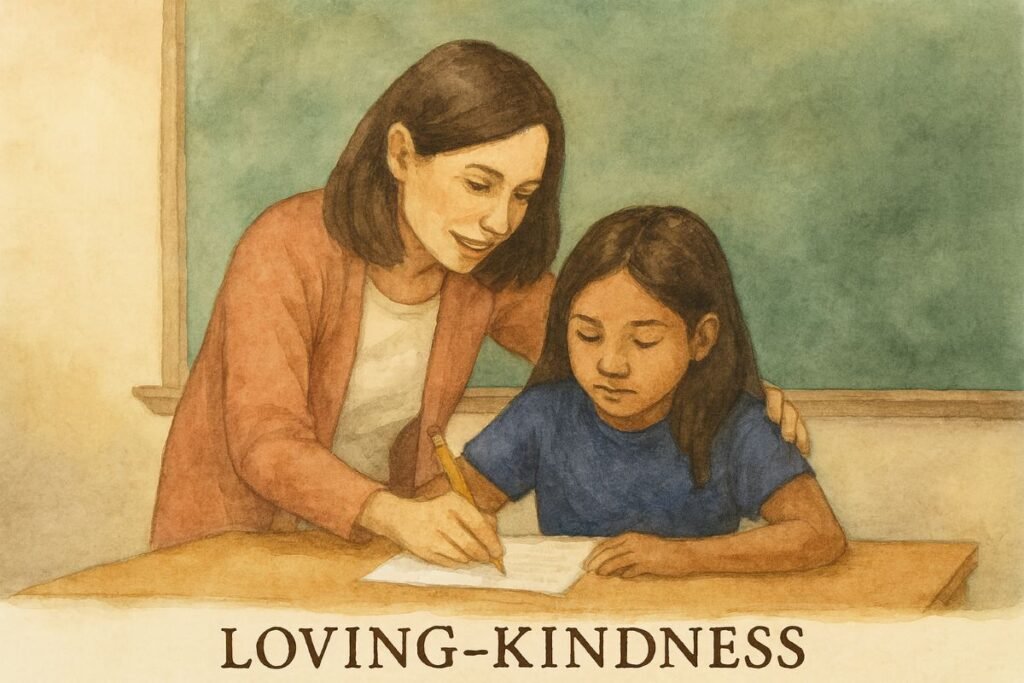
In the Karaṇīyamettā Sutta (Snp 1.8), the Buddha taught the practice of boundless loving-kindness (mettā) toward all beings. This teaching, often recited as a protection, exemplifies his emphasis on universal goodwill as essential to the path.
65. The Instruction to Rāhula
The Buddha gave detailed and practical instructions to his son Rāhula, teaching him the importance of truthfulness, reflection before action, and mindfulness. In the Ambalatthika Rāhulovāda Sutta (MN 61), he taught the profound principle that any action that leads to harm for oneself or others should be abandoned.
66. The Discourse on the Foundations of Mindfulness
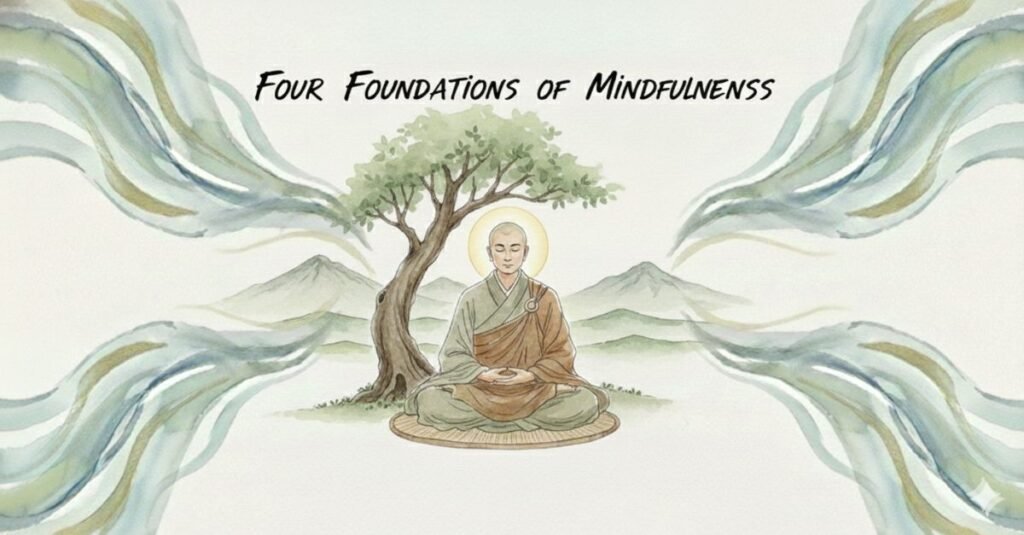
The Satipaṭṭhāna Sutta (MN 10), one of the most important discourses, provides a comprehensive framework for meditation practice. The Buddha declared that this is the direct path for the purification of beings, for the overcoming of sorrow and lamentation, for the ending of pain and grief, for the attainment of Nibbāna.
67. The Discourse on the Mindfulness of Breathing
In the Ānāpānasati Sutta (MN 118), the Buddha taught a complete system of meditation centered on the breath. This practice, culminating in the seven factors of enlightenment and the complete knowledge and liberation, was practiced by the Buddha himself and remains central to Buddhist meditation.
68. The Great Forty
In the Mahācattārīsaka Sutta (MN 117), the Buddha analyzed the Noble Eightfold Path in detail, distinguishing between the mundane and supramundane factors. He showed how right view leads to right intention, right speech, right action, right livelihood, right effort, right mindfulness, and right concentration, and how these factors mutually support one another.
69. The Simile of the Saw
The Buddha taught the ultimate standard of patience: even if bandits were to sever you limb from limb with a two-handled saw, any who gave rise to anger would not be following his teaching. This powerful instruction in the Kakacūpama Sutta (MN 21) demonstrates the depth of loving-kindness and patience required on the path.
70. The Discourse on the Unfindable Self
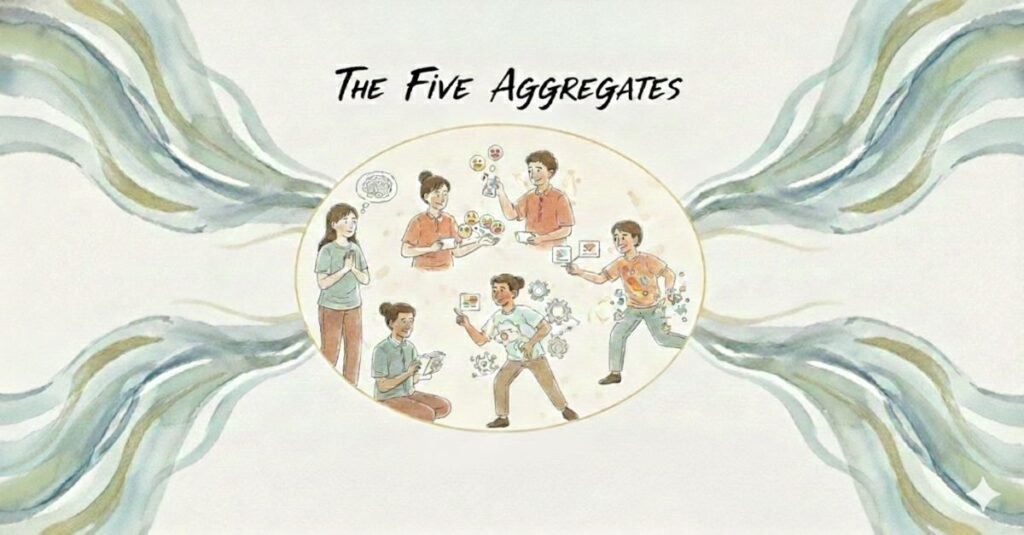
In the Anattalakkhaṇa Sutta (SN 22.59), the Buddha systematically examined the five aggregates and demonstrated that none of them can be regarded as self. This second discourse, given to the five ascetics, led to their full enlightenment and established the core teaching of not-self (anattā).
71. The Discourse on the Root of All Things
The Mūlapariyāya Sutta (MN 1), considered by some as the deepest discourse in the canon, explains how an untaught ordinary person perceives things, how a disciple in training perceives them, and how an arahant and the Tathāgata perceive them. It reveals the profound difference between conceptual proliferation and direct knowledge.
72. The Discourse on the Noble Quest
In the Ariyapariyesanā Sutta (MN 26), the Buddha shared his own spiritual journey, distinguishing between the ignoble quest (seeking what is subject to birth, aging, sickness, and death) and the noble quest (seeking the unborn, unaging, unailing, deathless). This discourse serves as both biography and teaching.
73. The Parable of the Mustard Seed
According to commentarial tradition, the story of Kisā Gotamī, who came to the Buddha with her dead child, is one of the most beloved in Buddhist literature. The Buddha asked her to bring a mustard seed from a house where no one had died, teaching her that death is universal. This profound lesson on impermanence illustrates the teaching of the Piyajātika Sutta (MN 87) that from what is dear, sorrow arises.
74. The Conversion of Angulimāla
The bandit Angulimāla, who had murdered many people, was converted by the Buddha through compassion and wisdom. Despite his past, Angulimāla attained arahantship. The Angulimāla Sutta (MN 86) demonstrates that even the worst kamma can be transcended through earnest practice and that transformation is possible for all.
75. The Discourse on Blessings
In the Maṅgala Sutta (Snp 2.4), the Buddha was asked about the highest blessings. He responded with a comprehensive list of practical teachings, from avoiding fools and associating with the wise to supporting one’s parents, from patience and obedience to the holy life and seeing the Noble Truths. This discourse remains one of the most popular protective chants.
76. The Discourse on Loving-Kindness for Animals
The Buddha’s compassion extended to all beings. In the Vanaropa Sutta (SN 1.47), he taught that planting groves and providing water are meritorious deeds that benefit beings day and night. His ethical framework includes care for animals and the environment.
77. The Discourse on the Treasures
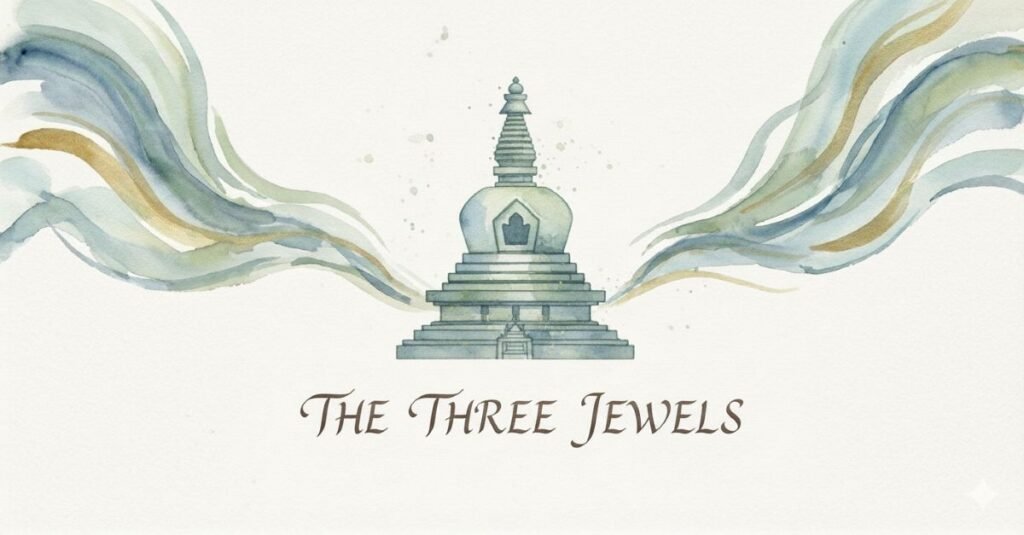
The Ratana Sutta (Snp 2.1) praises the virtues of the Buddha, Dhamma, and Sangha. According to the commentary, this discourse was taught by the Buddha to dispel a plague in Vesālī, highlighting the protective power of the Triple Gem.
78. The Discourse on the Parable of the Water Snake
In the Alagaddūpama Sutta (MN 22), the Buddha warned against misapprehending the Dhamma, comparing it to grasping a water snake wrongly, which leads to being bitten. He also introduced the famous simile of the raft, showing that the teachings are to be used, not clung to.
79. The Discourse on the Simile of the Cloth
In the Vatthūpama Sutta (MN 7), the Buddha explained that just as a cloth stained with dirt cannot be properly dyed, a mind stained with defilements cannot attain liberation. This teaching emphasizes the need for purification through ethical conduct and mental development.
80. The Discourse on the Fool and the Wise Person
In the Bālapandita Sutta (MN 129), the Buddha contrasted the fool and the wise person, describing the sufferings of hell and the joys of heaven in vivid detail. This teaching serves to inspire ethical conduct and the urgency of practice.
Challenges and the Community’s Growth
81. Devadatta’s Schism
Devadatta, the Buddha’s cousin, grew jealous and sought to take over leadership of the Sangha. When the Buddha refused, Devadatta attempted to harm him and created a schism, taking some newly ordained monks with him. The Vinaya Cullavagga records how Devadatta’s schemes ultimately failed. According to tradition, he is said to have been swallowed by the earth as kammic retribution for his grave offenses.
82. The Tamed Elephant Nāḷāgiri
When the fierce elephant Nāḷāgiri, intoxicated with spirits, was released to trample the Buddha, he approached the Buddha, who radiated loving-kindness. The elephant’s fury subsided, and he knelt before the Buddha, who stroked his forehead and spoke to him gently. This event, described in the Vinaya Cullavagga, demonstrates the power of mettā over violence.
83. Sāriputta and Moggallāna Reconcile the Sangha
After Devadatta’s schism, Sāriputta and Moggallāna went to the monks who had followed Devadatta and skillfully taught them, bringing many back to the Buddha’s Sangha. This event underscores the importance of wise leadership in maintaining community harmony.
84. The Discourse on the Roots of Violence

In the Āghātapaṭivinaya Sutta (AN 5.162), the Buddha taught practical methods for overcoming anger and resentment. He emphasized that even when faced with violence, one should maintain a mind of goodwill and recognize that anger only perpetuates suffering.
85. The Discourse to the Kālāmas on Criteria for Truth
The famous Kesamutti Sutta (AN 3.65) was given to the Kālāmas, who were confused by various visiting teachers. The Buddha’s response, to investigate for oneself and to abandon what leads to harm, became a foundational statement of Buddhist inquiry and free investigation.
86. The Discourse on the Great Lion’s Roar
In the Mahāsīhanāda Sutta (MN 12), the Buddha declared his unique qualities and achievements, roaring the lion’s roar of certainty. He affirmed that he was the Fully Enlightened One, that he had destroyed the taints, and that his teaching leads to liberation for those who practice it.
87. The Discourse on the Shorter Leash
When a group of monks were not making progress, the Buddha questioned them about their practice. Realizing they were still holding back, he taught the Cūḷasāropama Sutta (MN 30), emphasizing that the heart of the holy life is unshakeable liberation, not mere attainments or reputation.
88. The Discourse on the Longer Leash
The Mahāsāropama Sutta (MN 29) similarly warns against being satisfied with lesser gains: honor, fame, or even meditative attainments, when the final goal of liberation remains unattained. The Buddha urged his monks to practice with complete dedication.
89. The Discourse on the Unconditioned
The Buddha taught that there is an unborn, unbecome, unmade, unconditioned. If there were not, no escape from the conditioned would be possible. This profound teaching, found in the Udāna (Ud 8.3), points directly to Nibbāna as the ultimate goal.
90. The Discourse on the Analysis of the Undefiled
In the Sabbāsava Sutta (MN 2), the Buddha taught seven methods for restraining and abandoning the taints (āsavas). These methods include wise attention, restraint of the senses, and development of the factors of enlightenment, providing a comprehensive system for mental purification.
91. The Discourse on the Gradual Training
The Ganakamoggallāna Sutta (MN 107) outlines the gradual training of a monk, from ethical discipline to sense restraint, from mindfulness to the jhānas, culminating in the destruction of the taints. This systematic path shows how practice builds progressively toward liberation.
92. The Discourse to Prince Bodhi
When Prince Bodhi invited the Buddha for a meal and expressed his wish that the Buddha might remain in his kingdom, the Buddha taught the Bodhirājakumāra Sutta (MN 85), recounting his own spiritual journey and emphasizing that even the highest happiness in the sensual realm is impermanent and ultimately unsatisfactory.
93. The Discourse on the Exposition of the Elements
In the Dhātuvibhaṅga Sutta (MN 140), the Buddha gave a profound teaching on the analysis of the elements to a wandering ascetic named Pukkusāti, who did not recognize him. This discourse explains the nature of the six elements and leads to the realization of the deathless.
94. The Discourse to Bāhiya of the Bark Garment
The Bāhiya Sutta (Ud 1.10) records the brief but powerful teaching that led Bāhiya to arahantship instantly: “In the seen, there will be just the seen; in the heard, just the heard; in the sensed, just the sensed; in the cognized, just the cognized.” This teaching on direct perception without proliferation became a classic instruction.
95. The Discourse on the Exhortation to Rāhula
In the Mahārāhulovāda Sutta (MN 62), the Buddha gave his son detailed instructions on mindfulness of the elements and mindfulness of breathing, showing his careful and compassionate guidance of even his closest disciples.
96. The Discourse on the Dhamma as an Island
The Buddha taught his disciples to be islands unto themselves, with the Dhamma as their island and refuge. This teaching, found in the Mahāparinibbāna Sutta (DN 16), emphasizes self-reliance and the importance of internalizing the teachings.
The Final Year and the Great Passing
97. The Decision to Pass Away
Three months before his passing, while staying at Vesālī, the Buddha announced to Ānanda that one who has developed the four bases of psychic power could live for an aeon or until the end of an aeon. But Ānanda, as the text states, was “possessed by Māra” and failed to ask him to remain. Later, the Buddha declared that he would pass away in three months. This pivotal moment is recorded in the Mahāparinibbāna Sutta (DN 16).
98. The Last Meal with Cunda
The Buddha accepted his last meal from the smith Cunda, which unfortunately led to a severe illness. Despite his pain, the Buddha maintained mindfulness and proceeded to Kusinārā. He instructed that Cunda not be blamed, for his meal would bring great merit. This compassionate concern for his lay follower is detailed in the Mahāparinibbāna Sutta (DN 16).
99. The Conversion of Subhadda
A wandering ascetic named Subhadda, hearing that the Buddha would pass away that night, sought to see him. Despite Ānanda’s attempts to refuse him, the Buddha called him forward. The Buddha taught him the Dhamma, and Subhadda became his last direct disciple, attaining arahantship. This event is recorded in the Mahāparinibbāna Sutta (DN 16).
100. The Final Admonition
Addressing the assembled monks, the Buddha gave his last teaching: “Now, monks, I declare to you: all conditioned things are subject to dissolution. Strive on with diligence.” These final words, the essence of his entire teaching, are preserved in the Mahāparinibbāna Sutta (DN 16).
101. The Passing into Parinibbāna
Entering the jhānas in stages, the Buddha passed from the fourth jhāna into final Nibbāna. At that moment, the earth trembled and Brahmā Sahampati and Sakka uttered verses on impermanence. The Mahāparinibbāna Sutta (DN 16) describes the profound grief of those present and the serene passing of the Awakened One.
102. The Cremation
For seven days, the Buddha’s body lay in state. On the seventh day, it was cremated with royal honors. Even the funeral pyre would not ignite until Mahākassapa arrived to pay his respects. The relics were divided among eight kingdoms and enshrined in stūpas. This account is found in the Mahāparinibbāna Sutta (DN 16).
103. The First Buddhist Council
Concerned about preserving the Buddha’s teachings, Mahākassapa convened a council of five hundred arahants at Rājagaha. Ānanda recited all the Suttas, and Upāli recited the Vinaya. This gathering, described in the Vinaya Cullavagga, ensured that the Dhamma would be preserved for future generations.
104. The Role of Ānanda
Ānanda, the Buddha’s personal attendant for twenty-five years, was known for his remarkable memory. The Buddha declared him foremost among those who had learned much, as recorded in the Aṅguttara Nikāya (AN 1.218). Despite not being an arahant at the time of the Buddha’s passing (he attained it just before the First Council), he was able to recite all the discourses.
105. The Distribution of Relics
After the cremation, the relics of the Buddha were divided into eight portions, with the urn and embers also claimed. King Ajātasattu enshrined his portion at Rājagaha, and other kingdoms did likewise. This distribution, recorded in the Mahāparinibbāna Sutta (DN 16), ensured that the Buddha’s physical presence continued to inspire devotion.
106. The Buddha’s Teaching on Commemorating His Life
The Buddha himself established four places of pilgrimage: Lumbinī (his birth), Bodh Gayā (his enlightenment), Isipatana (his first sermon), and Kusinārā (his passing). He declared that those who die with confident heart while making such a pilgrimage will be reborn in heaven. This teaching in the Mahāparinibbāna Sutta (DN 16) provides for continued devotion.
107. The Living Presence of the Dhamma
Though the Buddha passed away, his Dhamma remains. In the Mahāparinibbāna Sutta (DN 16), he taught that the Dhamma and Vinaya he had taught and laid down would be the teacher after his passing. Thus, the living presence of the Buddha continues in his teachings.
108. The Eternal Example
The life of the Buddha remains the supreme example for all practitioners. His renunciation, his struggle, his awakening, and his compassionate teaching for forty-five years demonstrate what is possible for human beings. As the Dhammapada (vv. 276) states: “You yourselves must strive; the Buddhas only point the way.” His life is the pointing, and the path is ours to walk.
Glossary of Key Terms
| Pāli Term | English Translation |
|---|---|
| Anattā | Not-self, absence of permanent, independent self |
| Anicca | Impermanence, inconstancy |
| Arahant | One who has attained full enlightenment, a “worthy one” |
| Āsava | Taint, canker, intoxicant bias |
| Bhikkhu | Fully ordained Buddhist monk |
| Bhikkhunī | Fully ordained Buddhist nun |
| Bodhisatta (Bodhisattva) | Being destined for Buddhahood |
| Brahmā | A high celestial being |
| Dāna | Generosity, giving |
| Deva | Celestial being, god |
| Dhamma (Dharma) | The Buddha’s teachings; natural law; phenomena |
| Dukkha | Suffering, unsatisfactoriness, stress |
| Jhāna | Meditative absorption |
| Kamma (Karma) | Volitional action and its results |
| Karuṇā | Compassion |
| Mettā | Loving-kindness, goodwill |
| Nibbāna (Nirvāṇa) | Liberation, the unconditioned, the deathless |
| Paññā | Wisdom, understanding |
| Pāramī | Perfections, qualities developed over many lifetimes |
| Paṭiccasamuppāda | Dependent origination |
| Saṃsāra | The cycle of birth, death, and rebirth |
| Saṃvega | Spiritual urgency |
| Saṅgha | The community of monastic disciples; the community of noble ones |
| Sutta (Sūtra) | Discourse attributed to the Buddha |
| Tathāgata | “Thus-gone” or “Thus-come,” a term the Buddha used for himself |
| Upāsaka / Upāsikā | Lay male / female follower |
| Vinaya | The monastic code of discipline |
| Vipassanā | Insight meditation |
Conclusion
The life of the Buddha is not merely a historical record but a living testament to the possibility of awakening. From his princely birth in the Lumbinī Grove to his final passing in the sal forest of Kusinārā, every event in his journey carries profound meaning for those who walk the path he revealed. His great renunciation teaches us that true freedom lies not in accumulating but in letting go. His six years of struggle remind us that awakening requires sustained effort and cannot be achieved without dedication. His enlightenment beneath the Bodhi tree stands as the eternal promise that liberation is attainable. His forty-five years of compassionate teaching demonstrate that wisdom fulfilled expresses itself as boundless compassion for all beings.
As we contemplate these 108 aspects of the Buddha’s life, may we be inspired to follow his example. May we develop the same determination that led him to declare, “Let only my skin, sinews, and bones remain,” rather than cease striving. May we cultivate the wisdom that sees through the illusion of a permanent self. May we embody the compassion that seeks the welfare of all beings. And may we, like the Buddha and his countless enlightened disciples, realize for ourselves the deathless peace of Nibbāna.
The Buddha’s last words remain our constant guide: “All conditioned things are subject to dissolution. Strive on with diligence.” In this striving, his life becomes our own, and his awakening lights the path for our journey home.
Sadhu, sadhu, sadhu.
References
Primary Sources (Pāli Canon)
- Dīgha Nikāya (DN) — The Long Discourses
- DN 14: Mahāpadāna Sutta
- DN 15: Mahānidāna Sutta
- DN 16: Mahāparinibbāna Sutta
- DN 2: Sāmaññaphala Sutta
- Majjhima Nikāya (MN) — The Middle Discourses
- MN 1: Mūlapariyāya Sutta
- MN 7: Vatthūpama Sutta
- MN 9: Sammādiṭṭhi Sutta
- MN 10: Satipaṭṭhāna Sutta
- MN 12: Mahāsīhanāda Sutta
- MN 21: Kakacūpama Sutta
- MN 22: Alagaddūpama Sutta
- MN 26: Ariyapariyesanā Sutta
- MN 29: Mahāsāropama Sutta
- MN 30: Cūḷasāropama Sutta
- MN 36: Mahāsaccaka Sutta
- MN 61: Ambalatthika Rāhulovāda Sutta
- MN 62: Mahārāhulovāda Sutta
- MN 63: Cūḷamāluṅkya Sutta
- MN 85: Bodhirājakumāra Sutta
- MN 86: Aṅgulimāla Sutta
- MN 87: Piyajātika Sutta
- MN 102: Pañcattaya Sutta
- MN 107: Ganakamoggallāna Sutta
- MN 117: Mahācattārīsaka Sutta
- MN 118: Ānāpānasati Sutta
- MN 123: Acchariyabbhūta Sutta
- MN 129: Bālapandita Sutta
- MN 130: Devadūta Sutta
- MN 135: Cūḷakammavibhaṅga Sutta
- MN 140: Dhātuvibhaṅga Sutta
- Saṃyutta Nikāya (SN) — The Connected Discourses
- SN 1.47: Vanaropa Sutta
- SN 3.3: Jarā Sutta
- SN 3.18: Kalyāṇamitta Sutta
- SN 3.25: Pabbatopama Sutta
- SN 5.10: Vajirā Sutta
- SN 6.1: Brahmāyācana Sutta
- SN 8.4: Vaṅgīsa Sutta
- SN 12.61: Assutavā Sutta
- SN 22.59: Anattalakkhaṇa Sutta
- SN 22.87: Nakkhasutta
- SN 22.95: Pheṇapiṇḍūpama Sutta
- SN 35.28: Ādittapariyāya Sutta
- SN 36.6: Salla Sutta
- SN 36.7: Gelañña Sutta
- SN 56.11: Dhammacakkappavattana Sutta
- Aṅguttara Nikāya (AN) — The Numerical Discourses
- AN 1.188-267: Etadagga Vagga (Foremost Disciples)
- AN 3.38: Sukhumāla Sutta
- AN 3.65: Kesamutti Sutta (Kālāma Sutta)
- AN 4.45: Rohitassa Sutta
- AN 5.57: Upajjhatthana Sutta
- AN 5.162: Āghātapaṭivinaya Sutta
- AN 8.51: Gotamī Sutta
- AN 10.60: Girimananda Sutta
- Khuddaka Nikāya (KN) — The Minor Collection
- Dhammapada (Dhp)
- Udāna (Ud) — especially Ud 1.1-3, Ud 1.10, Ud 2.1, Ud 8.1-3
- Sutta Nipāta (Snp) — especially Snp 1.8, Snp 2.1, Snp 2.4, Snp 3.1-2, Snp 3.11
- Therīgāthā (Thig)
- Buddhavaṃsa (Buv)
- Jātaka (Ja)
- Vinaya Piṭaka — The Book of Discipline
- Mahāvagga
- Cullavagga
Traditional Biographical and Commentarial Sources
- Nidānakathā — The introductory narrative to the Jātaka commentary, containing the most complete traditional biography of the Buddha
- Buddhavaṃsa Commentary — Elaborates on the lives of the previous Buddhas
- Jātaka Commentary — Contains numerous stories of the Bodhisatta’s previous lives
- Dhammapada Commentary — Includes many biographical anecdotes, including the story of Kisā Gotamī
- Apadāna — Contains verses attributed to enlightened elders, including biographical elements
- Mahāvaṃsa and Dīpavaṃsa — Later historical chronicles
All Sutta references in this article use the translations available at SuttaCentral, primarily the translations by Bhikkhu Sujato and other contributors. Readers are encouraged to consult these primary sources directly for deeper study.