108 Contemplations on Loving-Kindness (Metta): A Guide

The number 108 holds symbolic significance in later Buddhist traditions, often associated with the 108 defilements or earthly desires that beings must overcome. In this spirit, we present 108 contemplations on loving-kindness, a systematic exploration of the heart’s most sublime quality.
Loving-kindness, known as Metta [mettā] in Pali, is far more than simple friendliness or affection. It is a radical spiritual practice that transforms the mind from the inside out, systematically dismantling the barriers we erect between ourselves and others. Rooted in the earliest Buddhist teachings, Metta is described as a boundless state of unconditional goodwill, a love that asks nothing in return and excludes no one. The Buddha taught that cultivating this quality leads to profound personal transformation: better sleep, freedom from nightmares, being loved by humans and non-humans alike, protection, a peaceful death, and, if one does not attain liberation, rebirth in the Brahma realms (Anguttara Nikaya 11.16). When combined with wisdom and insight, Metta practice also supports the realization of full enlightenment.
These 108 contemplations are designed as a progressive journey. Each numbered reflection builds upon the last, creating a continuous thread of investigation that moves from understanding to practice, from personal cultivation to universal application. Whether you are new to Metta practice or a seasoned meditator, these contemplations offer a structured path for deepening your capacity for genuine, unconditional love.
Understanding Loving-Kindness: The Foundation
- Loving-kindness is the sincere wish for the happiness and well-being of all beings, without exception, it is the mind’s natural radiance when freed from fear and aversion.
- It is unconditional, not dependent on whether others deserve it or reciprocate, making it a boundless rather than a transactional state.
- Metta is distinct from attachment or romantic love; it is selfless goodwill that wishes well without clinging or possessiveness.
- The practice begins with oneself, as genuine love for others requires a wise and caring attitude toward one’s own well-being.
- Loving-kindness is a mental state cultivated through intentional meditation and expressed through daily actions.
- It is the direct antidote to ill-will, hatred, and anger, the mind’s healing medicine for its most destructive tendencies.
- Metta is described in the suttas as boundless, extending infinitely to all beings in all directions without limitation. The Buddha taught the radiation of loving-kindness to the ten directions as a practice for “vitalizing the mind” (Subha Sutta, MN 99).
- The Buddha compared loving-kindness to a mother’s protective love for her only child, spontaneous, all-protecting, and willing to give her own life for her child’s safety (Karaniya Metta Sutta, Sn 1.8).
- It fosters joy, peace, and emotional resilience that protects the mind even in difficult circumstances.
- Loving-kindness supports social harmony and prosocial behavior, making it both a personal and collective practice.
- True Metta is free from selfishness and ego, it does not say “I love you because you make me happy” but rather “I wish you happiness.”
- It is a form of wisdom recognizing the interdependence of all beings through dependent origination (paticcasamuppada), your well-being is inseparable from my own.
- Metta is closely linked with compassion (Karuna), sympathetic joy (Mudita), and equanimity (Upekkha), the other three Divine Abodes, and together they form a complete path of heart-cultivation.
- The cultivation of Metta leads to spiritual freedom and supports liberation from suffering, as it uproots ill-will and supports the insight into non-self that finally liberates.
- It transforms fear into courage and isolation into connection, revealing our fundamental belonging to the whole of life.
- Loving-kindness is a practice of giving without expecting anything in return, the heart’s purest expression of generosity.
- It is a steady, warm-hearted feeling of fellowship and sympathy that can be maintained in all circumstances.
- Metta is a universal love that overcomes social, racial, and political barriers, recognizing the shared humanity in all beings.
- The practice is both contemplative and active, involving meditation, speech, and action in integrated expression.
- Metta is essential for weakening self-centered tendencies and the suffering they cause, as it shifts the focus from “me” to “all beings.”
Cultivating Metta Through Meditation
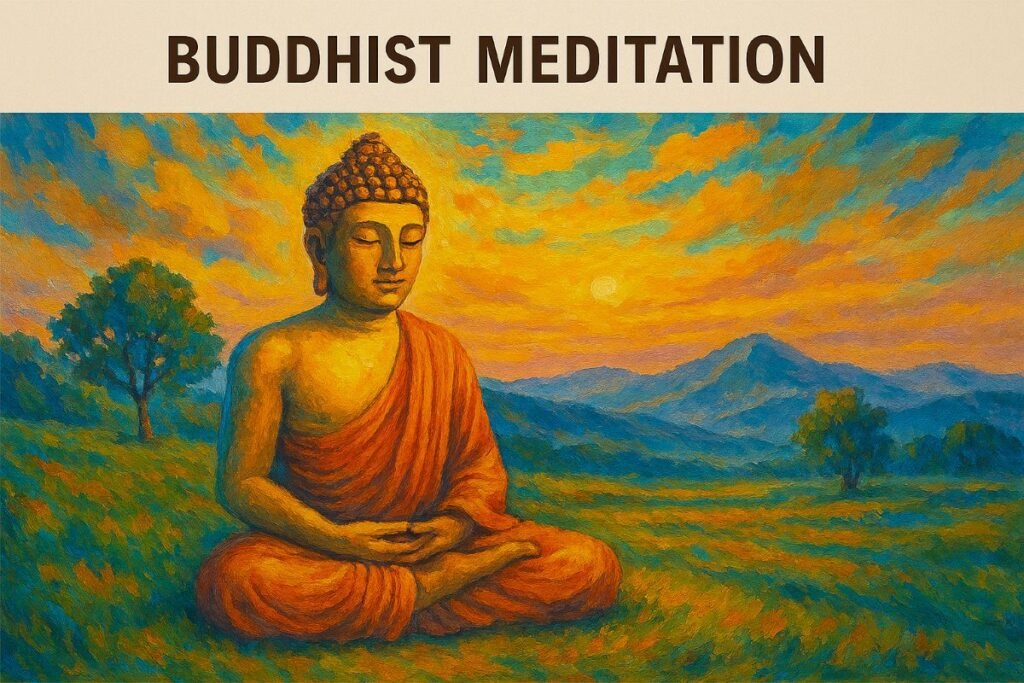
- Begin Metta meditation by cultivating loving-kindness toward yourself—this is not selfish but necessary, as you cannot give what you do not possess.
- Use traditional phrases such as “May I be happy, may I be peaceful, may I be free from suffering,” allowing the words to resonate in the heart.
- Visualize yourself surrounded by warmth and care, perhaps recalling a moment when you felt completely at ease and loved.
- Extend loving-kindness to a benefactor or teacher who has helped you, someone for whom gratitude arises naturally.
- Then extend it to a beloved friend, feeling the warmth of affection and wishing for their genuine well-being.
- Next, direct Metta toward a neutral person, someone you neither like nor dislike, a neighbor you pass occasionally, a shopkeeper you don’t know well.
- Progress gradually to a difficult person, someone with whom you have conflict. The traditional commentaries, such as the Visuddhimagga, advise approaching this stage with care, it is best to establish a steady practice with oneself, benefactors, friends, and neutral persons before attempting to extend Metta to someone who has caused harm. This gradual approach strengthens the mind and prevents discouragement.
- Finally, extend loving-kindness to all beings everywhere, without limitation, in all directions, the boundless radiation of goodwill.
- Repeat phrases like “May you be happy, may you be peaceful, may you be free from suffering,” adapting them to each category of being.
- Synchronize the phrases with your breath for deeper focus, inhaling, prepare the intention; exhaling, send the wish outward.
- Metta meditation can be practiced sitting, walking, or lying down, the posture supports the practice but does not define it.
- The practice helps dissolve barriers between “self” and “other,” revealing the interdependence that was always present.
- It cultivates a mind unaffected by external circumstances, a heart that remains warm even when treated with coldness.
- Loving-kindness meditation is a gradual process requiring patience and effort; the heart cannot be forced open but can be gently invited to expand.
- The feeling of Metta becomes spontaneous and ingrained with practice, arising naturally in situations that once triggered reactivity.
- It is important to maintain ethical conduct alongside meditation, as unwholesome actions disturb the mind and block Metta’s growth.
- Ethical conduct includes non-harming, truthful speech, and mindful living, the foundation upon which Metta is built.
- Metta meditation is supported by the Four Noble Truths and the Noble Eightfold Path, which provide the framework for all Buddhist practice.
- The intention of harmlessness guides the practice, rooted in the recognition that all beings tremble at violence and hold their lives dear (Dhammapada 129-132).
- Metta meditation is a path to infinite freedom and peace, as the heart that holds no ill-will cannot be bound by anyone or anything.
Expressing Loving-Kindness in Daily Life
- Begin each day with the intention to cultivate loving-kindness, setting the mind’s direction before the world pulls it in many directions.
- Offer kind words and sincere compliments to others, right speech is Metta expressed through the voice.
- Practice patience and understanding in difficult interactions, recognizing that others, like yourself, wish to be happy and free from suffering.
- Avoid angry speech, gossip, and harmful actions, as these are the very expressions of ill-will that Metta seeks to uproot.
- Respond to hostility with warmth and a gentle smile, not as a strategy but as a genuine expression of goodwill that disarms aggression.
- Look for the goodness in others, even strangers, every being has some quality worthy of appreciation.
- Perform acts of generosity as expressions of Metta, giving without concern for recognition or return.
- Help those in need with compassion and without expectation, allowing Metta to flow through action.
- Practice forgiveness toward those who have wronged you, not because they deserve it, but because you deserve peace.
- Protect the vulnerable and treat all beings with dignity, recognizing that Metta includes the willingness to act on behalf of others.
- Cultivate gratitude and express appreciation regularly, as gratitude opens the heart and makes Metta accessible.
- Use mindfulness to maintain a heart of loving-kindness throughout the day, noticing when ill-will arises and gently returning to goodwill.
- Recognize and transform negative emotions with Metta, anger becomes an opportunity to practice patience; fear becomes an invitation to cultivate courage.
- Maintain equanimity to balance loving-kindness with wisdom, accepting that beings are responsible for their own actions while still wishing them well.
- Extend loving-kindness to animals and all living beings, recognizing that they too feel pain and seek happiness.
- Use Metta to navigate conflict and stress with patience, finding creative solutions that honor everyone’s well-being.
- Share the positive energy of Metta with your community, knowing that one person’s peace benefits all.
- Practice Metta in digital communication by sending goodwill before posting, speaking, or responding online.
- Cultivate humility to protect yourself from negative emotions, remembering that Metta is not about being right but about being kind.
- Remember that all beings share the wish to be happy and free from suffering, this simple recognition is the foundation of universal love.
The Four Divine Abodes: Metta’s Sacred Family
- Loving-kindness (Metta) is the first of the Four Divine Abodes (Brahmaviharas), sublime states of mind that are the natural dwellings of a heart cultivated in goodness.
- Compassion (Karuna) is the wish for beings to be free from suffering, the heart’s response when it meets suffering with love.
- Sympathetic joy (Mudita) is rejoicing in others’ happiness without envy or comparison, the antidote to jealousy and resentment.
- Equanimity (Upekkha) is balanced acceptance of all experiences, recognizing the law of karma, beings are responsible for their own actions and their results, while we maintain our wish for their well-being.
- Together, these four qualities cultivate a balanced, wise heart that can engage with the world without being overwhelmed by it.
- Metta provides the foundation from which compassion, sympathetic joy, and equanimity can develop, when unconditional goodwill is established, the other sublime states arise naturally.
- Practicing all four Brahmaviharas leads to spiritual liberation, as they systematically uproot the mind’s unwholesome tendencies and support the development of insight.
- Equanimity is not indifference but wise acceptance, it allows us to act with compassion without being attached to outcomes.
- Compassion arises naturally from a heart full of Metta, when you truly wish others well, their suffering becomes your concern.
- Sympathetic joy counters envy and jealousy, training the mind to celebrate rather than resent others’ good fortune.
- The Brahmaviharas are qualities fully developed in awakened beings, and we can cultivate them here and now as part of the path.
- Cultivating these states helps overcome the Five Hindrances to meditation, sensual desire, ill-will, sloth-and-torpor, restlessness-and-worry, and doubt.
- Ill-will is the opposite of Metta and a hindrance to peace, the Brahmaviharas provide the direct path to its uprooting.
- The practice of Metta displaces hatred with forbearance and kindness, transforming even the most difficult relationships.
- The Brahmaviharas are described extensively in the Pali Canon, including the Te-vijja Sutta (DN 13)—where the Buddha presents them to Brahmins seeking union with Brahma—and the Metta Sutta (Sn 1.8).
- They are called “Divine Abodes” because they are sublime states of mind that lift us above our ordinary, contracted consciousness.
- Metta meditation is often paired with compassion meditation for balance: loving-kindness opens the heart, compassion directs it toward suffering.
- The cultivation of these states is a gradual and lifelong process, each moment of practice plants seeds for future growth.
- The Brahmaviharas support ethical living and mental purification, providing the internal motivation for wholesome action.
- They are essential for developing right intention on the Noble Eightfold Path, the commitment to goodwill, harmlessness, and renunciation.
The Path of Ethical Transformation
- Loving-kindness requires ethical conduct as its foundation, unwholesome actions disturb the mind and make Metta impossible.
- Right Speech involves speaking truthfully, harmoniously, and kindly, words that heal rather than harm.
- Right Action includes non-harming and helping others, the body becomes an instrument of goodwill.
- Right Intention is the commitment to goodwill, harmlessness, and renunciation—the mind’s direction toward liberation.
- Metta is a form of right intention, cultivating goodwill toward all beings as the basis for all thought, speech, and action.
- Ethical living supports the stability needed for deep Metta practice, a clear conscience allows the mind to settle into meditation.
- The Noble Eightfold Path guides the practitioner toward liberation, with Metta supporting and being supported by each factor.
- Metta practice helps overcome self-centeredness and craving, shifting attention from “what I want” to “what all beings need.”
- It fosters a mind free from greed, hatred, and delusion, the three roots of unwholesome action.
- The practice leads to the cessation of suffering as taught in the Four Noble Truths, the ultimate purpose of all Buddhist practice.
- Loving-kindness is a practical tool for reducing stress and fear, as the mind that wishes well to all cannot be threatened.
- It nurtures emotional resilience and peaceful sleep, as the heart rests easily when it holds no ill-will toward anyone.
- Metta is a radical practice requiring courage and openness, it asks us to love without guarantee of return.
- It challenges habitual divisions of “us” and “them,” revealing the constructed nature of these boundaries.
- Metta is not sentimental but a deliberate mental training, a systematic cultivation of the heart’s most sublime capacity.
- It involves self-reflection and letting go of self-interest, turning the mind toward the welfare of all.
- The practice can be integrated into all daily activities, eating, working, walking, communicating, each moment becomes an opportunity for Metta.
- Metta supports the development of wisdom alongside compassion, as clear seeing reveals the interdependence of all beings.
- It is a path of self-transformation and healing, gradually replacing fear, anger, and resentment with peace, warmth, and connection.
- Metta is a source of motivation for ethical and compassionate action, inspiring us to act on behalf of others.
- It encourages generosity as an expression of goodwill, giving becomes natural when the heart is full of love.
- Metta practice can inspire altruism and social harmony, extending from personal practice to collective transformation.
- It is accessible to all, regardless of background or belief, the wish for happiness is universal.
- The practice is supported by numerous suttas, including the Buddha’s teaching that even briefly cultivating a wholesome state such as loving-kindness for the duration of a finger-snap is of great benefit (Anguttara Nikaya 1.21-30).
- Metta is a living tradition, adaptable to modern challenges while remaining true to its ancient roots.
- It fosters a sense of universal belonging and peace, revealing our place in the vast web of existence.
- The cultivation of Metta is a journey toward boundless love, a love that grows with sharing and diminishes with hoarding.
- Ultimately, Metta supports the realization of true freedom and peace, the heart’s final liberation from all limitation and separation, when combined with the insight that liberates.
Glossary of Key Terms
| English Term | Pali/Sanskrit Term | Explanation |
|---|---|---|
| Compassion | Karuna [karuṇā] | The heartfelt wish for others to be free from suffering; the heart’s response to pain with love. |
| Equanimity | Upekkha [upekkhā] | Balanced, even-minded acceptance of all experiences; wisdom’s gift of peace amidst life’s changes. |
| Ethical conduct | Sila [sīla] | Moral discipline involving non-harming, truthful speech, and right action; the foundation for meditation. |
| Five Hindrances | Pañca Nīvaraṇāni | Obstacles to meditation: sensual desire, ill-will, sloth-and-torpor, restlessness-and-worry, doubt. Metta directly counters ill-will. |
| Four Divine Abodes | Brahmavihāra | Four sublime states of mind: loving-kindness, compassion, sympathetic joy, and equanimity. |
| Four Noble Truths | Cattāri Ariya Saccāni | The Buddha’s core teaching: suffering, its origin, its cessation, and the path to its cessation. |
| Generosity | Dana [dāna] | The practice of giving without expectation; the first perfection and natural expression of Metta. |
| Ill-will | Vyapada [vyāpāda] | Hostility or hatred; one of the Five Hindrances, directly opposed by loving-kindness. |
| Interdependence | Paṭicca Samuppāda | Dependent origination; the principle that all phenomena arise in dependence on conditions. |
| Loving-kindness | Metta [mettā] | Unconditional goodwill and benevolence toward all beings; the wish for all to be happy and peaceful. |
| Mindfulness | Sati [sati] | The practice of present-moment awareness; essential for maintaining Metta throughout the day. |
| Noble Eightfold Path | Ariya Atthangika Magga | The path to liberation: right view, intention, speech, action, livelihood, effort, mindfulness, concentration. |
| Right Intention | Sammā Saṅkappa | The mental commitment to goodwill, harmlessness, and renunciation; Metta as a formal path factor. |
| Sympathetic joy | Mudita [muditā] | Rejoicing in the happiness and success of others; the antidote to envy and jealousy. |
| Wisdom | Paññā [paññā] | Clear seeing of reality as it is; the understanding that perfects compassion and guides Metta. |
Conclusion
Loving-kindness (Metta) is not merely a meditation technique or an ethical ideal, it is a complete path of heart-transformation that the Buddha described as leading to eleven specific benefits, including sleeping peacefully, being dear to humans and non-humans alike, and, if going no further, at least attaining rebirth in the Brahma realms (Anguttara Nikaya 11.16). These 108 contemplations have traced that path from its foundation in understanding, through its cultivation in formal meditation, to its expression in daily life, and finally to its culmination in the Four Divine Abodes and the entire Noble Eightfold Path.
What makes Metta practice so powerful is its accessibility and its completeness. It can be practiced by anyone, anywhere, at any time, yet it leads all the way to the highest spiritual attainments when combined with wisdom and insight. The mother’s love for her child, which the Buddha held up as the model for Metta, is something we all recognize and have experienced. Metta practice simply takes that natural capacity for love and systematically expands it until it embraces all beings in all directions without exception.
As you continue your own practice, remember that Metta is not about achieving a particular feeling but about cultivating an intention, the sincere wish for happiness and well-being, first for yourself, then for all beings. The feelings will come and go, but the intention, steadily maintained, gradually transforms the heart. Each moment of Metta, even a finger-snap’s duration, plants seeds that will bear fruit in this life and beyond.
May these contemplations support your practice. May your heart open to yourself with kindness. May it open to all beings without exception. And may the boundless love you cultivate become a source of peace and freedom for yourself and for all who cross your path.
Sadhu, sadhu, sadhu. (Well said, well practiced, well accomplished.)
*This article draws on the Buddha’s teachings as preserved in the Pali Canon, particularly the Metta Sutta (Sn 1.8), the Te-vijja Sutta (DN 13), and the Anguttara Nikaya. It is presented from a Theravada perspective, while recognizing that loving-kindness practice exists in all Buddhist traditions. May all beings be happy.*