The Four Noble Truths
The Four Noble Truths are the foundational framework of Buddhism, outlining the nature of suffering, its cause, its cessation, and the path to its end. They serve as a practical guide for understanding the human condition and cultivating a life of wisdom and peace through the Noble Eightfold Path.
The Eightfold Path

The Eightfold Path is a central teaching in Buddhism that offers a practical and holistic guide to ending suffering and achieving enlightenment. This teaching explores the eight interconnected factors—Right View, Right Intention, Right Speech, Right Action, Right Livelihood, Right Effort, Right Mindfulness, and Right Concentration—grouped into wisdom, ethical conduct, and mental discipline. By understanding and practicing these elements together, learners are guided toward a balanced life of compassion, clarity, and freedom from attachment. The path is not linear but a continuous journey of growth and transformation, leading to lasting peace and liberation.
The Three Jewels (Triple Gem)

The Three Jewels: Buddha, Dharma, and Sangha, are the heart of Buddhist practice and faith. This teaching introduces these precious guides: the Buddha as the awakened teacher and example, the Dharma as the timeless teachings and path, and the Sangha as the supportive community of practitioners. Taking refuge in the Three Jewels offers a foundation of trust, inspiration, and guidance on the journey toward enlightenment. Through understanding and embodying these interconnected jewels, learners cultivate wisdom, compassion, and a sense of belonging that supports their spiritual growth and daily practice.
The Three Marks of Existence

Unlock a Deeper Peace: Discover Buddhism’s Three Universal Truths
Feeling stressed, stuck, or unsettled by life’s constant changes? You’re not alone. Ancient wisdom offers a powerful key to finding freedom. Discover the Three Universal Truths of Buddhism, Impermanence, Suffering, and Non-Self – a profound yet practical framework for understanding reality itself. This isn’t about philosophy; it’s about liberation.
Karma (Cause and Effect) in Buddhism

Karma is a foundational Buddhist concept explaining the law of cause and effect. It teaches that our intentional actions of body, speech, and mind shape our present experiences and future circumstances. This article provides a clear explanation of how karma operates as a natural process, distinct from fate or judgment. It details the types of karma, the principles governing its results, and practical methods for cultivating positive outcomes. The guide also addresses common misconceptions and explores karma’s relationship to ethical living and mental well-being, offering a straightforward framework for personal responsibility and mindful choice.
Dependent Origination
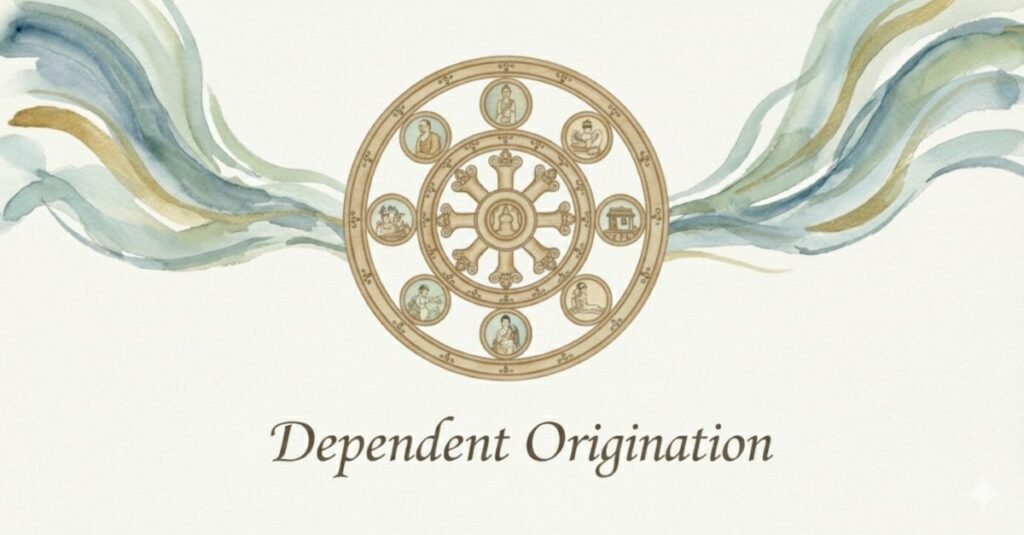
Dependent Origination (Paṭicca-samuppāda) is a core Buddhist teaching explaining how all phenomena arise dependent on causes and conditions. It reveals that nothing exists independently or permanently, and suffering arises through a complex chain of twelve interconnected links starting with ignorance and leading to birth, aging, and death. Understanding this principle is essential for ending suffering and achieving liberation. Practical applications include recognizing how our thoughts, feelings, and actions are conditioned, enabling us to break the cycle of craving and attachment. Everyday examples like the flame of an oil lamp or the growth of a plant illustrate this interdependence. Cultivating insight into Dependent Origination through mindfulness and reflection fosters wisdom, compassion, and freedom from suffering.
The Five Precepts
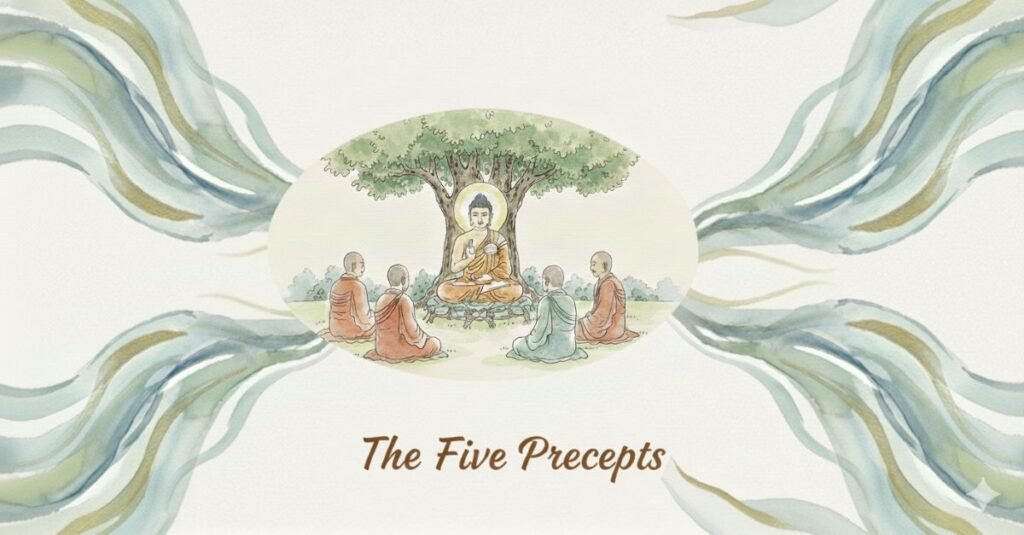
The Five Precepts are basic ethical guidelines observed by lay Buddhists, consisting of commitments to abstain from killing, stealing, sexual misconduct, false speech, and the use of intoxicants. These precepts serve as practical training rules aimed at fostering compassion, honesty, and mindfulness in daily life. This article provides an overview of their meaning, significance, and ways they can be applied in everyday situations.
The Four Divine Abodes – Brahmaviharas: A Guide to Cultivating a Steady Heart
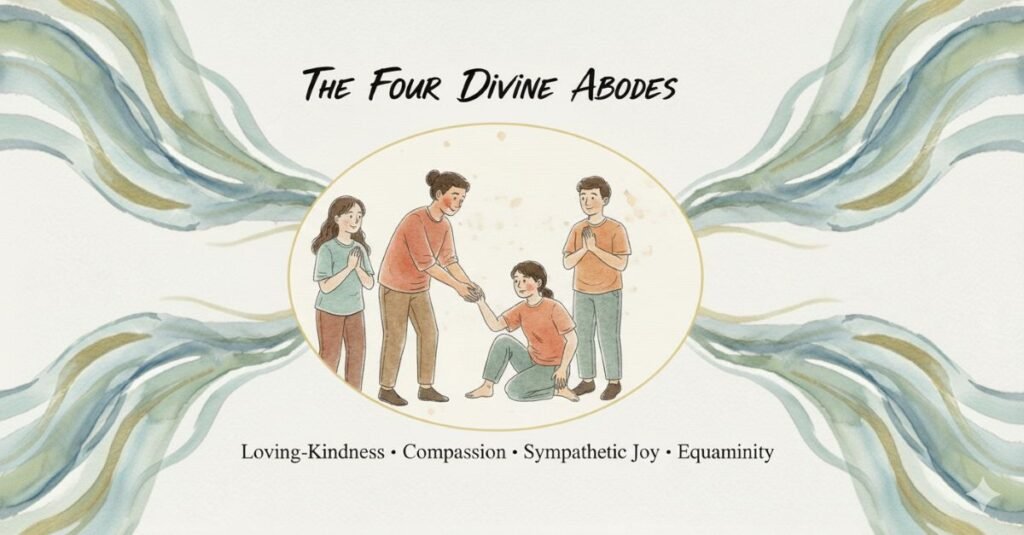
The Four Divine Abodes (Brahmaviharas), an ancient, practical framework for cultivating a resilient and compassionate heart. This guide explores the four cultivatable qualities of Loving-Kindness, Compassion, Sympathetic Joy, and Equanimity, explaining each in simple terms and providing concrete ways to apply them in daily life.
The Five Aggregates

What if your sense of “self” was actually a process you could understand? The Buddhist teaching of the Five Aggregates offers a clear map for investigating your own experience. It breaks down every moment into five components: physical form, feeling tone, perception, mental habits, and consciousness. This isn’t abstract philosophy—it’s a practical tool for mindfulness. By learning to observe these aggregates in daily life, you can see how your experience is constructed, reduce identification with passing thoughts and feelings, and find greater freedom from reactive patterns. Explore this framework to cultivate deeper clarity and peace.
The Four Foundations of Mindfulness
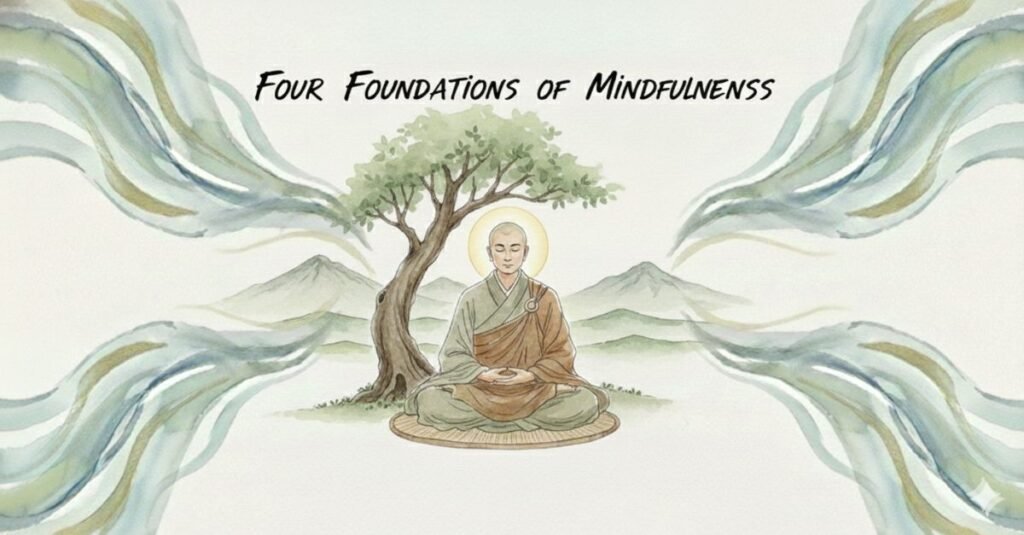
Discover a practical framework for cultivating genuine awareness in everyday life. The Four Foundations of Mindfulness offer a clear, step-by-step approach to developing presence by focusing on the body, feelings, states of mind, and underlying patterns of thought. This guide breaks down each foundation with simple explanations and real-world applications—from managing stress to responding more skillfully in difficult moments. Learn how this timeless practice can help you move from autopilot to engaged, balanced living. Explore how mindful awareness can become a natural part of your day, bringing greater clarity and calm.