1. What is Zazen? Understanding the Heart of Zen Practice
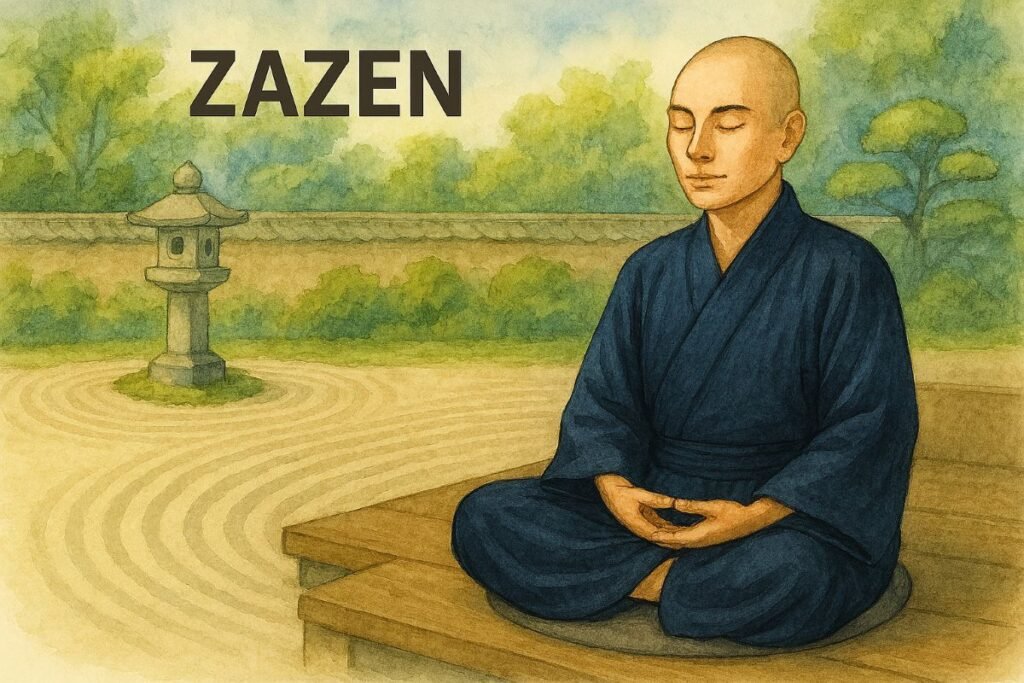
Zazen is the central meditation practice of Zen Buddhism. The word is Japanese: “Za” means “to sit,” and “Zen” means “meditation.” So, Zazen literally translates to “seated meditation.” But it is much more than simply sitting quietly. It is a practice of bringing your full awareness to the present moment, without trying to achieve anything special or hold onto any particular experience.
At its core, Zazen is about being fully present and awake. It is not about emptying your mind of thoughts, going into a trance, or achieving a state of constant bliss. Instead, it is about sitting with whatever is happening right now, your breath, the sounds around you, physical sensations, and the flow of your thoughts and feelings, and observing it all with a calm, steady, and non-judgmental awareness. The most direct form of this is called shikantaza, a Japanese term meaning “nothing but precisely sitting” or “just sitting.”
2. The Buddhist Tradition of Zazen: Roots and Schools
Zazen comes from the Zen school of Buddhism. Zen is the Japanese development of the Chinese Buddhist school known as Chan, which itself grew from the blending of Indian Buddhism with Chinese Taoist thought. Zen places primary emphasis on direct personal experience and insight over theoretical study.
There are two main schools of Zen that practice Zazen, each with a slight difference in emphasis:
- Soto Zen: This school, founded in Japan by Master Dogen in the 13th century, strongly emphasizes shikantaza, or “just sitting.” In Soto practice, Zazen itself is the complete expression of your awakened nature. You sit without any goal, technique, or object of meditation. The act of sincere, attentive sitting is itself enlightenment.
- Rinzai Zen: This school also practices Zazen but often incorporates the use of koans. A koan is a paradoxical question or statement (like “What is the sound of one hand clapping?”) that cannot be solved by logical thinking. Meditating on a koan is meant to help break the habitual patterns of the intellectual mind and lead to a direct insight.
For anyone beginning Zazen, the Soto Zen approach of “just sitting” is the most fundamental and widely taught method. This guide will focus on that approach.
3. Why Practice Zazen? The Importance for Modern Life
You do not need to be a Buddhist to benefit from Zazen. The practice addresses universal human experiences and can be deeply valuable in our busy, modern lives.
- It Cultivates Calm and Stability: By regularly returning to the simple anchor of the breath and posture, Zazen trains your nervous system to find a center of calm amidst daily stress and anxiety. It is not that stress disappears, but your relationship to it can change.
- It Develops Clear Seeing: Zazen is often called a practice of awareness or mindfulness. As you observe your thoughts and emotions come and go without getting swept away by them, you begin to see your own mental patterns more clearly. This clarity can help you respond to life’s challenges with more wisdom and less automatic reaction.
- It Fosters Acceptance and Patience: The instruction to sit with “whatever arises” teaches patience and acceptance. You learn to meet discomfort, boredom, restlessness, and joy all with the same steady attention. This attitude can deeply improve your relationship with yourself and others.
- It Connects You to the Present Moment: So much of our suffering comes from ruminating on the past or worrying about the future. Zazen is a practical training in coming home to the only moment we ever truly have, the present one.
4. How to Practice Zazen: A Detailed, Step-by-Step Guide
4.1. The Foundation: Physical Posture (A Flexible and Supportive Approach)
The most important principle for posture in Zazen is to find a position that is upright, stable, and alert, yet relaxed. The goal is to support a wakeful mind, not to achieve a perfect-looking pose. Discomfort that distracts from meditation is counterproductive. Please choose the option that best supports your body.
The Universal Principle: Hip-Knee Alignment
Whether on the floor or in a chair, aim to have your hips positioned slightly higher than your knees. This helps your spine find its natural, upright “S-curve” without slouching or straining. Use cushions, blankets, or a higher seat to achieve this.
Detailed Seating Options:
A. Seated on the Floor (Using a Cushion – Zafu):
Sitting on a firm meditation cushion (zafu) on top of a mat (zabuton) is traditional. It provides a stable, grounded base.
- Burmese Position (Recommended for Beginners): Both legs are folded in front of you, with one ankle in front of the other and both feet resting on the mat. This is generally the easiest and most stable floor position for most people. Place your cushion so your sit bones are near the front edge, letting your knees tilt downward toward the mat.
- Half-Lotus: One foot rests on the opposite thigh, while the other foot rests on the floor beneath the opposite knee. Only attempt this if it comes easily; forcing it can injure knees.
- Full Lotus: Each foot rests on the opposite thigh. This is an advanced posture requiring significant hip flexibility. It is not necessary for effective Zazen and should not be forced.
- Seiza (Kneeling): Kneel with a cushion or a meditation bench (seiza bench) placed between your feet to support your sit bones. This is an excellent option if you have tight hips or knee sensitivity, as it takes pressure off the joints.
B. Seated in a Chair (A Perfectly Valid and Respectable Option):
Sitting in a chair is a wonderful and accessible way to practice. It is not a lesser form of Zazen.
- Choose a sturdy, flat-bottomed chair (a dining chair is ideal).
- Sit forward: Do not lean against the chair’s back. Sit on the front half to three-quarters of the seat.
- Feet Flat: Place your feet flat on the floor, hip-width apart.
- Create the Angle: If your feet don’t reach the floor comfortably, place a cushion or books under them to achieve the key “hips higher than knees” alignment.
- Support for Your Back: If you need to use the chair’s back for physical reasons, place a small cushion or rolled towel in the curve of your lower back to help maintain an upright spine rather than slouching.
The Rest of Your Posture (Applies to All Seating Options):
- Position Your Spine: Gently rock side to side and then settle with your spine upright and naturally aligned. Imagine the top of your head being gently lifted toward the ceiling. Your ears should be in line with your shoulders. This posture embodies dignity and wakefulness.
- Place Your Hands: Rest your hands in your lap, forming the “cosmic mudra.” Place your left hand, palm up, on top of your right hand, also palm up. Let the tips of your thumbs touch lightly, forming a soft oval. This hand position creates a sense of completeness. Rest your hands against your lower abdomen.
- Set Your Gaze: Keep your eyes slightly open, gazing softly at the floor about 2-3 feet in front of you. Do not focus intently on anything. Having eyes partly open helps you stay present and alert.
- Relax Your Face and Jaw: Allow your facial muscles to soften. Let your tongue rest gently against the roof of your mouth. Part your lips slightly so your jaw is relaxed.
4.2. The Anchor: Breathing
Breath is the primary anchor for your attention in Zazen.
- Breathe naturally through your nose. Do not try to control the breath or make it deeper or slower.
- Simply be aware of the full cycle of the breath, the cool air coming in, the warm air going out.
- Many find it helpful to focus on the slight rise and fall of the lower abdomen with each breath (hara in Japanese). This is a stable, centering point of awareness.
- When your mind wanders (and it will, countless times), gently and without criticism, bring your attention back to the feeling of the breath.
4.3. The Attitude: Working with the Mind
This is the essence of shikantaza, or “just sitting.”
- Your job is not to stop thinking. It is to change your relationship to your thoughts.
- As you sit, thoughts, memories, plans, and emotions will arise. This is completely normal, it is what minds do.
- Instead of following a thought down a path, simply notice that a thought is present. You can mentally note “thinking,” and then softly return your attention to your breath and posture.
- Treat everything that arises, sounds, physical sensations, emotions, in the same way. Notice it, allow it to be there without fighting it or clinging to it, and let it pass on its own. Return to your anchor.
5. Applying the Spirit of Zazen in Daily Life
The true purpose of Zazen is not confined to the meditation cushion. The calm, clear, and present awareness you cultivate is meant to flow into your entire life. Here are practical ways to bring “Zazen mind” into your day.
- Mindful Morning Routine: For the first five minutes after you wake up, before checking your phone, simply be present. Feel your feet on the floor, notice your breath, listen to the morning sounds. Set an intention to carry this attentiveness into your day.
- Pause Before Transitioning: Before you start a new task, whether it’s beginning work, starting to cook dinner, or having a conversation, pause for one conscious breath. This creates a small space of awareness between activities.
- Listen Fully: In conversations, practice listening with your full attention, the way you listen to sounds during Zazen. Listen to understand, not just to formulate your next response. This is a profound practice of respect and connection.
- Mindful Eating: For one meal or even a few bites, eat without distraction. Put away screens and reading material. Notice the colors, smells, textures, and flavors of your food. Chew slowly. This turns a daily necessity into a practice of gratitude and presence.
- Dealing with Difficulty: When you feel strong emotion like anger, frustration, or anxiety, try not to react immediately. If possible, pause. Feel the physical sensations of the emotion in your body (tightness, heat, churning) with the same observer’s mind you use in Zazen. This pause can give you the clarity to choose a more skillful response.
6. Common Questions and Challenges for Beginners
- “My mind won’t stop thinking. Am I doing it wrong?”
No, you are doing it right. The practice is the gentle returning, not the absence of thought. Every time you notice you are lost in thought and come back to the breath, that is a “rep” of mental training. It is like noticing your posture has slouched and gently sitting up straight again. - “I feel physical pain or discomfort.”
Some discomfort from sitting still is normal. First, check your posture to ensure you are aligned and not straining. If the pain is sharp or acute, it is wise to adjust your position mindfully. For general aching or stiffness, you can try to observe the sensation with curiosity (“Where is it exactly? Does it change?”) as an object of meditation itself. This teaches patience and non-reactivity. - “I fall asleep.”
Sleepiness is very common, especially if you are tired or sitting in a dim room. Ensure your posture is upright and alert. Opening your eyes a bit wider or directing your gaze slightly upward can help. If sleepiness persists, it is okay to meditate at a different time of day when you are more naturally alert. - “I don’t have 30 minutes to sit.”
Consistency is far more important than duration. It is better to sit for 5 or 10 minutes every day than for an hour once a month. Start with a time commitment that feels manageable and build from there.
7. Important Considerations: Zazen and Your Health
Zazen is a powerful practice of the mind and body. It is essential to approach it with care and in concert with your overall well-being.
- Listen to Your Body: Never force a sitting posture that causes pain in your knees, hips, or back. Use a chair if needed—the quality of your awareness is what matters, not the position of your legs.
- Seek Guidance if Needed: If you have a history of severe trauma or certain psychiatric conditions, deepening meditation practice can sometimes bring difficult material to the surface. It can be very helpful to practice under the guidance of an experienced teacher and/or in conjunction with support from a mental health professional.
- It Complements, Does Not Replace: The awareness cultivated in Zazen is a tool for navigating life with greater wisdom and resilience. It is not a substitute for medical care, psychological therapy, or other necessary treatments for health conditions.
8. A Simple Zazen Practice Sequence for Beginners
- Set a Timer: Start with 5 or 10 minutes. Use a gentle bell sound if possible.
- Take Your Seat: Settle onto your cushion or chair. Arrange your posture as described above.
- Do a Quick Body Scan: Briefly bring attention to your feet, legs, hands, arms, torso, and face. Consciously release any obvious tension.
- Find Your Breath: Bring your attention to the natural flow of your breath at your nostrils or abdomen.
- Simply Sit: For the duration of your sit, your only task is to be aware of your posture and breath. When the mind wanders, notice where it went, and gently guide it back.
- End Gently: When the timer sounds, don’t jump up. Sit quietly for another 15-30 seconds. Notice how you feel. Slowly and mindfully, begin to move.
9. The Deeper Current: Zazen as a Way of Life
Ultimately, Zazen is more than a stress-reduction technique. In the Zen tradition, it is a way of expressing your fundamental, innate wholeness. Master Dogen taught that to practice Zazen is to already embody enlightenment, not as a future goal, but as a present reality. By sitting with unwavering attention and openness, you align yourself with the true nature of reality: impermanent, interconnected, and complete just as it is.
This practice of “just sitting” slowly permeates your life, encouraging you to meet every moment, the joyful, the boring, the painful, the ordinary, with the same spirit of presence, curiosity, and compassion.
Glossary of Key Terms
| English Term | Japanese/Pali Term | Explanation |
|---|---|---|
| Zazen | Japanese: 坐禅 | The core seated meditation practice of Zen Buddhism, meaning “seated meditation.” |
| Shikantaza | Japanese: 只管打坐 | Often translated as “just sitting.” A form of Zazen with no object of meditation, emphasizing pure, non-grasping awareness. |
| Zen | Japanese: 禅 (from Chinese: Chan) | A school of Buddhism emphasizing meditation, direct experience, and insight into the nature of mind. |
| Soto Zen | Japanese: 曹洞宗 | One of the two main Japanese Zen schools, emphasizing the practice of shikantaza. |
| Rinzai Zen | Japanese: 臨済宗 | One of the two main Japanese Zen schools, emphasizing the use of koans alongside Zazen. |
| Zafu | Japanese: 座蒲 | A firm, round meditation cushion used to support posture in seated meditation. |
| Zabuton | Japanese: 座布団 | A rectangular mat placed under the zafu to cushion the knees and ankles. |
| Seiza | Japanese: 正座 | A kneeling posture for meditation, often using a bench or cushion for support. |
| Hara | Japanese: 腹 | The lower abdomen, considered a center of energy and stability; a common focal point for breath awareness. |
| Koan | Japanese: 公案 | A paradoxical anecdote or question used in Zen to provoke doubt and break through logical thinking. |
| Mindfulness | Pali: Sati | The quality of conscious, non-judgmental awareness of present-moment experience. |
🧘 Zazen Quick-Start Checklist
1. The Environment
- [ ] Quiet Space: Minimize distractions (phones on silent).
- [ ] Comfortable Clothing: Wear loose-fitting pants that don’t restrict your waist or legs.
- [ ] Set Your Timer: 5 to 10 minutes for beginners; use a soft, non-jarring bell.
2. The Physical Posture
- [ ] Stable Base: Hips higher than knees (use a zafu or firm cushion).
- [ ] The “S-Curve”: Sit on the front third of your cushion; let your pelvis tilt forward slightly to support the spine’s natural curve.
- [ ] Ears & Shoulders: Align your ears over your shoulders and your nose over your navel.
- [ ] The Hands (Cosmic Mudra): Right hand palm-up, left hand rests on top. Thumb-tips touch lightly to form an oval. Rest them against your lower belly.
- [ ] The Gaze: Eyes half-open, looking down at a 45-degree angle (about 2-3 feet ahead). Do not “stare”—let the vision be soft.
- [ ] The Mouth: Tongue touching the roof of the mouth; jaw relaxed; lips slightly parted.
3. The Practice (Shikantaza)
- [ ] The Anchor: Breathe naturally through the nose. Feel the breath in the hara (lower belly).
- [ ] Just Sitting: Do not try to achieve a special state. If a thought arises, notice it (“thinking”) and gently return to the physical sensation of the breath and posture.
- [ ] Alternative Anchor: If the breath feels restrictive or causes anxiety, shift your focus to the feeling of your hands in the mudra or the weight of your body on the cushion.
4. Ending the Sit
- [ ] Don’t Rush: When the timer rings, stay still for a few breaths.
- [ ] Transition: Sway gently from side to side to “wake up” the body.
- [ ] Integration: Stand up slowly. Carry this quality of “just being” into your next task.
Tips for Success
- Consistency over Duration: 5 minutes every day is more effective than 60 minutes once a week.
- The “Mental Rep”: Every time you realize you’re lost in thought and return to the breath, you are successfully practicing Zazen. This is the “rep” that builds the muscle of awareness.
- Be Kind: If your legs ache or your mind is busy, don’t judge yourself. Simply observe the ache or the busyness as “just what is happening right now.”