1. Introduction to Theravada Buddhism and Its Core Aim
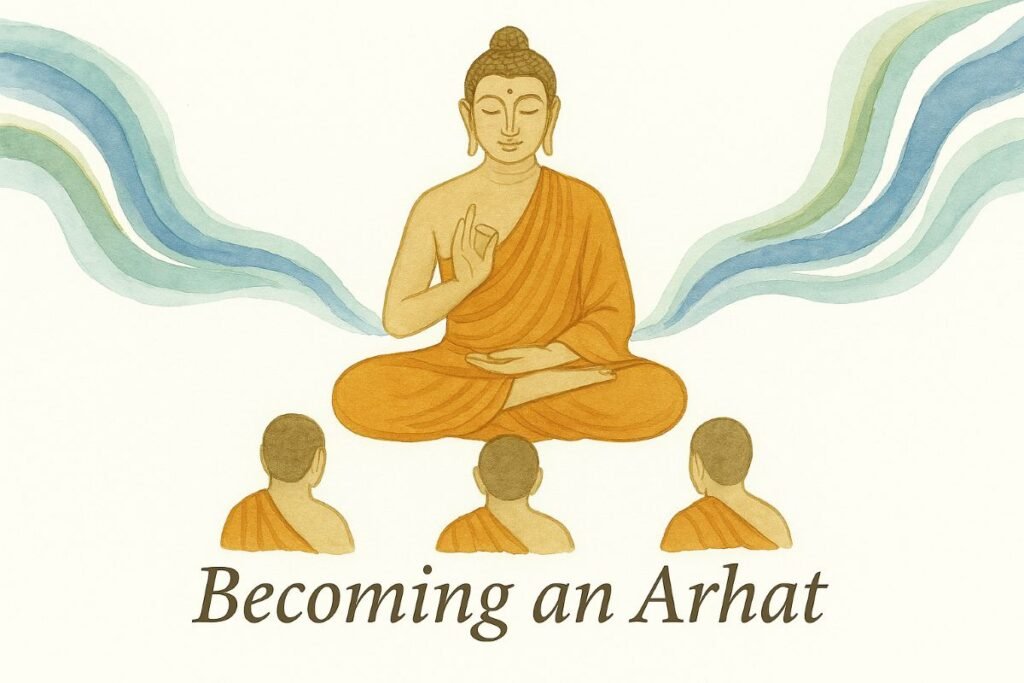
Theravada Buddhism stands as the oldest continuously extant school of Buddhism, distinguished by its doctrinal conservatism and its adherence to the earliest recorded Buddhist scriptures. Its name, Theravada (Pali: Theravāda), translates to the “Doctrine of the Elders,” signaling its claim to preserve the original teachings and monastic lineage of the historical Buddha, Siddhartha Gautama. The central, organizing aim of this tradition is the attainment of liberation (Pali: Nibbāna; Sanskrit: Nirvāṇa), a definitive and irreversible release from all forms of suffering and the cycle of rebirth. The individual who achieves this goal is called a perfected one (Pali: Arahant; Sanskrit: Arhat), a person who has extinguished the mental defilements that bind one to conditioned existence.
This aim is not a peripheral hope but the explicit and singular purpose of the entire spiritual path. It is presented as the complete solution to the fundamental problem identified by the Buddha: the pervasive and intrinsic unsatisfactoriness of conditioned existence, termed suffering (Pali: dukkha). The path to this liberation is systematic, empirical, and profoundly pragmatic, relying on an individual’s own disciplined effort through a graduated threefold training in ethical conduct, mental concentration, and transformative wisdom.
This article will define this ultimate goal and the ideal of the perfected one, ground them within their specific historical and scriptural context, detail the structured path laid out for their achievement, and provide concrete methodologies for applying these principles within the complexities of contemporary life.
2. What is Nirvana and Arhatship?
2.1 Nirvana – The Unconditioned State of Liberation
Liberation (Pali: Nibbāna) represents the cessation of all suffering and the unconditioned peace that follows. The term’s literal meaning is “extinguishing” or “quenching.”
2.1.1 The Fires That Are Extinguished
This metaphor refers to the complete and permanent extinguishing of the three primary afflictions, known as the three unwholesome roots (Pali: akusala-mūla):
- Greed (Pali: lobha): Encompassing all forms of craving, attachment, and possessive desire for sensory objects, experiences, or states of being.
- Hatred (Pali: dosa): Encompassing aversion, anger, ill-will, resentment, and fear, any mental state that seeks to reject or destroy its object.
- Delusion (Pali: moha): Fundamental ignorance or misunderstanding of the true nature of reality, particularly regarding the characteristics of impermanence, suffering, and non-self.
2.1.2 Defining Characteristics of Liberation
- Unconditioned (Pali: asaṅkhata): All phenomena in the empirical world are conditioned (Pali: saṅkhata). They come into being, persist for a time, and cease due to specific causes and conditions. Liberation is uniquely unconditioned. It is not created, not born, not produced, and is therefore not subject to change, decay, or death. It stands outside the endless chain of cause-and-effect (dependent origination) that governs cyclic existence (Pali: Saṃsāra).
- Cessation of Suffering: It is the direct realization of the Third Noble Truth. It marks the absolute end of suffering (Pali: dukkha) and, consequently, the end of the cycle of rebirth (Pali: vaṭṭa) propelled by karma and craving.
- Supreme Happiness (Pali: paramaṃ sukha): The texts describe it as the highest bliss, a peace and happiness utterly secure and independent because it does not rely on any unstable, conditioned phenomenon.
2.1.3 Clarification of Common Misconceptions
- It is not annihilation. The Buddha explicitly rejected this view. He stated that categories like “exists,” “does not exist,” “both,” or “neither” are inapplicable to one who has attained liberation, as these concepts are only meaningful within the framework of conditioned reality.
- It is not a heavenly realm or a place. It is not a location one goes to after death to enjoy eternal sensual pleasures. It is a transcendental, experiential reality realized through the purification of the mind.
- It is not a state of nothingness or blankness. It is characterized by supreme awareness, unobstructed wisdom, and boundless compassion. The mind of one liberated is fully awake and free.
2.2 The Arhat – The Fully Liberated Person
A perfected one (Pali: Arahant) is a human being who has fully realized liberation within their present lifetime.
2.2.1 Specific Achievements of a Perfected One
The attainment is marked by the destruction of ten specific mental bonds:
The Ten Fetters (Pali: dasa saṃyojanāni)
- Lower Fetters (Overcome by the Non-Returner):
- Identity-View (Pali: sakkāya-diṭṭhi): The belief in a permanent, substantial self or soul.
- Doubt (Pali: vicikicchā): Skeptical uncertainty about the Buddha, Dhamma, Sangha, or the training.
- Clinging to Rules and Rituals (Pali: sīlabbata-parāmāsa): The belief that mere external rites or ascetic practices alone lead to liberation.
- Sensual Desire (Pali: kāmacchanda): Craving for pleasurable experiences through the five senses.
- Ill-Will (Pali: byāpāda): Aversion, anger, hatred.
- Higher Fetters (Overcome by the Arhat):
6. Desire for Fine-Material Existence (Pali: rūparāga): Craving for rebirth in the subtle material heavens.
7. Desire for Immaterial Existence (Pali: arūparāga): Craving for rebirth in the formless realms.
8. Conceit (Pali: māna): The subtle, residual tendency to compare oneself to others.
9. Restlessness (Pali: uddhacca): Mental agitation, worry, anxiety.
10. Ignorance (Pali: avijjā): The fundamental misunderstanding of reality, the root of all other fetters.
2.2.2 The Embodied Qualities of a Perfected One
- Impeccable and Effortless Ethics: Moral purity arises spontaneously. Their actions, speech, and livelihood cause no harm.
- Unshakable Equanimity (Pali: upekkhā): They are completely unaffected by the “eight worldly winds”: gain and loss, fame and disrepute, praise and blame, pleasure and pain.
- Great Compassion and Teaching Role: Liberated from their own suffering, they often act out of compassion to guide others, as exemplified by the Buddha’s chief disciples.
3. Theravada Buddhism: Tradition, Scriptures, and Geographic Scope
3.1 Historical Development and Textual Authority
Theravada is the surviving branch of the Early Buddhist Schools that formed after the Buddha’s passing. Its core authority is the Pali Canon (Pali: Tipiṭaka; “Three Baskets”), compiled in the Pali language, a literary derivative of the vernacular the Buddha likely spoke.
The Three Baskets of the Pali Canon:
- Vinaya Piṭaka (“Basket of Discipline”): Contains the detailed monastic code (Pali: Pātimokkha) of 227 rules for monks and more for nuns, along with narratives on their origin. It governs the monastic community (Pali: Saṅgha), which is considered essential for preserving the Dhamma.
- Sutta Piṭaka (“Basket of Discourses”): The largest section, containing thousands of discourses attributed to the Buddha and his chief disciples. It is divided into five collections (Nikāyas), including the Dīgha Nikāya (Long Discourses), Majjhima Nikāya (Middle-Length Discourses), and the Samyutta Nikāya (Connected Discourses). This basket contains the core doctrinal teachings, including the Four Noble Truths, Dependent Origination, and the Satipaṭṭhāna Sutta.
- Abhidhamma Piṭaka (“Basket of Higher Doctrine”): A later, systematic philosophical and psychological analysis of the mind and matter presented in the Suttas. It categorizes ultimate realities (dhammas) and their conditional relationships.
Post-canonical texts, like the Visuddhimagga (“Path of Purification”) by Buddhaghosa (5th century CE), provide comprehensive meditation manuals and remain immensely influential.
3.2 Geographic Prevalence and Cultural Context
Theravada Buddhism is the dominant religion in several Southeast Asian nations, profoundly shaping their cultures, laws, art, and social rhythms:
- Sri Lanka: The oldest continually Buddhist country, where the Pali Canon was first committed to writing in the 1st century BCE.
- Myanmar (Burma): Known for its large population of monks and nuns and its strong emphasis on insight meditation (Pali: vipassanā).
- Thailand: Where the Buddhist monastic community (Pali: Saṅgha) is deeply integrated into society, and many young men ordain as monks temporarily.
- Laos and Cambodia: Where Theravada practice is central to national identity and village life.
- It also has significant communities in Vietnam (particularly the Khmer Krom), parts of southern China (Yunnan), and Bangladesh (Chittagong).
This geographic cluster is sometimes referred to as the “Theravada Buddhist world.”
4. Why is This Core Aim Important?
4.1 It Constitutes the Entire Purpose of the Buddhist Path
The aim of liberation is the fulfillment of the Third Noble Truth. It is not an optional extra but the very reason the path exists. It transforms Buddhism from a philosophy or moral system into a complete soteriology, a coherent system of salvation or liberation.
4.2 It Validates the Teachings as Pragmatic and Verifiable
The Buddha invited scrutiny, urging followers to “come and see (Pali: ehipassiko)” for themselves. The Arhat serves as living proof that the path is achievable and the goal real. This emphasis on personal verification guards against blind faith and dogmatism.
4.3 It Establishes a Framework of Radical Self-Reliance
Liberation cannot be granted by an external agent. It must be earned through one’s own diligent effort (Pali: appamāda). This principle fosters profound personal responsibility, autonomy, and dignity.
4.4 It Necessitates and Inspires Uncompromising Ethics
The goal is inseparable from the means. One cannot uproot hatred while cultivating cruelty. Therefore, the pursuit of liberation intrinsically requires the cultivation of loving-kindness (Pali: mettā), compassion (Pali: karuṇā), and non-harm, making ethics a foundational component of enlightenment itself.
5. The Path to the Goal: The Threefold Training and the Noble Eightfold Path
The path is an integrated, simultaneous cultivation known as the Threefold Training (Pali: tisso sikkhā).
5.1 The Training in Ethical Conduct (Pali: sīla-sikkhā)
Ethical discipline purifies actions and speech, creating the personal and social stability necessary for mental cultivation.
- The Five Precepts (Pali: pañcasīla): The basic ethical code for all lay practitioners: abstaining from killing, stealing, sexual misconduct, false speech, and intoxicants.
- The Monastic Code (Pali: Pātimokkha): The extensive rulebook for monks and nuns, designed to simplify life and eliminate distractions for those fully dedicated to the path.
5.2 The Training in Concentration (Pali: samādhi-sikkhā)
Concentration training unifies and calms the mind, freeing it from distraction.
- Tranquility Meditation (Pali: samatha-bhāvanā): Develops deep, absorbed states of one-pointedness known as meditative absorptions (Pali: jhāna). These states provide a mind of sublime stability, purity, and power, which is then used as an instrument for insight.
5.3 The Training in Wisdom (Pali: paññā-sikkhā)
Wisdom is the direct, non-conceptual penetration of the true nature of reality, developed through Insight Meditation (Pali: vipassanā-bhāvanā).
- The Three Characteristics (Pali: tilakkhaṇa): Insight meditation leads to the direct experience of:
- Impermanence (Pali: anicca): All conditioned phenomena are in constant, instantaneous flux.
- Suffering (Pali: dukkha): Anything impermanent and clung to is, by nature, unsatisfactory.
- Non-Self (Pali: anattā): Within these changing processes, no permanent, independent, controlling self can be found.
5.4 The Operational Framework: The Noble Eightfold Path (Pali: ariya aṭṭhaṅgika magga)
This is the practical, step-by-step breakdown of the Threefold Training, constituting the Fourth Noble Truth.
Wisdom (Pali: paññā) Group:
- Right View: Understanding the Four Noble Truths and karmic law.
- Right Intention: The resolve for renunciation, good-will, and harmlessness.
Ethical Conduct (Pali: sīla) Group:
3. Right Speech: Abstaining from false, divisive, harsh, and idle speech.
4. Right Action: Abstaining from harming life, stealing, and sexual misconduct.
5. Right Livelihood: Earning a living in a way that does not harm others.
Concentration (Pali: samādhi) Group:
6. Right Effort: The energetic cultivation of wholesome states and abandonment of unwholesome ones.
7. Right Mindfulness: The sustained, non-judgmental awareness of body, feelings, mind, and mental objects.
8. Right Concentration: The development of the unified, absorbed mind of the meditative absorptions (Pali: jhāna).
6. Applying the Core Aim in Daily Life: Practical Examples
The path is fully applicable to lay life. Here is how to integrate its core components.
6.1 Applying Ethical Conduct
- Practice: Consciously adhere to Right Speech during a conflict. Use the “THINK” filter: Is it True, Helpful, Inspiring, Necessary, Kind?
- Example: When giving critical feedback at work, frame it factually and constructively (“The report deadline was missed, which impacted the team. How can we adjust the process?”) rather than with blame (“You failed”).
6.2 Applying Concentration and Mindfulness
- Practice: Establish a daily formal sitting meditation of 20 minutes, focusing solely on the physical sensations of the breath.
- Example: When anxiety about an upcoming event arises, instead of getting caught in future-tripping, anchor yourself with three conscious breaths, feeling the air moving at the nostrils. This is a direct application of Right Effort and Right Mindfulness.
6.3 Applying Wisdom
- Practice: Use daily inconveniences (traffic, a long queue) as laboratories for observing impermanence and non-self.
- Example: Stuck in traffic, observe the frustration. See it as a constellation of temporary physical sensations (tight shoulders) and passing thoughts (“I’m going to be late!”). Note how the frustration itself changes, arises, and passes. This investigative observation is the essence of insight practice in daily life.
6.4 Applying Renunciation and Generosity
- Practice: Engage in deliberate, mindful consumption. Before a purchase, ask: “Is this from a place of need or a place of craving (Pali: taṇhā)?”
- Example: Choosing to prepare a simple meal at home rather than ordering expensive takeout out of habit can be an act of renunciation that weakens sensual desire. Donating the money saved is an act of generosity that weakens clinging.
7. Challenges and Encouragements on the Path
7.1 Navigating Common Challenges
- Expecting Immediate Results: The path is a gradual cultivation. Encouragement: Focus on the immediate benefits, a calmer mind, better relationships, which are signs of progress on the longer journey.
- Dealing with the “Monkey Mind”: Restlessness is universal. Encouragement: In meditation, view each moment of noticing distraction as a victory of mindfulness, not a failure of concentration.
- Balancing Practice with Responsibilities: Encouragement: Integrate practice into existing activities (mindful walking, listening, eating). Short, consistent sessions are more valuable than sporadic long ones.
7.2 Sustaining Encouragement
- The Dhamma is Accessible: The Buddha stated his teaching was “visible here and now.” The peace from ethical living and a mindful moment is immediately verifiable.
- The Support of the Community (Pali: Sangha): Connecting with a local temple, meditation group, or online community provides invaluable guidance, inspiration, and a sense of shared purpose.
- The Joy of the Path (Pali: pāmojja): The development of concentration brings joy (Pali: pīti), and the softening of defilements brings profound relief. The path itself has a taste of freedom.
8. Summary
The core aim of Theravada Buddhism, the attainment of liberation (Nirvana) by becoming a perfected one (Arhat), is the definitive response to the problem of suffering. It is a goal made possible by a rigorous, integrated path of ethical discipline, meditative concentration, and penetrating wisdom, all preserved in the ancient Pali Canon and practiced as a living tradition across Southeast Asia. While the full realization of this aim represents the culmination of the spiritual journey, every intentional step on the path, every act of kindness, moment of mindfulness, and insight into change, aligns one with this ultimate freedom, bringing tangible peace and clarity into the fabric of daily life.
9. Suggested Further Study and Practice
- Primary Text Study: Begin with the Dhammapada, then explore anthologies like In the Buddha’s Words by Bhikkhu Bodhi. For the monastic framework, read excerpts from the Vinaya Piṭaka.
- Meditation Practice: Seek qualified instruction in Insight Meditation (Pali: vipassanā). The Satipaṭṭhāna Sutta (Discourse on the Foundations of Mindfulness) is the canonical guide.
- Ethical and Doctrinal Deepening: Study the Five Precepts in detail. Explore the Abhidhamma for a systematic understanding of mind states.
- Immersive Practice: Attend a retreat at a dedicated Theravada meditation center or monastery to experience the teachings within a supportive, immersive environment.