1. Introduction to Right Effort: A Path of Balanced Energy
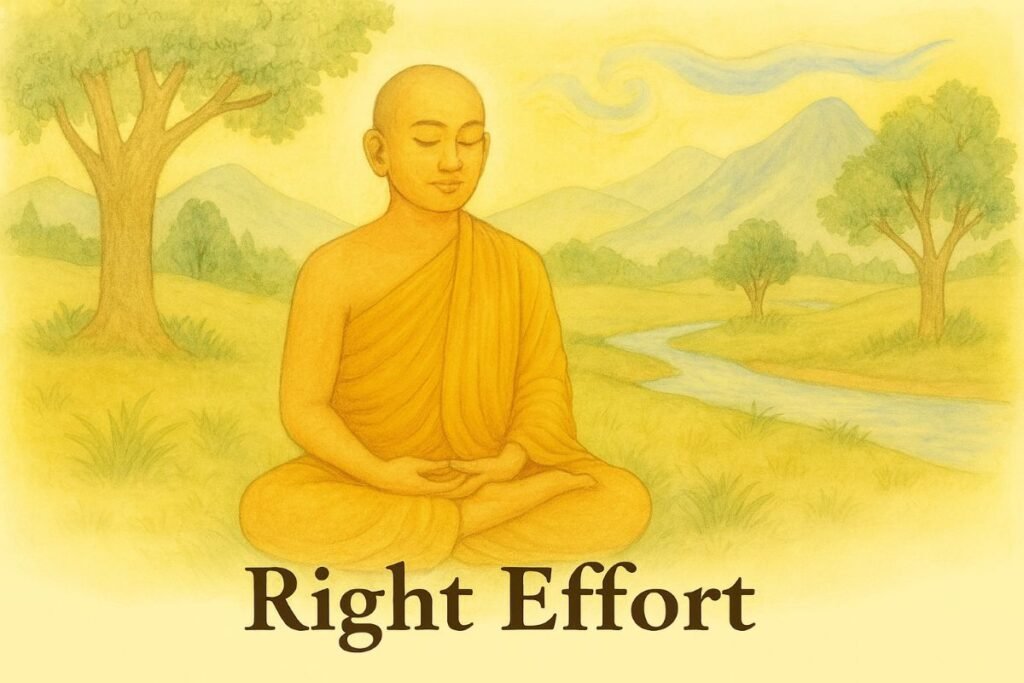
Right Effort, or sammā vāyāma in Pali, represents the wise and balanced application of our energy on the Buddhist path. It’s the sixth element of the Noble Eightfold Path, situated within the mental discipline group alongside mindfulness and concentration. Unlike Western concepts of willpower that often involve force and struggle, Right Effort emphasizes skillful, sustainable energy management that aligns with natural rhythms and wisdom.
This ancient teaching holds remarkable relevance today. Neuroscientific research confirms that consistent, gentle effort in meditation physically reshapes the brain, a process called neuroplasticity. Just as muscles strengthen with regular, balanced exercise, neural pathways supporting compassion, focus, and emotional regulation strengthen through what Buddhism calls Right Effort. Studies at institutions like the University of Wisconsin-Madison’s Center for Healthy Minds show how meditation practices grounded in balanced effort decrease amygdala reactivity (our brain’s alarm center) while strengthening prefrontal cortex connections associated with wise decision-making.
An Essential Note on Medicine and Spiritual Practice: While Right Effort offers profound benefits for mental and emotional well-being, it is crucial to understand its boundaries. Buddhist practice complements but does not replace professional medical or psychological treatment. Clinical conditions such as major depressive disorder, anxiety disorders, or bipolar disorder require appropriate medical intervention. A spiritual path works alongside medicine, not as a substitute for it. The Buddha himself was compared to a physician who diagnosed suffering and offered a cure, and he would often direct followers to rest and receive care when ill. Right Effort includes the wisdom to seek professional help when needed, recognizing this as a compassionate and responsible application of energy toward healing.
2. The Core Framework: The Four Great Efforts
Right Effort is operationalized through a practical four-fold framework known as the Four Great Efforts or Right Exertions. This system provides a complete approach to mental development.
2.1. The Effort to Prevent Unwholesome States
This involves creating conditions where harmful mental states are less likely to arise. Modern psychology echoes this in concepts like “cue management” for habit change. By adjusting our environment and routines, we reduce triggers for automatic negative patterns.
Practical Application:
- Digital Hygiene: Consciously curating social media feeds to prevent constant comparison (a source of envy/restlessness).
- Routine Design: Not checking email first thing in the morning to prevent anxiety from hijacking your day’s focus.
- Nutritional Support: Recognizing that poor diet (e.g., blood sugar spikes) can exacerbate irritability and mental fog, making wholesome states harder to maintain. Right Effort includes the effort to choose foods that stabilize energy and mood.
2.2. The Effort to Abandon Arisen Unwholesome States
When negative states like anger, anxiety, or craving do arise, this effort involves letting them go without suppression or indulgence. Neuroscience shows that simply naming an emotion (“labeling”) reduces activity in the amygdala and engages the prefrontal cortex, helping to de-escalate emotional reactivity.
Practical Application:
- The “Note and Return” Method: In meditation or daily life, when distracted by worry, gently note “worrying” and return attention to the breath or task. This is mental repetition, not fighting.
- Physiological First Aid: For acute anxiety or anger, using the physiological sigh (double inhale through nose, long exhale through mouth) directly calms the nervous system, making it easier to “abandon” the charged emotional state.
2.3. The Effort to Cultivate Wholesome States
This is the proactive development of positive qualities like kindness, patience, and joy. The field of Positive Psychology confirms that qualities like gratitude and compassion can be systematically cultivated through practice, leading to lasting increases in well-being.
Practical Application:
- Gratitude Journaling: A direct, evidence-based method to cultivate the wholesome state of appreciation.
- Loving-Kindness (Metta) Meditation: A formal practice where one systematically generates wishes for well-being for oneself and others. Research shows it increases positive emotions and social connectedness.
- Skillful Friendship: Actively nurturing relationships with people who embody qualities you wish to cultivate (kalyāṇa-mittatā). This is considered essential in Buddhism, as our associations powerfully shape our mind.
2.4. The Effort to Maintain and Strengthen Wholesome States
This effort protects and deepens positive qualities so they become stable traits, not fleeting moments. This aligns with the science of habit formation, where consistency and reinforcement solidify new neural pathways.
Practical Application:
- Consistency Over Intensity: A daily 10-minute meditation practice is more effective for maintenance than a 2-hour session once a month.
- Reflective Practice: Ending the day by reviewing moments when patience or generosity was present reinforces those neural patterns.
- Community Support: Participating in a meditation group or Dharma community provides encouragement and accountability, helping to maintain practice through challenging periods.
3. Right Effort and Modern Science: A Supportive Dialogue
The mechanisms underlying Right Effort find compelling parallels in contemporary science, creating a rich dialogue between ancient wisdom and modern understanding.
3.1. Neuroplasticity and the “Mental Gym”
The brain’s ability to reorganize itself, neuroplasticity, is the biological substrate of Right Effort. Each time we:
- Notice a judgment and choose kindness (abandoning & cultivating)
- Resist an addictive urge and sit with the discomfort (preventing & abandoning)
- Focus a wandering mind back to the present (abandoning distraction & cultivating concentration)
…we are strengthening specific neural circuits. This isn’t metaphorical; fMRI studies show increased gray matter density in brain regions associated with awareness and emotional regulation in long-term meditators.
3.2. The Hormones of Effort: Balance is Key
Forceful, striving effort triggers the stress response (cortisol and adrenaline), leading to burnout. Lethargic effort under-activates our systems. Right Effort aims for the balance that supports the “tend-and-befriend” system, linked to oxytocin and endorphins, promoting calm and connection. Activities aligned with Right Effort, like mindful movement, meditation, and genuine social connection, modulate these hormonal systems toward equilibrium.
3.3. The Science of Motivation: Intrinsic vs. Extrinsic
Right Effort is fueled by Right Intention, motivation rooted in ethical values and personal understanding. This mirrors the psychological distinction between intrinsic motivation (doing something for its inherent satisfaction) and extrinsic motivation (doing it for reward or to avoid punishment). Intrinsic motivation, like practicing meditation for the peace it brings, is far more sustainable. Right Effort involves nurturing this intrinsic “why,” connecting our daily efforts to our deepest values of freedom and compassion.
4. The Essential Balance: Effort in a Holistic Life Context
Right Effort does not exist in a vacuum. Its effectiveness is deeply interwoven with our physical and social well-being. The Buddha’s teachings on gradual training always started with ethical living and sense restraint, which create the stable foundation for mental effort.
4.1. The Foundation of Physical Health
- Sleep as Non-Negotiable: Cognitive science is unequivocal: sleep deprivation severely impairs prefrontal cortex function, emotional regulation, and willpower. Right Effort includes the effort to prioritize and protect sleep. Trying to meditate or practice mindfulness while chronically sleep-deprived is like trying to tune a lute with broken strings.
- Movement and Energy: Moderate, regular exercise (like walking meditation, yoga, or mindful cycling) regulates mood, improves focus, and increases energy available for spiritual practice. It is a direct support to Right Effort.
- Nutrition as Fuel: A diet that causes energy crashes or brain fog makes sustained mental effort nearly impossible. Choosing nourishing foods is part of caring for the “vehicle” of practice.
4.2. The Container of Social Connection
Humans are socially wired. Loneliness activates threat centers in the brain, while safe connection regulates the nervous system.
- Skillful Friendship (Kalyāṇa-mittatā): The Buddha called spiritual friendship “the whole of the holy life.” Right Effort includes the effort to seek out and nurture relationships with people who support our growth, offer wise counsel, and practice alongside us.
- Community (Sangha): Practicing within a community provides encouragement, perspective, and accountability. Sharing the path makes the effort feel shared and sustainable.
4.3. The Interplay with Professional Care
This point cannot be overstated: Right Effort is a framework for spiritual development and everyday well-being, not a treatment plan for medical illness.
- For Mental Health: If you are experiencing symptoms of depression, trauma (PTSD), or acute anxiety that significantly impair your life, a qualified therapist or psychiatrist is essential. Meditation can be a helpful adjunct but can sometimes exacerbate symptoms if not guided carefully within a therapeutic context. Right Effort means having the courage and wisdom to seek appropriate help.
- For Physical Health: All spiritual practice rests upon the body. Chronic pain, illness, or hormonal imbalances need medical attention. The effort to follow a treatment plan, rest when needed, and listen to medical professionals is a profound expression of Right Effort and self-compassion.
5. Common Misapplications and How to Correct Them
5.1. Spiritual Bypassing: Using Right Effort or meditation to avoid, suppress, or transcend legitimate psychological pain, emotional needs, or relational problems. This is a distortion.
- The Correction: True practice meets experience with honesty. Right Effort might be directed toward the courageous work of therapy to process trauma, or toward having a difficult conversation you’ve been avoiding.
5.2. The Productivity Trap: Turning mindfulness and effort into tools for mere efficiency and output, fueling the very striving the path aims to end.
- The Correction: Regularly check your intention. Is the effort aimed at being more present and compassionate, or just “doing more”? Incorporate practices of non-doing, like simply sitting in nature, to balance goal-oriented effort.
5.3. Neglecting the Foundations: Trying to exert immense mental effort while chronically exhausted, malnourished, or isolated.
- The Correction: Apply effort first to the fundamentals. Create a schedule that protects 7-8 hours for sleep. Prepare a healthy meal. Reach out to a friend. This is not separate from the path; it is its foundation.
6. Cultivating Sustainable Right Effort: A Lifelong Practice
Right Effort is a dynamic, responsive skill. It is not about unwavering intensity, but about intelligent adaptation.
- Seasonal Effort: There will be periods of energetic, joyful practice, and periods of consolidation or necessary rest. Right Effort respects these cycles.
- The 80% Rule: Aim for consistency at about 80% of your maximum capacity. This avoids burnout and makes practice sustainable for decades, not just weeks.
- Joy as the Engine: The Buddha said, “From joy comes serenity.” The effort to notice and appreciate small joys; in nature, in simple tasks, in connection, fuels the entire path. If your practice becomes joyless, recalibrate your effort.
7. Conclusion: An Integrated Path for Modern Life
Right Effort, in its full depth, is a holistic art of living. It is the gentle, persistent force that turns insight into habit and intention into reality. By integrating this ancient framework with modern knowledge of the brain, body, and psychology, we create a robust path for transformation.
This path honors the totality of our human experience. It directs effort not only to the mind in meditation but to the body through care, to our life through ethical action, and to our community through supportive connection. It possesses the humility to recognize when spiritual practice meets its limit and the wisdom to seek other forms of healing, seeing this not as a failure but as an aspect of compassionate awareness.
Ultimately, Right Effort is the heart’s commitment to awakening, expressed through balanced, wise, and loving action in every facet of life. It is the steady hand that cultivates our inner garden, knowing that with patience, care, and the right conditions, peace and freedom can genuinely take root.