1. Introduction: Understanding Mental Obstacles on the Path
The journey of mindfulness and meditation, while deeply rewarding, is not always smooth. Anyone who has tried to sit quietly with their thoughts knows the experience: the mind that was meant to be calm suddenly fills with a craving for coffee, a replay of yesterday’s argument, a heavy fog of sleepiness, a whirlwind of worries about tomorrow, or a nagging voice asking, “Is this even working?”
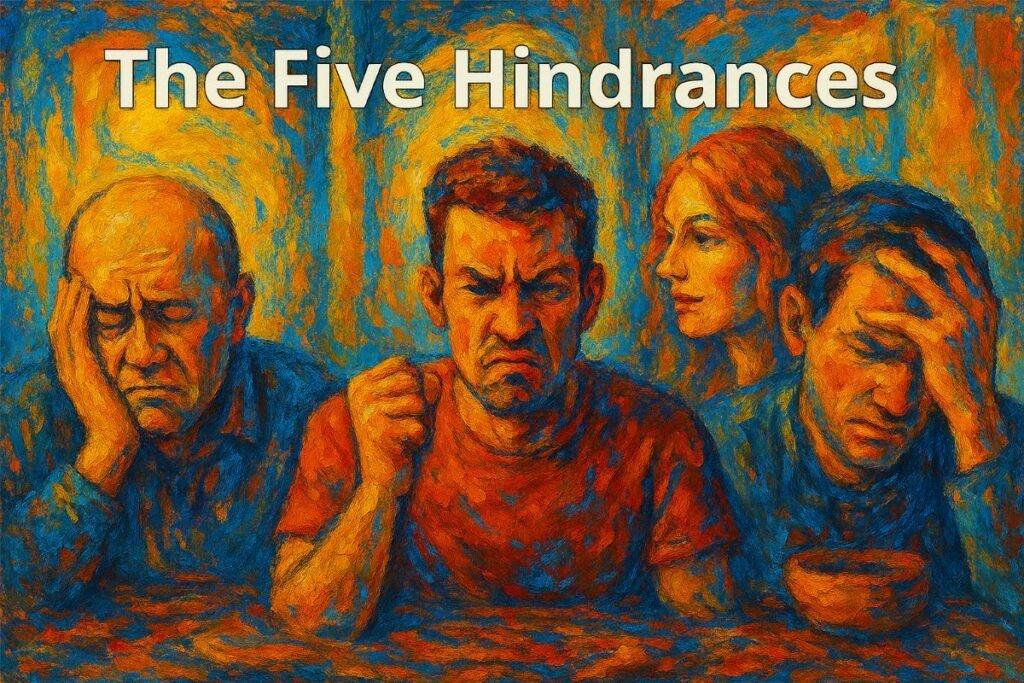
In Buddhism, these universal experiences are not viewed as personal failures, but as predictable, natural phenomena of the human mind. They are formally recognized as The Five Hindrances [Pali: Pañca Nīvaraṇāni]. A hindrance [nīvaraṇa] is something that obstructs, covers, or blocks. These five mental states obstruct our ability to see clearly, to concentrate deeply, and to cultivate genuine peace.
This guide will explore these Five Hindrances in detail. We will move beyond a simple list to understand them as practical psychology. You can learn to recognize them not just on the meditation cushion, but in the middle of your workday, during difficult conversations, and in moments of quiet reflection. More importantly, you will learn time-tested, compassionate strategies from the Buddhist tradition for working with them, transforming obstacles into opportunities for greater awareness and resilience.
2. The Foundation: What Are the Five Hindrances?
The Five Hindrances are five specific categories of unwholesome mental states that disrupt and cloud the mind’s natural clarity and stability. They are:
- Sensual Desire [Pali: Kāmacchanda]
- Ill Will [Pali: Vyāpāda]
- Sloth and Torpor [Pali: Thīna-Middha]
- Restlessness and Worry [Pali: Uddhacca-Kukkucca]
- Doubt [Pali: Vicikicchā]
In the ancient texts, they are often compared to different types of water that are unsuitable for reflection:
- Water heated by a fire (Sensual Desire) is turbulent and steamy.
- Water colored with dye (Ill Will) is discolored and distorted.
- Water choked with algae (Sloth and Torpor) is stagnant and murky.
- Water churned by the wind (Restlessness and Worry) is agitated and rippled.
- Water muddied by stirred-up silt (Doubt) is opaque and unclear.
Just as you cannot see your clear reflection in such water, you cannot see the true nature of your experience; thoughts, feelings, reality itself, when the mind is dominated by a hindrance.
2.1. The Buddhist Tradition and School Affiliation
The teaching on the Five Hindrances is a core component of early Buddhist psychology found in the Theravāda tradition, preserved in the Pali Canon. It is a fundamental framework for understanding the challenges of meditation and is central to the practice of developing concentration [samādhi].
However, the recognition of these mental obstacles is universal across Buddhist schools. Mahāyāna traditions also address them, often incorporating them into broader discussions on the afflictions [Sanskrit: kleśas] that bind beings to suffering. Vajrayāna teachings work with the energy of these states, seeking to transform their raw power into wisdom. For the practical purpose of this guide, we will focus on the clear, actionable framework offered by the early teachings, which is accessible and applicable regardless of one’s specific tradition.
3. A Detailed Look at Each Hindrance
To work skillfully with these states, we must first learn to recognize them with precision and compassion.
3.1. Sensual Desire [Kāmacchanda]
- What It Is: This is the mind’s pull toward pleasurable experiences through the five senses. It is not just sexual desire, but any craving for attractive sights, comforting sounds, delicious tastes, pleasant physical sensations, or enticing smells. It also includes the craving for pleasant mental “snacks”; fantasies, daydreams, or replaying enjoyable memories.
- How It Feels: A leaning-forward quality of the mind. A sense of lack or incompleteness that believes a specific sensation (a snack, a purchase, a video, a compliment) will fix it. The mind becomes restless, searching externally for satisfaction.
- The Underlying Message: “Happiness is out there, in that thing. I need it to be okay right now.”
- Common Manifestations in Daily Life:
- Mindless scrolling through social media, seeking the next interesting post.
- Opening the fridge when not hungry, looking for something satisfying.
- Online shopping to lift your mood.
- Daydreaming about a vacation or a different life during a mundane task.
- The inability to be content with a simple, quiet moment.
3.2. Ill Will [Vyāpāda]
- What It Is: The mind’s push away from unpleasant experiences. This includes anger, resentment, hostility, hatred, aversion, irritation, and even mild dislike. It is the desire for a person, situation, or your own feeling to go away or be different.
- How It Feels: A tightening, hardening, or heating up of the mind and often the body. Thoughts may become critical, blaming, or vengeful. It creates a sense of separation, “me” against “that.”
- The Underlying Message: “This (person, feeling, situation) should not be. Its presence is the cause of my suffering.”
- Common Manifestations in Daily Life:
- Grumbling about traffic or a slow-moving person.
- Holding onto a grudge from a past conversation.
- Feeling intense irritation toward a family member’s habit.
- Self-directed anger after making a mistake.
- A general, low-grade negativity about your job, the weather, or the state of the world.
3.3. Sloth and Torpor [Thīna-Middha]
- What It Is: A heavy, dull, lethargic state of mind and body. Sloth [thīna] is the mental aspect: dullness, lack of mental energy, fogginess. Torpor [middha] is the physical aspect: heaviness in the body, drooping posture, sleepiness.
- How It Feels: The mind feels thick, like wading through mud. Awareness shrinks and blurs. There is a strong inertia, a resistance to applying energy. It is the opposite of alert, bright awareness.
- The Underlying Message: “I don’t have the energy to meet this moment. Withdrawal is safer.”
- Common Manifestations in Daily Life:
- The “afternoon slump” where concentration plummets.
- Reaching for another cup of coffee or a sugary snack for a “boost.”
- Choosing passive entertainment (TV, YouTube) over engaging activities.
- Hitting the snooze button repeatedly.
- A general sense of burnout or apathy toward responsibilities.
3.4. Restlessness and Worry [Uddhacca-Kukkucca]
- What It Is: A state of agitated, scattered energy. Restlessness [uddhacca] is the frantic, jumping, monkey-mind quality, an inability to settle. Worry [kukkucca] is the anxious, regretful content of that agitation: replaying past mistakes or fearing future problems.
- How It Feels: The mind feels like it’s vibrating or spinning. Thoughts race from one topic to another. There may be physical fidgeting, a tight chest, or shallow breathing. It is energy without focus or peace.
- The Underlying Message: “The present moment is not safe or sufficient. I must mentally flee to the past or future to figure things out.”
- Common Manifestations in Daily Life:
- Lying in bed at night, mentally rehearsing tomorrow’s meeting.
- Being unable to listen fully because you’re planning what to say next.
- Constant leg-jiggling or phone-checking.
- Ruminating over a slightly awkward email you sent.
- A pervasive background anxiety about health, finances, or relationships.
3.5. Doubt [Vicikicchā]
- What It Is: Not skeptical inquiry, but a paralyzing, indecisive form of doubt. It is a loss of trust or confidence in the path, the teachings, your teacher, or, most commonly, in yourself and your own capacity.
- How It Feels: The mind is stuck, frozen between options. It feels hesitant, confused, and undermined. It prevents committed action. “What’s the point?” is its favorite question.
- Underlying Message: “I am incapable. The path is unclear. Nothing will work.”
- Common Manifestations in Daily Life:
- Researching meditation techniques endlessly but never settling into a practice.
- After a few calm days, thinking, “Maybe I’m cured,” and then doubting the practice when anxiety returns.
- Believing that peace is for “other people,” not someone with a mind like yours.
- Indecision about life choices, rooted in a lack of self-trust.
- Comparing your practice to others’ and feeling you’re “doing it wrong.”
4. Why Working with the Hindrances is Essential for Modern Life
You might wonder why an ancient list of mental states matters today. The answer is that these hindrances are the primary architects of our daily stress and dissatisfaction. They are not just meditation problems; they are life problems.
- They Cloud Decision-Making: Making a decision from a place of craving, aversion, dullness, agitation, or doubt rarely leads to wise outcomes. Recognizing a hindrance allows you to pause and wait for clarity.
- They Damage Relationships: Ill will creates conflict. Restlessness prevents deep listening. Sensual desire can lead us to use others for gratification. Working with hindrances fosters patience, presence, and true connection.
- They Cause Inner Conflict: We often believe our restless, worried, or craving thoughts. This identification creates suffering. Seeing them as passing hindrances, not core truths, provides profound relief.
- They Are the “Fuel” of Stress: Modern stress is often a complex cocktail of these hindrances: worry about deadlines (Restlessness), aversion to a difficult task (Ill Will), craving for a distraction (Sensual Desire), and doubt in our ability to cope (Doubt).
The Buddha taught that the temporary abandonment of the Five Hindrances is the prerequisite for entering the first stage of deep, tranquil concentration [jhāna]. In simpler terms, you cannot be deeply peaceful if your mind is busy wanting, hating, sleeping, fretting, or doubting. Therefore, learning to recognize and gently work with these states is not a side practice; it is central to cultivating a mind that can find calm, clarity, and insight amidst the chaos of modern existence.
5. A Practical Framework for Working with the Hindrances
The traditional approach is not to declare war on the hindrances. Fighting restlessness with anger just creates more ill will. Instead, the Buddha taught a progressive, skillful set of strategies.
Step 1: Recognition with Mindfulness
This is the most crucial step. You cannot work with what you do not see. The practice is to notice, “Ah, this is here.”
- The Mental Note: Gently label it in your mind. “Craving.” “Aversion.” “Sleepiness.” “Restlessness.” “Doubt.” The label is not a judgment; it is like recognizing an old acquaintance on the street.
- Drop the Story: Try to see the energy or flavor of the hindrance itself, not get sucked into the specific story it’s selling (the details of the fantasy, the reasons for the anger). Feel the tightening of ill will, the leaning of desire, the heaviness of sloth.
- Practice: Begin dedicating a few minutes of your daily meditation to simply recognizing which hindrance is most prominent. Carry this into your day, checking in with yourself: “What’s the dominant weather pattern in my mind right now?”
Step 2: Applying Specific Antidotes
Once recognized, you can apply a skillful response. Think of these as tools, not weapons.
For Sensual Desire (Craving):
- Reflect on Impermanence: That which you crave will change, fade, or ultimately not satisfy in a lasting way. Look at a past craving, did obtaining the object lead to permanent happiness?
- Cultivate Contentment: Actively appreciate what you already have. Practice a moment of gratitude for simple things: a working body, a glass of water, a safe place to sit.
- Focus on the Unattractive Aspects: This is not about negativity, but about balance. If craving a sugary snack, also bring to mind the subsequent energy crash or the feeling of over-fullness.
- Simplify Your Sensory Input: For a period, reduce exposure to media or environments that deliberately stimulate craving.
For Ill Will (Aversion):
- Cultivate Loving-Kindness [Mettā]: This is the primary antidote. Start by sincerely wishing well for yourself: “May I be safe. May I be happy.” Then, if possible, extend that wish to the person who is the object of your aversion. If that’s too hard, send mettā to a neutral person or a benefactor first.
- Reflect on Shared Humanity: The person who irritates you also wants to be happy and avoid suffering. They are acting out of their own confusion and pain, just as you sometimes do.
- Look for the Good: Consciously look for one positive or neutral quality in the person or situation you’re averse to.
- Practice Compassion [Karuṇā]: See the suffering in the other person’s anger or negativity. Wish for their suffering to cease.
For Sloth and Torpor (Dullness):
- Change Your Physical State: Get up! Splash cold water on your face. Take five deep, energizing breaths. Do some gentle stretches. Meditate with eyes slightly open or while standing/walking.
- Brighten the Mind Object: If meditating, switch to a more vivid object, like noting the sensations at your nostrils, or silently reciting a brief phrase like “bright, aware.”
- Reflect on Inspiring Themes: Contemplate the preciousness of human life, or the urgency of the spiritual path. Read an inspiring text.
- Ensure Basic Health: Check if you are chronically sleep-deprived, malnourished, or sedentary. The hindrance may be a messenger about lifestyle.
For Restlessness and Worry (Agitation):
- Ground in the Body: Agitation lives in thoughts. Bring attention firmly to the physical sensations of the body, the feet on the floor, the hands in the lap. Practice a full body scan.
- Practice Softer Breathing: Gently lengthen the exhalation, which activates the body’s relaxation response.
- Contain Your Attention: Narrow your focus to a tiny, stable area, like the sensations of a single breath at the tip of the nose. Do not follow the racing thoughts.
- Practice Acceptance: Say to yourself, “It’s okay that agitation is here. I don’t need to fix it this moment. I can just feel this restless energy in the body.” This reduces the secondary worry about being worried.
For Doubt (Indecision):
- Seek Wise Guidance: Read the Buddha’s teachings, listen to talks from trusted teachers, or speak with a knowledgeable friend. Doubt often flourishes in isolation.
- Reflect on Your Own Experience: Have there been moments, however brief, of calm, clarity, or kindness from your practice? Trust those glimpses. Keep a simple journal to note them.
- Make a Provisional Commitment: Instead of being frozen by “Is this the right path?”, commit fully to a practice (e.g., daily mindfulness of breath) for a set period, like one month. Evaluate based on direct experience, not speculative doubt.
- See Doubt as an Object: When doubt arises, don’t get into an argument with it. Simply note, “Doubt is here,” and return to your anchor (the breath, a mantra). See it as another passing mental event.
Step 3: Developing the Opposite Quality
This is a long-term, cultivation-based strategy. You don’t just remove the weed; you plant a flower in its place.
- Counter Sensual Desire by cultivating Renunciation or Contentment, finding joy in simplicity.
- Counter Ill Will by cultivating Loving-Kindness [Mettā] and Compassion [Karuṇā].
- Counter Sloth and Torpor by cultivating Energy [Viriya] and Interest in the present moment.
- Counter Restlessness and Worry by cultivating Calm [Passaddhi] and Collectedness.
- Counter Doubt by cultivating Confidence [Saddhā] in the path and Collectedness in your own capacity.
6. Integration: The Hindrances in Daily Life and Relationships
The true test of this practice is off the cushion. Here is how hindrances play out in common scenarios and how to apply the framework.
Scenario 1: The Stressful Work Project
- Hindrances Present: Worry about the deadline (Restlessness), aversion to the difficult task (Ill Will), craving for a distraction like your phone (Sensual Desire), doubt in your abilities (Doubt).
- Skillful Response:
- Pause and Recognize: “This is a storm of hindrances.”
- Ground Yourself: Feel your feet on the floor for three breaths (addresses Restlessness).
- Apply an Antidote: Do 2 minutes of loving-kindness for yourself and your overwhelmed colleagues (“May we meet this challenge with peace.”) This softens Ill Will.
- Make a Smart Commitment: Use the “Pomodoro Technique”: commit to 25 minutes of focused work with the phone in another room (manages Sensual Desire and Doubt by creating a small, doable frame).
Scenario 2: A Heated Argument with a Partner
- Hindrances Present: Strong Ill Will (anger, blame), Restlessness (racing thoughts of what to say next), possibly Sensual Desire (wanting to be right/to win).
- Skillful Response:
- Recognize the Hijacking: “Ill will has taken the wheel.”
- Create Space: “I’m feeling too upset to talk well right now. Can we take 20 minutes to cool down?” This is not avoidance, but wise pause.
- During the Pause: Don’t rehearse your argument. Practice mindfulness of the strong bodily sensations of anger, the heat, the tightness. This grounds Restlessness. Silently wish for your own calm and for your partner’s well-being (Mettā).
- Re-engage: Return with the intention to listen and understand, not to win.
Scenario 3: Feeling Stuck and Apathetic (Burnout)
- Hindrances Present: Dominant Sloth and Torpor, likely mixed with Doubt (“Nothing matters”) and Ill Will toward responsibilities.
- Skillful Response:
- Recognize without Judgment: “There is a lot of heaviness and discouragement.”
- Start with the Body: Commit to a very short, gentle physical activity, a 5-minute walk outside. The goal isn’t exercise, but to change the stagnant energy.
- Perform a “Good Enough” Task: Pick one small, concrete task (e.g., wash three dishes, file one document). Do it with full attention, completing it to a “good enough” standard. This builds a tiny spark of energy and counters doubt.
- Seek Uplifting Input: Listen to a inspiring Dhamma talk or read a poem, something that touches the heart, not just the thinking mind.
7. Common Questions and Misunderstandings
- “Is it wrong to feel these things?” No. These are not sins or moral failings. They are conditioned mental events, like weather patterns in the mind. The “wrong” is in unconsciously being controlled by them, not in their initial arising.
- “Will they ever go away for good?” Through advanced practice, their power can be greatly diminished, and they may cease to arise temporarily in deep states of concentration. However, for most practitioners, the goal is not eradication but mastery: to see them arise, to not be identified with them, and to let them pass without being swept away.
- “I have multiple hindrances at once!” This is very common. Often one leads to another (e.g., craving leads to frustration/ill will when blocked, which leads to restless worry). Identify the strongest one in the moment and apply the primary antidote for it. Calming one often reduces the others.
- “This feels like suppression, not addressing the root cause.” There is a difference between suppression (denying the feeling exists) and skillful substitution (acknowledging the unwholesome state and consciously choosing to cultivate its opposite). You are not repressing anger; you are choosing to water the seeds of kindness while letting the anger’s energy dissipate without fuel.
8. Conclusion: Hindrances as Partners in Practice
The Five Hindrances are not your enemies. In a profound sense, they are your most valuable teachers. Their persistent appearance shows you exactly where your mind is stuck, where your attachments lie, and where your work is needed. Without them, there would be nothing to practice with.
The path of working with the hindrances is a lifelong journey of gentle recognition, compassionate response, and gradual cultivation. It is the very process of polishing the mirror of the mind. As you learn to see craving simply as craving, anger as anger, and worry as worry, without buying the stories they tell, you will find a new freedom. You will no longer be at the mercy of your inner weather.
Begin today. The next time you feel a tug of desire, a spike of irritation, a wave of tiredness, a flutter of anxiety, or a cloud of doubt, pause. Remember this simple formula: Recognize, Pause, Apply an Antidote. In that pause lies your freedom. With patience and kindness toward your own very human mind, you can transform these five obstacles into the very path of awakening.
Glossary of Key Terms
| English Term | Pali Term | Explanation |
|---|---|---|
| The Five Hindrances | Pañca Nīvaraṇāni | Five mental states that obstruct concentration and clarity: Sensual Desire, Ill Will, Sloth and Torpor, Restlessness and Worry, and Doubt. |
| Sensual Desire | Kāmacchanda | Craving for pleasure through the five senses (sight, sound, smell, taste, touch) or pleasant mental states. |
| Ill Will | Vyāpāda | The mind’s state of aversion, including anger, hatred, resentment, irritation, and dislike. |
| Sloth and Torpor | Thīna-Middha | A combined state of mental dullness (sloth) and physical lethargy or sleepiness (torpor). |
| Restlessness and Worry | Uddhacca-Kukkucca | A combined state of agitated, scattered mental energy (restlessness) and anxious, remorseful thinking (worry). |
| Doubt | Vicikicchā | Paralyzing skepticism or indecision, particularly regarding the spiritual path or one’s own abilities, not to be confused with healthy inquiry. |
| Mindfulness | Sati | The ability to remember to pay attention to present-moment experience with an attitude of non-judgmental awareness. |
| Loving-Kindness | Mettā | A boundless, unconditional attitude of friendliness, goodwill, and benevolence towards oneself and others. |
| Concentration | Samādhi | A state of collected, focused, and unified mind, developed through meditation. |
| Antidote | (Contextual) | A skillful mental quality or action cultivated to counterbalance or overcome a specific hindrance. |