Introduction: The Universal Flame of Anger
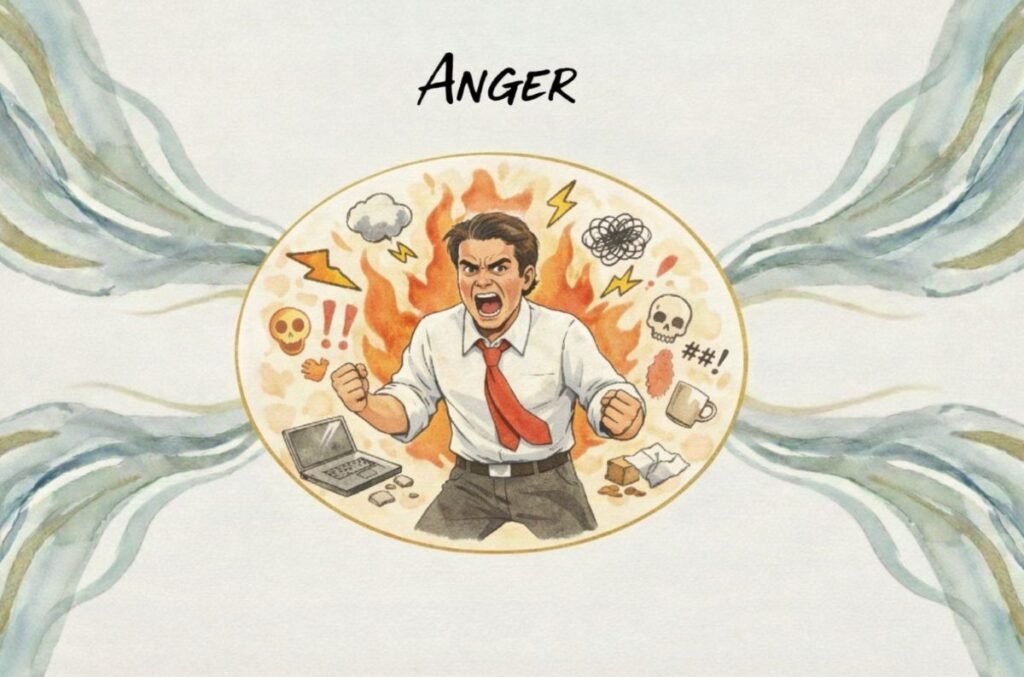
Anger is a universal human experience, a powerful emotional energy that every person encounters in varying degrees throughout their life. It can manifest as a fleeting flash of irritation, a slow-burning resentment, or an explosive outburst that leaves damage in its wake. This emotion does not discriminate; it touches the lives of individuals across all cultures, ages, and backgrounds. The critical question is not whether we will experience anger, but how we relate to it when it arises.
The challenge of anger is addressed by two profound and complementary systems of knowledge: the ancient, introspective wisdom of Buddhism and the empirical, investigative methods of modern science. Buddhist teachings, developed over 2,500 years through deep contemplation of the human mind, offer a detailed roadmap for understanding the nature of anger and a practical toolkit for its transformation. Concurrently, contemporary psychology, neuroscience, and physiology provide a lens to understand anger’s mechanisms within our brain and body, validating and refining many ancient techniques.
This guide seeks to weave these threads together into a coherent and practical tapestry. We will explore what anger transformation truly means, a process far more nuanced than simple suppression or elimination. We will examine why mastering this emotional energy is crucial for our physical health, mental well-being, relationships, and sense of inner peace. Most importantly, the bulk of this exploration will be dedicated to the how: providing practical methods that can be applied in the midst of daily life, from minor annoyances to deep-seated grievances. The goal is not to present an ultimate solution, but to offer a range of understanding and tools, allowing you to develop a more skillful and compassionate relationship with your own emotional landscape.
1: What is Anger Transformation? Beyond Suppression and Expression
1.1. Understanding the Anatomy of Anger
Before we can transform something, we must first understand its nature. Anger is not a monolithic entity but a complex process involving thoughts, physical sensations, and impulses.
From a Buddhist Psychological Perspective:
In Buddhist psychology, anger is classified as one of the primary “Kleshas” (Sanskrit for “poisons” or “afflictions”). The Kleshas are mind-states that disturb our inner peace, cloud our judgment, and lead to unwholesome actions. Anger (dvesha in Sanskrit, dosa in Pali) is specifically rooted in aversion, a pushing away of what is unpleasant or unwanted. It is often born from a triad of factors:
- The Identification of a “Self”: The feeling that “I” have been wronged, that “my” territory, beliefs, or desires have been threatened.
- Attachment to Views and Outcomes: A fixed idea about how things “should” be, and frustration when reality does not conform.
- Ignorance (Avijjā in Pali): A fundamental misperception of the nature of reality, including the impermanent and interdependent nature of all things, including our own self.
Buddhist texts use vivid metaphors for anger: a “forest fire” that consumes all wholesome qualities in its path; a “boiling poison” within the heart; or “carrying a burning ember to throw at someone else”, you are the first to get burned. These images highlight anger’s destructive and self-harming quality.
From a Scientific Perspective:
Scientifically, anger is a core emotion with deep evolutionary roots in the survival mechanism known as the “fight-or-flight” response. When a threat (physical or psychological) is perceived, the amygdala, an almond-shaped region in the brain, sounds an alarm. This triggers the hypothalamus and pituitary gland to activate the adrenal glands, which flood the bloodstream with stress hormones like adrenaline and cortisol.
Physiological changes include:
- Cardiovascular: Increased heart rate and blood pressure, directing blood to major muscle groups.
- Muscular: Tensing of muscles (jaw, fists, shoulders), preparing for physical action.
- Thermal: A feeling of heat or flushing as blood flow shifts.
- Cognitive: The prefrontal cortex, the brain’s center for rational thought, impulse control, and decision-making, can become temporarily “hijacked,” making clear thinking difficult.
This response is automatic and lightning-fast. Its purpose was to help our ancestors survive immediate physical dangers. In modern life, however, the “threats” are often psychological; a rude email, a critical comment, traffic congestion, yet the body’s primal reaction remains the same.
1.2. Defining Anger Transformation: A Process, Not an Event
Anger transformation is a fundamental shift in our relationship with this powerful emotional energy. It is crucial to distinguish it from two common but ineffective approaches:
- Suppression: This involves denying the feeling, pushing it down, or pretending it isn’t there. Suppressed anger doesn’t disappear; it often metastasizes into passive-aggressive behavior, internalized stress (leading to anxiety, depression, or physical illness), or sudden, disproportionate outbursts later.
- Uncontrolled Expression: This is the venting of anger through yelling, blaming, violence, or harsh speech. While it may provide a temporary release, it typically escalates conflict, damages relationships, and reinforces the neural pathways of aggressive reactivity.
Transformation is a middle path. It involves:
- Awareness & Acknowledgment: Clearly recognizing and admitting, “Anger is present,” without immediate judgment or identification (i.e., not thinking “I am an angry person”).
- Understanding & Investigation: Inquiring into the anger with curiosity. What triggered it? What underlying need, fear, or hurt is it signaling? What physical sensations accompany it?
- Mindful Containment: Creating a pause between the trigger and the response. This is the space where choice becomes possible.
- Alchemical Change: Skillfully redirecting the raw energy of anger. Instead of letting it fuel destructive speech or action, we learn to use its intensity to energize qualities like clear discernment, protective compassion, or motivated action for positive change.
In essence, anger transformation is the process of meeting anger with mindfulness and wisdom, so its energy is no longer a poison that harms, but can become a catalyst for greater understanding, connection, and constructive action.
2: Why is Anger Transformation Important? The Costs and the Rewards
2.1. The High Cost of Unmanaged Anger
The impact of chronic, unmanaged anger extends like ripples in a pond, affecting every dimension of our lives.
Physical Health Consequences:
The constant activation of the stress response system takes a severe toll on the body. Chronic anger is correlated with:
- Cardiovascular Problems: Sustained high blood pressure and increased heart rate strain the cardiovascular system, significantly raising the risk of heart attack, stroke, and arterial damage.
- Weakened Immune System: Elevated cortisol levels over long periods suppress immune function, making the body more susceptible to infections and illnesses.
- Chronic Pain: Muscle tension from constant bracing can lead to headaches, back pain, and jaw disorders like TMJ.
- Digestive Issues: The stress response diverts energy away from digestion, which can contribute to conditions like gastritis, acid reflux, and irritable bowel syndrome.
Mental and Emotional Well-being:
Anger is exhausting. It consumes immense mental energy and creates a state of persistent agitation.
- Anxiety and Depression: Anger and resentment are often underlying components of anxiety disorders and can feed into cycles of depressive rumination.
- Impaired Judgment: As neuroscience shows, anger impairs the prefrontal cortex, leading to poor decision-making, risky behavior, and an inability to see situations from others’ perspectives.
- Mental Suffering: Buddhism emphasizes that the one who holds anger suffers first and most. The mind filled with anger is like a turbulent, boiling sea, incapable of reflecting clarity or experiencing peace.
Relational and Social Damage:
Anger acts as a corrosive acid on the bonds between people.
- Erosion of Trust: Outbursts or sustained hostility break down trust, which is the foundation of any healthy relationship, be it with a partner, family member, friend, or colleague.
- Communication Breakdown: Anger often leads to accusatory language (“You always…”, “You never…”), defensiveness, and contempt, which psychologist John Gottman identifies as primary predictors of relationship failure.
- Social Isolation: People may begin to walk on eggshells around or ultimately avoid someone prone to anger, leading to loneliness and alienation.
Spiritual and Ethical Stagnation:
From a contemplative perspective, anger directly obstructs the development of the heart’s highest qualities.
- Block to Compassion (Karuṇā): Anger hardens the heart, making it difficult to feel empathy for another’s suffering.
- Obstacle to Loving-Kindness (Mettā): It is impossible to sincerely wish for someone’s happiness while simultaneously harboring anger toward them.
- Hindrance to Wisdom (Paññā): A mind clouded by anger cannot see things as they truly are: impermanent, interdependent, and without a solid, separate self to be defended.
2.2. The Profound Benefits of Transforming Anger
The work of transforming anger yields dividends across the same domains it once harmed.
Enhanced Physical and Mental Health:
- Reduced Stress Load: Managing anger effectively lowers baseline levels of cortisol and adrenaline, reducing the wear and tear on the body’s systems.
- Greater Emotional Resilience: The ability to navigate strong emotions without being overwhelmed contributes to overall psychological stability and well-being.
- A Calm and Clear Mind: The Buddhist ideal of a mind that is “settled, collected, and unified” becomes more accessible. This calmness (samatha) is the foundation for insight.
Deepened and Secure Relationships:
- Responsive Communication: Replacing reactive outbursts with mindful responses fosters safety, respect, and understanding in conversations.
- Conflict Resolution: The ability to approach disagreements with patience and a genuine desire to understand, rather than to win, transforms conflicts into opportunities for intimacy and problem-solving.
- Cultivation of Empathy: Understanding the roots of your own anger makes it easier to empathize with the anger and pain of others.
Spiritual and Personal Growth:
- Fuel for Virtue: The energy of anger, when transformed, can strengthen determination (viriya), fuel courageous compassion to protect the vulnerable, and energize the pursuit of justice.
- Insight into the Self: Working with anger provides a direct window into the workings of attachment, aversion, and the constructed sense of “I.” This is invaluable insight (vipassanā) on the path of self-understanding.
- Liberation: Ultimately, freedom from the compulsive grip of the Kleshas is a central goal of the Buddhist path. Mastering anger is a major stride toward that inner freedom (vimutti).
3: Buddhist Perspectives on the Nature and Transformation of Anger
3.1. The Two Arrows: Distinguishing Pain from Suffering
One of the most pragmatic and widely applicable Buddhist teachings on dealing with difficulty is the parable of the Two Arrows (found in the Sallatha Sutta).
- The First Arrow: This is the initial painful event itself, the insult, the disappointment, the loss, the physical injury. This arrow is a part of life. Pain (dukkha in its most basic sense) is inevitable in a world of constant change.
- The Second Arrow: This is our reaction to the first arrow. It is the mental and emotional suffering we add on top of the initial pain: the rage, the resentment, the rumination, the stories of “how unfair this is,” the tightening of the body.
The Buddha stated, “When touched with a feeling of pain, the ordinary uninstructed person sorrows, grieves, and laments, beats his breast, becomes distraught. So he feels two pains… Just as if they were to shoot a man with an arrow and, right afterward, were to shoot him with another arrow, so that he would feel the pains of two arrows.”
Transformation in Practice: The work of anger transformation is primarily about learning not to shoot the second arrow. The first arrow may indeed hit us, someone may speak harshly to us. The transformation occurs in the space before we reach for the second arrow of furious retaliation or internalized bitterness. We learn to feel the pain of the first arrow with awareness, without amplifying it with the self-inflicted wound of the second.
3.2. From Poison to Wisdom: The Alchemy of the Five Kleshas
Buddhism describes five primary mental poisons (Kleshas): Ignorance, Attachment (or Desire), Aversion (Anger), Pride, and Jealousy. These are not seen as permanent personality flaws, but as transient, conditioned mental states. Importantly, Tantric Buddhist philosophy presents a radical view of transformation: the raw energy of each poison can be alchemically transformed into a corresponding wisdom. This reframes anger not as an enemy to be destroyed, but as a misplaced energy to be redirected.
- The Poison of Anger/Aversion (Dvesha): The energy that pushes away, rejects, and destroys.
- The Wisdom of Mirror-Like Clarity (Ādarśa-jñāna): When the energy of anger is purified, it becomes the clear, unobstructed capacity to see reality exactly as it is, without distortion, preference, or aversion. Like a perfect mirror, it reflects everything, the beautiful and the ugly, with utter impartiality and precision. The energy that was once used to reject is now used to see with fearless clarity.
Transformation in Practice: This is not an abstract idea. When you feel anger arising, you can begin this alchemy by shifting your intention. Instead of thinking, “I hate this feeling, go away!” you can think, “This energy of anger is present. Can I use its intensity to see this situation more clearly? What is really happening, beyond my initial reaction?” This shifts the mode from reactive aversion to investigative clarity.
3.3. The Antidotes: Cultivating Opposing Forces
Buddhist training systematically cultivates specific heart qualities (brahmaviharas or “divine abodes”) that are direct antidotes to the poisons.
- Patience (Khanti in Pali) as the Antidote to Anger: Patience is not passive resignation. It is the powerful, active endurance of hardship without yielding to resentment or retaliation. It is the armor that protects the mind from the arrows of others’ harmful behavior. The Khantivādi Jātaka tells the story of a sage who patiently endures being tortured by a king, embodying the teaching that “victory breeds hatred, for the defeated live in pain. Happily the peaceful live, giving up victory and defeat.”
- Loving-Kindness (Mettā) and Compassion (Karuṇā) as Antidotes to Ill-Will: Mettā is the unconditional wish for happiness and well-being for oneself and all beings. Karuṇā is the heart’s tremor in response to suffering, with the wish to alleviate it. Practicing these towards a person you are angry with is the direct medicine. It softens the heart and breaks down the sense of rigid separation that anger requires.
4: Scientific Insights into Anger and Its Regulation
4.1. The Anger Circuit: Amygdala Hijack and Prefrontal Recovery
Modern neuroscience maps the journey of anger in the brain, confirming ancient observations about the loss of cognitive control.
- The Trigger and The Alarm (Amygdala): A perceived threat (a critical email, a disrespectful tone) is processed by sensory pathways that lead directly and rapidly to the amygdala. The amygdala’s job is to ask one primitive question: “Is this a threat?” If it answers “yes,” it initiates the fight-or-flight response before the thinking brain (the neocortex) has fully processed the event. This is the “amygdala hijack.”
- The Power Struggle (Prefrontal Cortex vs. Amygdala): The prefrontal cortex (PFC), particularly the ventromedial and dorsolateral regions, is responsible for executive functions: reasoning, impulse control, emotional regulation, and perspective-taking. During an amygdala hijack, the emotional brain’s signal overwhelms the PFC’s capacity to modulate it. Communication between the amygdala and PFC is essentially reduced.
- The Recovery (Neuroplasticity and Training): The crucial scientific insight is that this relationship is not fixed. Through practices like mindfulness meditation, we can strengthen the prefrontal cortex and enhance its connectivity with the amygdala. This is the concept of neuroplasticity, the brain’s ability to reorganize itself by forming new neural connections throughout life. A stronger PFC can more effectively “calm the alarm” of the amygdala, creating the biological basis for the “pause” that is central to anger transformation.
4.2. Emotional Intelligence: The Framework for Skillful Management
Psychologist Daniel Goleman’s model of Emotional Intelligence (EQ) provides a secular framework that aligns remarkably well with Buddhist psychology. EQ consists of four domains, all relevant to anger:
- Self-Awareness: Recognizing your own emotions as they happen. This is the foundational skill of mindfulness, noticing “anger is here.”
- Self-Management: Handling your emotions so they are appropriate to the situation. This is the transformation, using the pause to choose a response rather than react.
- Social Awareness: Sensing what others are feeling. This relates to empathy and compassion, understanding that the person who triggered you may be acting from their own pain.
- Relationship Management: Interacting skillfully with others, managing conflict, and inspiring them. This is the fruit of the practice, healthier communication and connection.
Goleman notes that anger is the most seductive and dangerous of the negative emotions because of its “self-justifying” nature. A ruminative cycle of anger creates compelling arguments for its own righteousness, making it harder to let go. Science thus confirms the Buddhist warning about anger’s capacity to distort perception.
4.3. The Stress-Response System: Cortisol and the Body’s Memory
Chronic anger keeps the body’s stress-response system (the Hypothalamic-Pituitary-Adrenal or HPA axis) in a state of constant activation. The primary hormone involved is cortisol.
- Short-term: Cortisol is beneficial, mobilizing energy and suppressing non-essential functions (like digestion) to deal with a crisis.
- Long-term: Chronically high cortisol is devastating. It damages neurons in the hippocampus (a brain area crucial for memory and emotional regulation), further impairing our ability to manage emotions. It also creates a state of systemic inflammation, which is now linked to a vast array of diseases, from diabetes to depression.
This creates a vicious cycle: anger spikes cortisol, which damages the brain’s regulatory centers, making future anger harder to manage, which spikes more cortisol. Transformation practices break this cycle at the source, allowing the body’s systems to return to a state of balance (homeostasis).
5: A Practical Toolkit for Transforming Anger
This section provides detailed, step-by-step methods. Consider these as exercises to be practiced in calm moments first, so they become more accessible during times of emotional heat.
5.1. Foundational Practice: Mindful Awareness of Anger
This is the cornerstone of all transformation. You cannot work with what you are not aware of.
Step-by-Step Guide:
- Pause: As soon as you notice the stirrings of irritation or anger, if possible, stop what you are doing. Even a micro-pause of three seconds can create critical space.
- Acknowledge Internally: Silently name the emotion. “Anger.” “Frustration.” “Resentment.” This simple act of labeling engages the prefrontal cortex and begins to separate you from the raw feeling.
- Locate the Sensation: Drop your attention from the story in your head (“He said this… she did that…”) and into your body. Where do you feel the anger physically?
- Is there heat in your face or chest?
- Tightness in your jaw, shoulders, or fists?
- A churning in your stomach?
- A quickened pulse?
Simply feel these sensations without trying to change them. Observe them as you would observe weather patterns in the sky: coming, staying, changing, going.
- Observe the Thoughts: After settling with the body for a moment, notice the thoughts that are accompanying the anger. Are they thoughts of blame? Injustice? Fantasy arguments? See these thoughts as mental events, like clouds passing through the sky of your awareness, not as absolute truths that must be believed or acted upon.
- Breathe: Anchor your awareness on the natural flow of your breath. Feel three full breath cycles. This is not “calming breath,” but mindful breathing, using the breath as a stable object to ground you in the present moment, preventing you from being swept away by the story of anger.
5.2. Cultivating the Antidotes: Formal Meditation Practices
Practice A: Loving-Kindness (Mettā) Meditation for Softening Anger
- Posture: Sit comfortably, with a relaxed but alert posture.
- Begin with Yourself: Generate feelings of care and well-wishing for yourself. You can use traditional phrases, silently repeating them with intention:
- “May I be safe and protected.”
- “May I be healthy and strong.”
- “May I be happy and content.”
- “May I live with ease.”
Feel the meaning of the phrases as you say them.
- Expand to a Benefactor: Bring to mind someone you naturally respect and feel gratitude towards (a teacher, a mentor, a friend). Direct the same phrases to them: “May you be safe…”
- Include a Neutral Person: Think of someone you see regularly but have no strong feelings for (a cashier, a neighbor). Offer them the same wishes.
- The Challenging Step: The “Difficult Person”: Now, bring to mind the person with whom you are feeling anger. This is the practice. It is normal to feel resistance. Start gently. You might begin with a more basic wish: “May you be free from suffering,” or even, “I acknowledge you are a human being who experiences pain, just as I do.” Gradually work towards the full phrases. If it feels too forced, return to wishing yourself well, then try again. The goal is not to force fake feelings, but to plant seeds of goodwill where ill-will once grew.
- Expand to All Beings: Finally, expand your well-wishing to include all living beings in all directions.
Practice B: Tonglen (“Sending and Taking”) for Transforming Anger into Compassion
This Tibetan practice directly works with the energy of suffering.
- Settle: Connect with your breath and a sense of openness.
- Visualize on the In-Breath: As you breathe in, visualize breathing in the hot, dark, heavy energy of your own anger and pain. Do not see it as a poison, but as raw energy. Breathe it into the spaciousness of your heart with the wish to relieve yourself of this suffering.
- Visualize on the Out-Breath: As you breathe out, visualize sending out cool, light, bright energy of compassion, peace, and relief. Send it to yourself first.
- Expand the Circle: Next, breathe in the anger and suffering of the person you are in conflict with (knowing they too feel pain, which may be the source of their harmful actions). Breathe out compassion and peace to them.
- Expand Further: Gradually extend this practice to breathe in the suffering of all others feeling anger in that moment, and breathe out compassion to all.
5.3. Cognitive Methods: Reframing and Wisdom Reflection
Method 1: The Substitution Method
When an angry, negative thought about someone arises, consciously substitute it with a reflection on one of their positive qualities or roles. The classic example from Buddhist training: if you are angry with a police officer who gave you a ticket, reflect on their role in protecting the community, maintaining order, and preventing accidents. This is not denial of your frustration, but a deliberate broadening of perspective to weaken the anger’s one-sided narrative.
Method 2: Reflection on Impermanence (Anicca)
In the grip of anger, the situation feels solid and permanent. Wisdom reminds us it is not.
- Reflect on the Emotion: “This anger is a conditioned state. It arose due to causes. It is not me, not mine. It will change and pass away, as all mental states do.”
- Reflect on the Situation: “This conflict, this moment, is already changing. An hour from now, a week from now, it will be different. My intense feelings about it will have shifted.”
This reflection loosens the tight grip of identification with the anger and reduces the sense of urgency that fuels rash action.
Method 3: Seeing the Suffering in the Other
Anger views the other person as an adversary. Compassion seeks to understand them as a human being subject to suffering.
- Ask yourself: “What pain, fear, insecurity, or ignorance might be driving this person’s behavior? Are they acting out of their own confusion, stress, or unmet needs?”
- This does not excuse harmful behavior, but it changes your relationship to it from one of pure opposition to one of clearer, more compassionate understanding. As Thubten Chodron says, it allows you to “hate the disease, not the patient.”
5.4. The Practice of Patience (Khanti) in Action
Patience is a muscle built through daily repetition of small acts.
- In Daily Inconveniences: Practice patience in line at the store, in traffic, with a slow computer. See these as your “patience gym.” Instead of simmering, use the moment to feel your breath or observe your surroundings.
- When Criticized: The instant reaction is defensiveness (a form of anger). Practice pausing. Listen fully to the criticism. Can you find even 2% of truth in it? Respond with, “Thank you for sharing that. I need to think about it,” instead of an immediate counter-attack.
- The “Water off a Duck’s Back” Visualization: Imagine harsh words or annoying behaviors are like water streaming off the oily feathers of a duck. They do not penetrate or stick. You hear them, but you choose not to let them saturate your mind and heart.
6: Applying Transformation in the Crucible of Daily Life
6.1. Navigating Specific Scenarios
Scenario A: Anger with a Partner/Family Member
- Tool 1: The Timeout with Agreement: Establish a mutual agreement: either person can call a “timeout” when emotions run high. This is not storming off, but saying, “I’m feeling too upset to talk well right now. I need 20 minutes to calm down, and then I promise we will come back to this.” Then use that time for mindful breathing or a walk.
- Tool 2: “I” Statements vs. “You” Attacks: Transform accusations into expressions of your own experience. Instead of “You never listen to me!” try “I feel hurt and frustrated when I don’t feel heard in our conversations.”
- Tool 3: Look for the Need: Under anger is often an unmet need: for respect, for consideration, for connection. Try to identify and calmly express the need: “What I need in these situations is to feel like we’re a team.”
Scenario B: Anger in the Workplace
- Tool 1: Displacement through Action: If a colleague or boss triggers anger, channel the energy immediately into a discrete, physical task—organizing a shelf, taking a walk around the building, writing a draft email (that you will not send). This metabolizes the physiological arousal.
- Tool 2: Strategic Compassion: Reflect on the pressures your colleague or boss may be under. This isn’t about being a doormat, but about gaining a strategic perspective that reduces your personal distress and allows you to interact more effectively.
- Tool 3: Professional Boundaries: Set clear limits on acceptable communication. “I am happy to discuss this project, but I need our conversation to remain professional. Can we focus on the specific task?”
Scenario C: Internal Anger (Self-Directed) and Frustration
- Tool 1: Apply Mettā to Yourself: Often we are most cruel to ourselves. Practice the loving-kindness phrases directed at yourself with particular tenderness. “May I forgive myself for this mistake. May I learn and grow from it.”
- Tool 2: The Wisdom of Imperfection: Reflect on the human condition. To make mistakes, to be imperfect, to sometimes fail, is not a personal failing, it is part of the shared human experience. Your anger at yourself is a second arrow.
6.2. Building a Supportive Lifestyle
Transformation is not just about in-the-moment techniques; it’s about creating a life that supports emotional balance.
- Regular Mindfulness Practice: Even 10 minutes of daily mindfulness meditation strengthens the “mindfulness muscle,” making it easier to access in times of crisis.
- Physical Well-being: Regular exercise, especially cardio and yoga, is a healthy way to metabolize stress hormones and regulate mood. Prioritize sleep, as exhaustion drastically lowers emotional tolerance.
- Nutritional Awareness: Notice if certain foods (excess caffeine, sugar, processed foods) contribute to agitation or mood swings.
- Conscious Media Consumption: Be mindful of how news, social media, or argumentative entertainment stokes indignation and a sense of threat.
- Community (Sangha): Surround yourself with people who value emotional wisdom and supportive communication. A community that practices patience and compassion provides a living model and reinforcement for your own efforts.
7: Clarifying Common Misunderstandings
- “Buddhism Says I Should Never Feel Anger.” This is incorrect. Feeling anger is not a moral failure. The teaching is about how we relate to the feeling. The ethical precept is to abstain from acting on anger in harmful ways (harsh speech, hostility, violence). The feeling itself is to be met with awareness.
- “Transforming Anger Means Being Passive or a Doormat.” Absolutely not. Clear, firm, and compassionate action is often necessary. The difference is in the motivation and execution. Action fueled by transformed clarity seeks to solve a problem and reduce suffering. Action fueled by raw anger seeks to hurt, punish, or assert dominance. You can set a powerful boundary (“I cannot allow this behavior in my home”) from a place of calm compassion rather than raging vengeance.
- “I Tried Mindfulness Once and It Didn’t Work.” Mindfulness is a skill developed over time, like learning a language or an instrument. You would not expect to play a concerto after one piano lesson. The “failure” is often the richest part of the practice, noticing that you got swept away by anger is, in itself, a moment of mindfulness. That is success. Gently begin again.
- “This is Just Avoiding Righteous Anger at Injustice.” There is a place for what is sometimes called “righteous indignation”, a clear, powerful rejection of unethical behavior. The key distinction is whether it is “self-righteous” (focused on my ego being wounded) or “righteous” (focused on the harm being done to others). The latter can be a pure expression of compassionate protection. Even then, wisdom asks: Is my expression of this anger skillful? Will it effectively reduce suffering, or will it simply inflame the conflict? Martin Luther King Jr.’s philosophy of non-violent resistance is a profound example of channeling moral outrage into strategically wise, compassionate, and transformative action.
Conclusion: The Lifelong Journey of Taming the Fire
The transformation of anger is not a destination at which one arrives, but a continuous path of practice. Some days, you will create a wise pause and respond with stunning clarity. Other days, the old habits will win, and you will speak or act in ways you later regret. This is not failure; it is the nature of the path. The practice is to meet even that regret with mindfulness and kindness, and to resolve to begin again.
By integrating the profound psychological insights of Buddhism with the validating data of modern science, we are equipped with a robust and compassionate framework. We learn to see anger not as a monster to be slain, but as a signal, a messenger pointing to our attachments, our vulnerabilities, and our deep care about the world. When we learn to listen to this messenger with mindful curiosity rather than blind obedience, we unlock the potential for true healing. We move from being victims of our own emotional weather to becoming wise and compassionate stewards of our inner landscape. The fire of anger, when understood and skillfully directed, can indeed provide the warmth of connection, the light of insight, and the energy needed to build a more peaceful life, from the inside out.
Additional Resources and Practices
Guided Audio Practices:
- Mindfulness of Breath & Body: Search for “10-minute mindfulness meditation” from reputable sources like UCLA Mindful Awareness Research Center, Insight Timer, or Ten Percent Happier.
- Loving-Kindness (Mettā) Meditation: Look for guided meditations by Sharon Salzberg, Joseph Goldstein, or Tara Brach.
- Tonglen Practice: Search for guided Tonglen by Pema Chödrön.
Further Reading:
- Buddhist Perspectives: Anger by Thich Nhat Hanh; Working with Anger by Thubten Chodron; The Places That Scare You by Pema Chödrön.
- Scientific & Integrative Perspectives: Emotional Intelligence by Daniel Goleman; Buddha’s Brain by Rick Hanson; The Science of Meditation by Daniel Goleman and Richard Davidson.
Journaling Prompts for Self-Reflection:
- What are my top three recurring anger triggers? What do they have in common?
- What physical sensations are my earliest warning signs of anger?
- Recall a recent anger episode. What was the “first arrow” (the event)? What was the “second arrow” (my added suffering)?
- Write a letter of compassion to the person you are angry with (you do not have to send it). Try to describe their life and possible pains.
Commitment to Practice:
Choose one tool from this guide to practice deliberately for one week. In low-stakes moments (mild irritation), experiment with it. At the end of the week, reflect on what you noticed. Then, choose another to integrate. This gradual, consistent approach builds the neural and psychological pathways for lasting transformation.
References & Source Notes
This guide synthesizes information from a wide range of traditional Buddhist sources and contemporary scientific understanding. Key referenced concepts are drawn from:
- Pali Canon Scriptures: The Sallatha Sutta (SN 36.6) on the Two Arrows; The Akosa Sutta (SN 7.2) on enduring abuse; The Vitakkasanthana Sutta (MN 20) on removing disturbing thoughts; Verses from the Dhammapada, Chapter XVII.
- Buddhist Teachers & Commentaries: Teachings on the Kleshas and their wisdoms from Tibetan Buddhist traditions; contemporary interpretations by Thich Nhat Hanh, Pema Chödrön, and Bhikkhu Bodhi.
- Scientific Literature: Research on neuroplasticity and meditation from labs such as those of Richard Davidson (University of Wisconsin-Madison); the model of Emotional Intelligence by Daniel Goleman; psychophysiological studies of the stress response system.
- Integrative Works: Books such as Buddha’s Brain by Rick Hanson which explicitly bridges neuroscience and Buddhist practice.