Introduction
The Five Precepts, known in Pali as pañca-sīla (five moral virtues), form the basic ethical code for lay Buddhists. They are voluntary commitments to abstain from certain harmful behaviors and cultivate wholesome conduct. These precepts are not commandments imposed by an external authority but are training rules (sikkhāpada) that individuals undertake to foster personal growth, social harmony, and spiritual development.
The Buddha taught these precepts as a foundation for living a skillful and peaceful life, emphasizing their practical benefits for oneself and others. They serve as a guide to reduce suffering, promote compassion, and create a safe and trusting community.
Introduction to the Five Precepts
The Five Precepts, known in Pali as pañca-sīla (five moral virtues), form the basic ethical code for lay Buddhists. They are voluntary commitments to abstain from certain harmful behaviors and cultivate wholesome conduct. These precepts are not commandments imposed by an external authority but are training rules (sikkhāpada) that individuals undertake to foster personal growth, social harmony, and spiritual development.
The Buddha taught these precepts as a foundation for living a skillful and peaceful life, emphasizing their practical benefits for oneself and others. They serve as a guide to reduce suffering, promote compassion, and create a safe and trusting community.
What Are the Five Precepts?
Historical and Linguistic Background
The term sīla in Pali, often translated as “precept,” “virtue,” or “moral conduct,” literally means “cool,” “normal,” or “natural,” reflecting the idea of living in harmony with the natural order or the Dhamma (the Buddha’s teachings). The Five Precepts are sometimes called the pañca-sīla, meaning “five virtues” or “five moral trainings.”
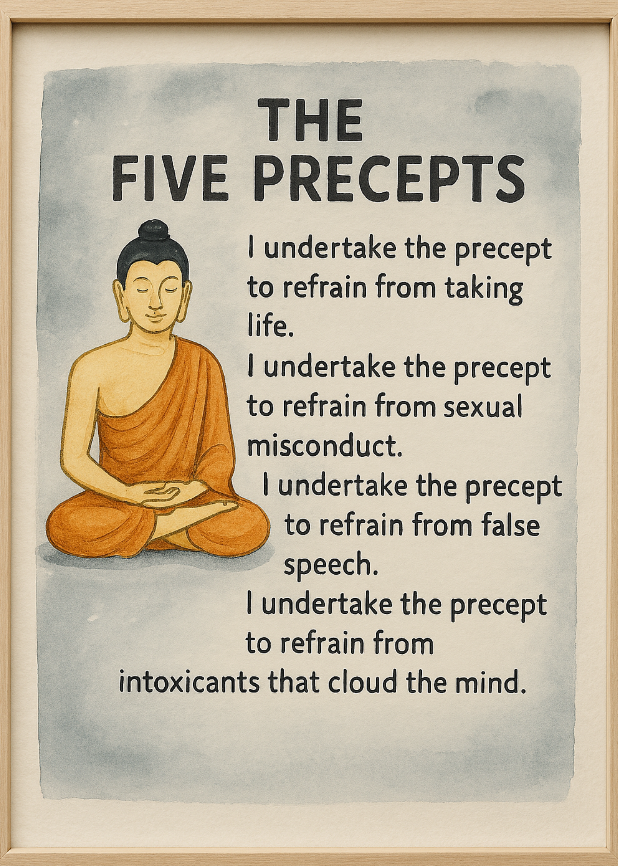
These precepts have been part of Buddhist practice since the time of the Buddha and are considered the minimal ethical standard for lay followers. They are recited in Pali during ceremonies and daily practice, often as follows:
- Pāṇātipātā veramaṇī sikkhāpadaṃ samādiyāmi
(“I undertake the training rule to abstain from taking life.”) - Adinnādānā veramaṇī sikkhāpadaṃ samādiyāmi
(“I undertake the training rule to abstain from taking what is not given.“) - Kāmesu micchācārā veramaṇī sikkhāpadaṃ samādiyāmi
(“I undertake the training rule to abstain from sexual misconduct.“) - Musāvādā veramaṇī sikkhāpadaṃ samādiyāmi
(“I undertake the training rule to abstain from false speech.“) - Surā-meraya-majja-pamādaṭṭhānā veramaṇī sikkhāpadaṃ samādiyāmi
(“I undertake the training rule to abstain from intoxicating drinks and drugs that cause heedlessness.“)
The Five Precepts Explained
- First Precept: Abstaining from Killing
This precept encourages refraining from taking the life of any living being, including humans, animals, and even insects. It promotes compassion and respect for all forms of life. - Second Precept: Abstaining from Taking What Is Not Given
This means not stealing or taking anything that is not freely offered. It includes avoiding theft, cheating, exploitation, and dishonesty in acquiring possessions. - Third Precept: Abstaining from Sexual Misconduct
This precept guides individuals to engage in sexual behavior that is responsible, respectful, and consensual, avoiding harm to oneself and others. - Fourth Precept: Abstaining from False Speech
This involves refraining from lying, deceit, gossip, harsh speech, and any communication that causes harm or discord. - Fifth Precept: Abstaining from Intoxicants
This precept advises avoiding substances like alcohol and drugs that cloud the mind, leading to heedlessness and potentially causing violations of the other precepts.
Why Are the Five Precepts Important?
Moral Foundation for Lay Buddhists
The Five Precepts constitute the minimum moral obligation for lay Buddhists. They provide a practical framework for ethical conduct that supports personal integrity and social responsibility. By observing these precepts, individuals cultivate a life free from harmful actions that cause suffering to themselves and others.
The precepts are not rigid commandments but voluntary commitments that help laypeople live harmoniously within their families, communities, and society at large. They are the foundation upon which further spiritual development is built.
Spiritual and Psychological Benefits
Observing the Five Precepts fosters inner peace, clarity of mind, and moral discipline. They help reduce mental agitation caused by guilt, fear, and conflict arising from unethical behavior. The practice of these precepts cultivates virtues such as compassion, generosity, honesty, and mindfulness.
Scientific studies have shown that living according to the Five Precepts can buffer stress and reduce symptoms of depression, promoting mental and emotional well-being even for non-Buddhists.
Social and Communal Harmony
The Five Precepts create a safe and trusting environment by preventing actions that cause harm, conflict, and distrust. They promote peaceful coexistence and cooperation, which are essential for community well-being.
By refraining from killing, stealing, sexual misconduct, lying, and intoxication, individuals contribute to reducing violence, injustice, and social discord. The precepts also encourage positive qualities like generosity, respect, and truthful communication, which strengthen social bonds.
How to Apply the Five Precepts in Daily Life
General Approach to Observance
The Five Precepts are best understood as training rules rather than strict laws. They invite mindful reflection and personal commitment rather than blind obedience. Practitioners are encouraged to:
- Reflect regularly on their actions and intentions.
- Understand the consequences of their behavior on themselves and others.
- Strive to improve gradually, recognizing that perfection is not required.
- Use the precepts as a guide to cultivate wholesome habits and reduce unwholesome ones.
Daily recitation or contemplation of the precepts can help keep them present in the mind and inspire ethical living.
Practical Application of Each Precept
First Precept: Abstaining from Killing
- Meaning: Avoid intentionally causing death or harm to any living being. This includes humans, animals, insects, and even plants in some interpretations.
- Why: Killing causes suffering and fear, breaking the natural harmony and generating negative karma.
- How:
- Practice compassion by respecting all life forms.
- Avoid violent actions and support non-violent solutions.
- Consider indirect harm, such as buying products that involve animal cruelty or environmental destruction.
- Example: Choosing a vegetarian or vegan diet to reduce harm to animals; avoiding killing insects unnecessarily; advocating for animal welfare.
Second Precept: Abstaining from Taking What Is Not Given
- Meaning: Do not steal or take anything that is not freely offered. This includes physical objects, time, credit, or opportunities.
- Why: Taking what is not given causes harm, distrust, and social discord. It also fosters greed and attachment.
- How:
- Practice generosity and contentment.
- Respect others’ property and rights.
- Avoid cheating, plagiarism, or exploiting others.
- Example: Returning lost items, paying fair wages, being honest in business dealings, and not taking advantage of others’ kindness.
Third Precept: Abstaining from Sexual Misconduct
- Meaning: Engage in sexual behavior that is responsible, consensual, and respectful, avoiding harm to oneself and others.
- Why: Sexual misconduct causes suffering, broken trust, and social problems.
- How:
- Honor commitments and relationships.
- Avoid exploitation, adultery, and inappropriate behavior.
- Cultivate self-restraint and respect for others’ boundaries.
- Example: Being faithful in marriage, avoiding relationships that cause harm, and respecting others’ consent and dignity.
Fourth Precept: Abstaining from False Speech
- Meaning: Refrain from lying, deceit, gossip, harsh words, and divisive speech.
- Why: False speech damages trust, relationships, and social harmony.
- How:
- Speak truthfully, kindly, and usefully.
- Practice mindful communication, considering the impact of words.
- Use silence when speech may cause harm.
- Example: Avoiding gossip, speaking honestly in difficult situations, and using words to heal rather than hurt.
Fifth Precept: Abstaining from Intoxicants
- Meaning: Avoid alcohol and drugs that cloud the mind and cause heedlessness.
- Why: Intoxication impairs judgment, leading to violations of other precepts and harmful behavior.
- How:
- Cultivate mindfulness and clarity of mind.
- Recognize the risks of addiction and heedlessness.
- Avoid substances and habits that reduce awareness.
- Example: Choosing sobriety, moderating alcohol consumption, and avoiding recreational drugs.
The Five Precepts as Training Rules (Sikkhāpada)
The Five Precepts are often described as sikkhāpada, meaning “training rules” or “training precepts.” This framing emphasizes that they are voluntary commitments aimed at self-improvement rather than rigid laws.
By adopting these precepts as training, practitioners experiment with ethical living, observing the effects on their mind and life. This approach encourages personal responsibility, reflection, and gradual progress.
The Buddha encouraged practitioners to test the precepts for themselves, observing how living without harm leads to less fear, more peace, and greater happiness.
The Five Precepts and the Development of Virtues
Each precept not only prohibits harmful actions but also cultivates positive qualities:
- First Precept: Develops compassion, kindness, and non-violence.
- Second Precept: Fosters generosity, honesty, contentment, and respect for others.
- Third Precept: Cultivates self-restraint, responsibility, and respect in relationships.
- Fourth Precept: Encourages truthfulness, integrity, and trustworthiness.
- Fifth Precept: Promotes mindfulness, clarity, and wisdom.
Together, these virtues support the path to spiritual awakening and harmonious living.
Common Challenges and Misunderstandings
- Not Commandments but Voluntary: The precepts are often misunderstood as strict rules or commandments. In reality, they are voluntary training guidelines to be adopted according to one’s readiness and understanding.
- Perfection Not Required: Practitioners are encouraged to strive for improvement without self-judgment or guilt when they fall short. The path is gradual and compassionate.
- Contextual Application: Applying the precepts can be complex in modern life, especially in professions or situations involving ethical dilemmas. Seeking guidance and reflecting deeply is recommended.
- Avoiding Self-Righteousness: Ethical practice should be free from arrogance or judgment of others. The precepts are personal commitments, not tools for moral superiority.
The Five Precepts in Contemporary Life
In today’s world, the Five Precepts remain highly relevant:
- Environmental Ethics: Extending the first precept to include care for the environment and non-harming of ecosystems.
- Digital Ethics: Applying the fourth precept to truthful and responsible communication online.
- Social Justice: Understanding the second precept in terms of economic fairness and avoiding exploitation.
- Health and Wellness: Observing the fifth precept by avoiding substances and habits harmful to mental clarity.
- Relationship Ethics: Practicing the third precept by fostering respectful and consensual relationships.
These applications demonstrate the flexibility and universality of the Five Precepts as ethical guidelines for modern life.
Conclusion: The Five Precepts as a Path to Peace and Wisdom
The Five Precepts offer a practical, compassionate, and wise foundation for ethical living. They guide individuals to reduce harm, cultivate virtue, and develop mindfulness and wisdom. By voluntarily undertaking these precepts, practitioners create a safer, more peaceful world for themselves and others.
The precepts are not about perfection or dogma but about ongoing personal growth and the cultivation of a heart and mind aligned with kindness, honesty, and clarity. Through consistent practice, reflection, and compassion, the Five Precepts become a source of freedom, joy, and spiritual awakening.
Connections:
[1]: The Five Precepts: Buddhist Principles for Everyday Life | Phra Anil Sakya [2]: Dealing With Depression—the Buddhist Way | Spirituality+Health [3]: The Five Precepts [4]: “The Five Precepts: A Beginner’s Guide to Buddhist Ethics” [5]: DharmaNet International [6]: The Buddha’s Guide to Living Well — The 5 Precepts Explained